


 1 / 6
1 / 6 Pharmacogenomic Test
Find out how your body processes 112+ medications. UK home saliva-kit pharmacogenomic test, results in 4 weeks, complimentary GP appointment if needed.
112+ medications screened across mental health, pain relief, statins, blood thinners, oncology and ADHD
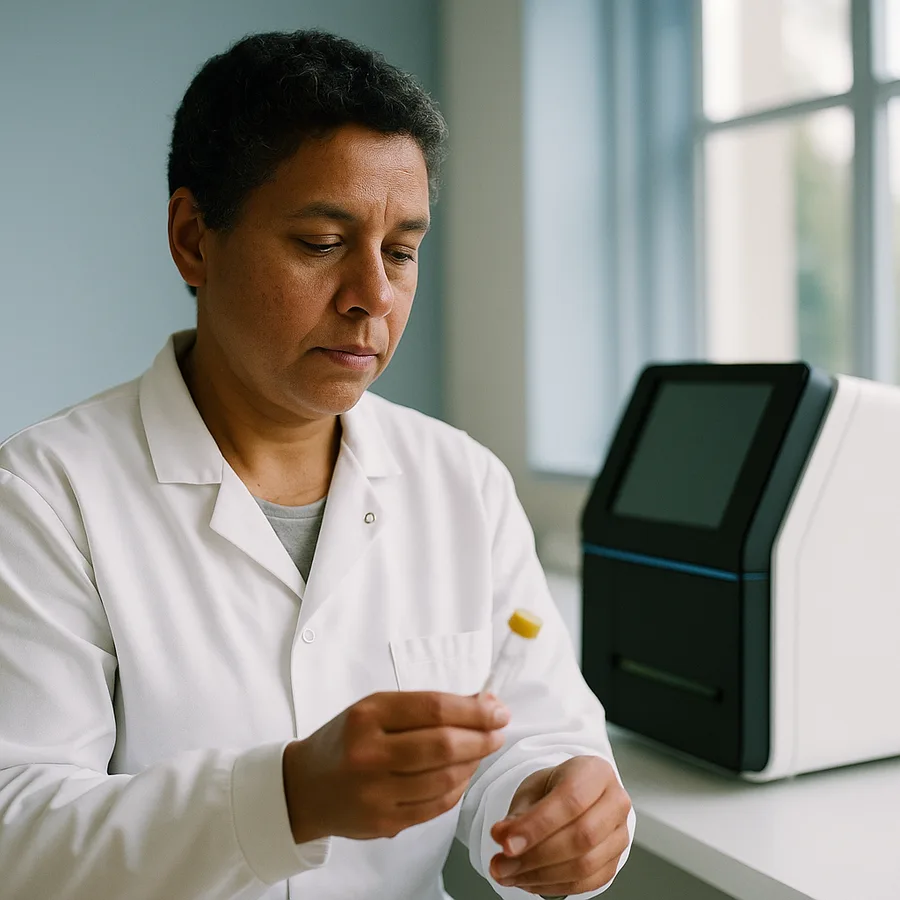
Lab analysis at Eurofins UK on Illumina pharmacogenomic-array platforms
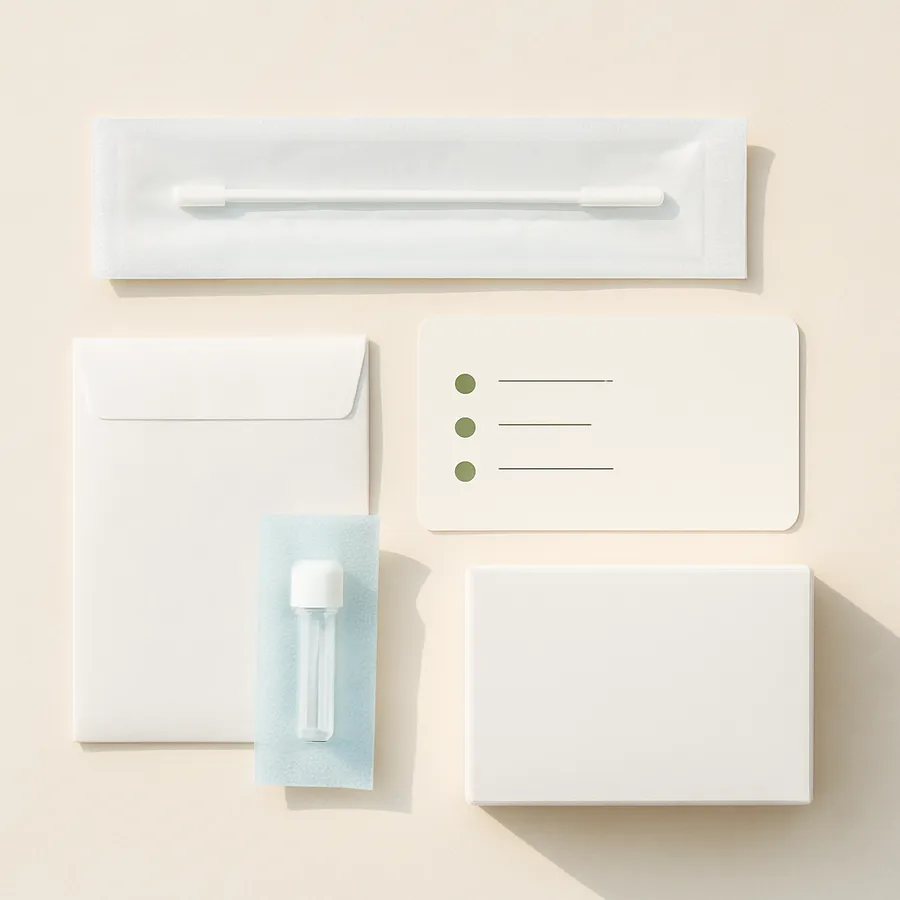
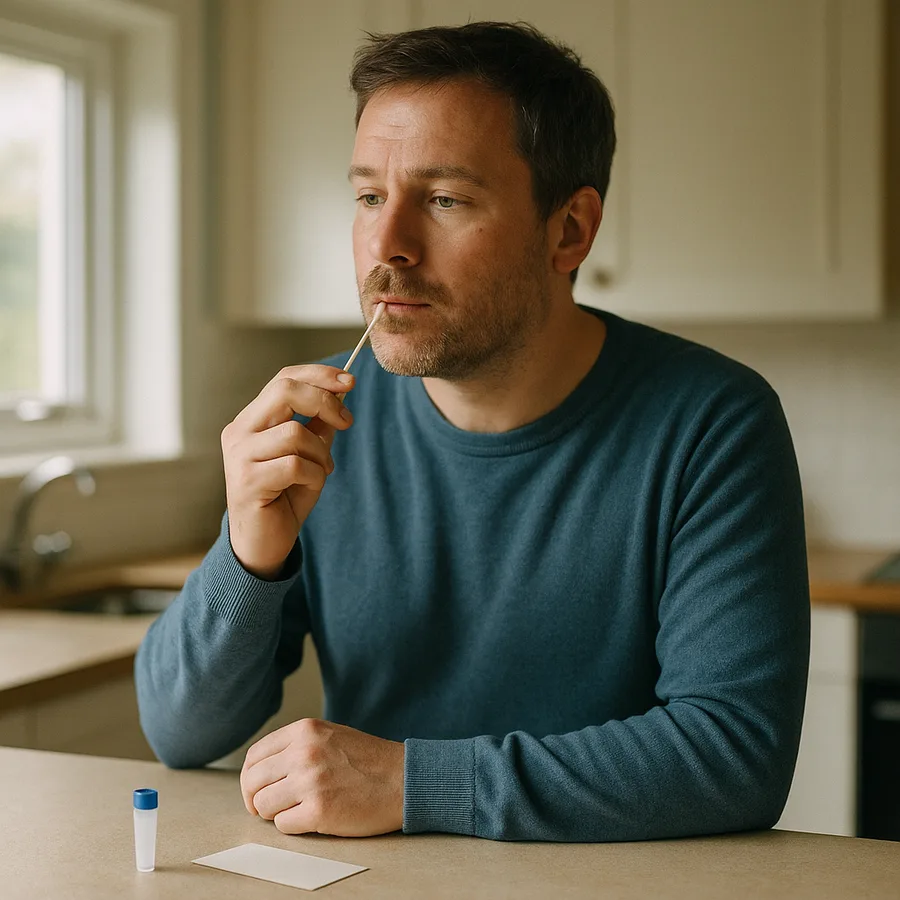
At-home saliva sample - no clinic visit, no fasting, keep taking your current medication
Complimentary 30-minute GP video appointment after results, if you need one
A pharmacogenomic test (PGx) - sometimes called a DNA medication check or drug-response genetic test - analyses a small saliva sample for variants in the genes that control how your body absorbs, breaks down, and clears medication. Knowing your pharmacogenomic profile helps your doctor pick the right drug at the right dose, with fewer side effects and less trial-and-error.
Our panel screens 112 medications across 14 therapy areas including mental health, pain relief, cholesterol, cardiovascular, ADHD, oncology, infection, and immune system drugs. Lab analysis is performed at Eurofins UK on Illumina pharmacogenomic array platforms - the same combination used by occupational-health programmes at major UK insurers. Your results stay valid for life because your DNA doesn't change.
What pharmacogenomics actually measures
Pharmacogenomic testing focuses on a small set of genes that code for drug-metabolising enzymes (mostly the cytochrome P450 family - CYP2D6, CYP2C19, CYP2C9, CYP3A4/5), drug transporters (SLCO1B1), and drug targets (e.g. VKORC1 for warfarin, HLA-B for several immunology and HIV drugs).
Variants in these genes group people into four broad metaboliser phenotypes:
- Poor metaboliser - the drug builds up in your body; standard doses cause side effects.
- Intermediate metaboliser - slower-than-average; you may need a lower dose.
- Normal metaboliser - standard dosing works as designed.
- Rapid / ultra-rapid metaboliser - the drug clears too quickly to be effective at the usual dose; you may need a higher dose, or a different drug.
For example, around 5-10% of people of European ancestry are CYP2D6 poor metabolisers - they cannot effectively convert codeine to its active form, so codeine works poorly for pain relief. Conversely, ultra-rapid CYP2D6 metabolisers convert codeine to morphine so quickly that standard doses can become dangerous. A simple saliva test tells you which group you're in before a clinical decision needs to be made.
Why Jeen Health (vs ordering it elsewhere)
- Same lab, same technology as the major UK reseller programmes (Eurofins UK, Illumina PGx arrays).
- Direct-to-consumer pricing - £210 for the test, GP appointment included if you need one.
- No pre-test counselling step - kit ships the day you order. Saliva collection at home, post the kit back, results in ~4 weeks.
- Lifetime-valid report - your genome doesn't change. Use the same report whenever your GP prescribes anything new from the panel.
- Independent, not insurer-tied - your results are not shared with health insurers in the UK.
The 112 medications we screen
Our PGx panel covers drugs across these therapy areas. Some drugs listed below are licensed in other jurisdictions but not the UK - they're included because the report follows international PGx standards.
Mental health (25 drugs) - Amitriptyline, Aripiprazole, Brexpiprazole, Bupropion, Citalopram, Clomipramine, Desipramine, Doxepin, Escitalopram, Fluoxetine, Fluvoxamine, Haloperidol, Imipramine, Mirtazapine, Moclobemide, Nortriptyline, Paroxetine, Perphenazine, Pimozide, Quetiapine, Risperidone, Sertraline, Thioridazine, Trimipramine, Venlafaxine, Vortioxetine, Zuclopenthixol.
Cancer (11 drugs) - Capecitabine, Cisplatin, Fluorouracil, Gefitinib, Imatinib, Irinotecan, Oxaliplatin, Rasburicase, Tamoxifen, Tegafur, Tioguanine.
Infection (12 drugs) - Abacavir, Atazanavir, Dapsone, Efavirenz, Flucloxacillin, Flucytosine, Nevirapine, Nitrofurantoin, Primaquine, Ribavirin, Tafenoquine, Voriconazole.
Pain relief (12 drugs) - Celecoxib, Codeine, Flurbiprofen, Hydrocodone, Ibuprofen, Lornoxicam, Meloxicam, Methadone, Oxycodone, Piroxicam, Tenoxicam, Tramadol.
Heart (9 drugs) - Acenocoumarol, Carvedilol, Clopidogrel, Flecainide, Mavacamten, Metoprolol, Phenprocoumon, Propafenone, Warfarin.
Cholesterol (7 drugs) - Atorvastatin, Fluvastatin, Lovastatin, Pitavastatin, Pravastatin, Rosuvastatin, Simvastatin.
Digestive system (8 drugs) - Dexlansoprazole, Esomeprazole, Lansoprazole, Omeprazole, Ondansetron, Pantoprazole, Rabeprazole, Tropisetron.
Immune system (6 drugs) - Azathioprine, Hydroxychloroquine, Mercaptopurine, Peg-interferon alfa 2a, Peg-interferon alfa 2b, Tacrolimus.
Nervous system (9 drugs) - Brivaracetam, Carbamazepine, Diazepam, Fosphenytoin, Oxcarbazepine, Phenytoin, Pitolisant, Siponimod, Tetrabenazine.
Diabetes (4 drugs) - Glibenclamide, Gliclazide, Glimepiride, Metformin.
Bone & joint (2 drugs) - Allopurinol, Pegloticase.
ADHD (1 drug) - Atomoxetine.
Chest (1 drug) - Dextromethorphan.
Other (3 drugs) - Eliglustat, Methylene Blue, Toluidine Blue.
What's included
- At-home saliva-collection kit - posted within 1–2 working days of order
- Lab analysis at Eurofins UK on Illumina PGx arrays
- Personalised digital report emailed to you in ~4 weeks
- Complimentary 30-minute GP video appointment when results land - book it from the report email if you want a clinician to walk you through any flagged medications
When NOT to take this test
A pharmacogenomic test is unsuitable for anyone whose DNA could be confused with a donor's. Specifically:
- You've had a liver or kidney transplant
- You've had a bone marrow or stem cell transplant
- You've received a blood transfusion in the last four weeks
The reason is biological: transplanted tissue and recently-transfused blood carry the donor's DNA, which can mix with your own in a saliva sample and confuse the result. After a blood transfusion, donor DNA is typically cleared within 4 weeks. After bone-marrow or solid-organ transplant, the mix is permanent - a different testing approach is needed (we can refer you to a specialist clinical-genetics service).
You'll be asked these three questions before you can complete checkout. If any answer is "yes", we'll cancel your order automatically - no payment taken - and email you with next steps.
How long do results last?
Forever. Your genome doesn't change, so the variants we report stay valid for life. Save your report - when your doctor next prescribes a drug from the panel, you can show it to them and they can adjust the choice or dose.
That said, interpretation evolves. New evidence is added to the international PGx databases (CPIC, DPWG) every year. Your report reflects the science as of the date it was issued; check back periodically with your GP if your prescription set changes substantially.
Regulatory & lab accreditation
| Standard | Scope |
|---|---|
| CE IVD-certified | Sample collection kits, reagents, DNA-extraction machinery |
| ISO 15189 | Medical laboratory quality (Eurofins UK) |
| ISO 17025 | Testing & calibration (Eurofins UK) |
| ISO 27001 | Information-security management |
| ISO 13485 | Result-interpretation algorithm + software |
| CQC registered | UK lab oversight |
| Cyber Essentials | UK cybersecurity certification |
Your saliva sample is destroyed after analysis. Your data is stored and processed in the UK and Europe.
Saliva or blood? The same DNA, the same accuracy.
The logistics, simply.
Everything you need to know about shipping, blood draw, and suitability.
Kit delivery & logistics
Kit delivery & logistics
1. Get your kit from us. Free delivery of your test kit, dispatched by next-day delivery after your included 30-minute genetic counsellor consultation (video or phone) and once your test choice is confirmed. Changed your mind? Return the kit unused within 30 days at no charge.
2. Easy returns. After sample collection, send your sample in the pre-paid bag to the nearest depot (details in your email). Turnaround is counted in working days from when your sample reaches the laboratory.
Sample / draw options
Sample / draw options
At-home cheek swab : At-home cheek swab kit; you collect the sample yourself and post it back.
Test suitability
Test suitability
Genetic testing with Jeen Health is suitable for adults who have completed a pre-test consultation with one of our genetic counsellors - in clinic, over video, or by phone.
Genetic testing with Jeen Health is only available to individuals aged 18 and over.
Three steps. That's it.
Simple, clinician-supported steps to take your test with Jeen.
Talk to a clinician
Book your included 30-minute consultation with our genetic counsellor (video or phone). Confirm the test that's right for you.
Consent + collect
Complete your consent form online, receive your kit, and collect your sample at home or via a clinic of your choice.
Results + follow-up
Your results are reviewed by your genetic counsellor. We share them with you securely, and book a follow-up consultation with onward referrals if your result is high-risk.
Compare every option we offer.
From the basic panel to our most advanced option.


Frequently asked questions.
What is a pharmacogenomic test?
How is this different from a medication check at Bupa or another provider?
How many medications does the test cover?
Do I need to stop my current medication before the test?
How do I prepare for the saliva sample?
How long do results take?
Can the test results change over time?
Will my health insurer get access to my results?
Who can take the test?
What happens to my saliva sample?
Is this an NHS test?
Do I have to share the results with my GP?
- Clinical Pharmacogenetics Implementation Consortium (CPIC) - cpicpgx.org
- Dutch Pharmacogenetics Working Group (DPWG) guidelines
- PharmGKB Variant Annotations - pharmgkb.org
- NHS Genomic Medicine Service - pharmacogenomics overview
- Pirmohamed et al., Pharmacogenomics: current status and future perspectives. Nat Rev Genet 24, 350–362 (2023).
- Caudle et al., Standardizing terms for clinical pharmacogenetic test results. Genet Med 19, 215–223 (2017).
Talk to a specialist.
Our team is here to help. Whether you're curious about testing, your results, or what's right for you - we're a message away.
Book a consultationQuick check before you order
Three short questions. We have to ask because donor DNA from a recent transplant or transfusion can confuse the test - if any answer is "Yes" we can't reliably run the panel.
Donor DNA mixed with your own would make the result unreliable. If you've had a blood transfusion, you can take this test once four weeks have passed since the transfusion. After a solid-organ or bone-marrow transplant, a different testing approach is needed - please email my@jeen.health and we'll arrange a referral.