








01
Genetic Counselling
Our pre-test genetic counselling is designed to help you understand the scope, benefits, limitations and potential outcomes of genetic testing. They will discuss your personal and family history.

Get personalised genetic testing and counselling for hereditary cancers with expert private cancer screening in UK.

How much cancer risk is actually inherited, and what a genetic test can tell you.
Cancer risk genetic testing looks for inherited genetic variants that may increase your risk of developing certain cancers. It does not test for cancer itself.
Some people may choose broader panels that analyse many genes, while others opt for more targeted testing based on their personal or family history of cancer. If a close relative is known to carry a cancer-related genetic variant, you may choose targeted testing for that specific familial variant.
It’s important to distinguish genetic cancer risk testing from cancer screening or diagnostic tests (such as mammograms, FIT tests, or scans), which are designed to detect cancer or early signs of disease.
Our genetic counsellors and clinical geneticists will guide you through the options, explain the benefits and limitations, and help you decide which test is right for you.














Comprehensive 50-gene hereditary cancer-risk panel.
13-gene panel focused on hereditary breast cancer predisposition.
13-gene panel focused on hereditary prostate cancer predisposition.
14-gene panel focused on hereditary ovarian cancer predisposition.
23-gene panel focused on hereditary colorectal cancer predisposition.
11-gene panel focused on hereditary pancreatic cancer predisposition.

Hereditary-cancer 50-gene panel bundled with our 1,008-variant carrier-screening panel - one counselling session, one report, one price. Best value when you want both.
In the UK, 1 in 2 people will be diagnosed with cancer at some point in their life. Genetic testing can help clarify your risk of developing certain types of cancer, so you can take action early.
What happens if my genetic test identifies a variant in a cancer-risk gene?
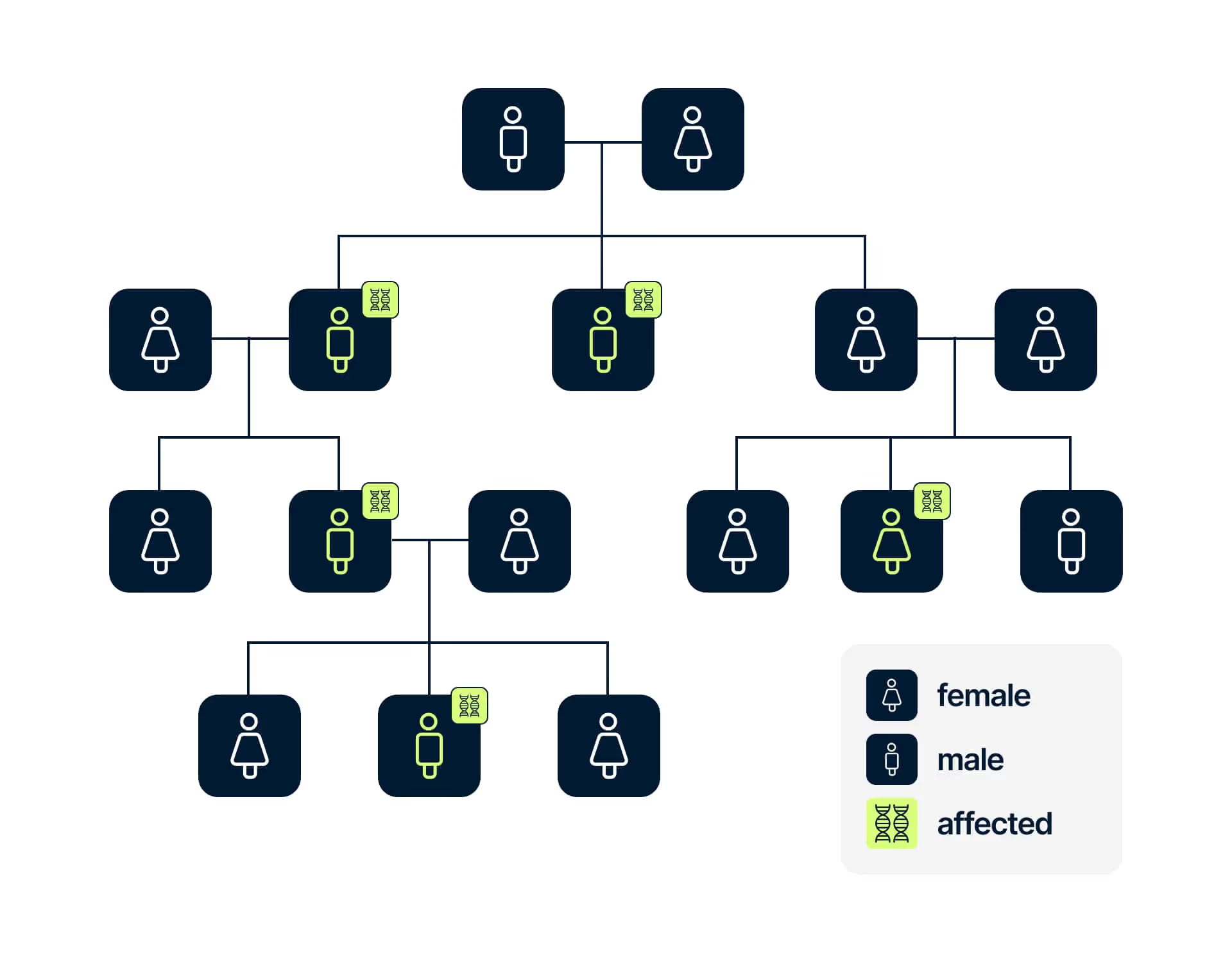
A key part of your test is a 45-minute personalised session with one of our genetic counsellors. Genetics can be complex, but you're not alone. We're here to guide you through it. By exploring your family history, we can uncover valuable insights that could make a real difference to your health.

Our genetic cancer panel focuses on 50 carefully chosen genes, all backed by strong scientific evidence. While some tests look at more genes, many include ones with little clinical value. We focus on what’s most useful, so you get results you can actually act on.

Fulgent Genetics, based in California, is a global leader in genetic testing and analysis. We’ve partnered with them because quality matters, especially when it comes to your health. Their state-of-the-art Illumina sequencing technology delivers over 99% accuracy at 50x coverage, ensuring your results are both reliable and clinically meaningful.
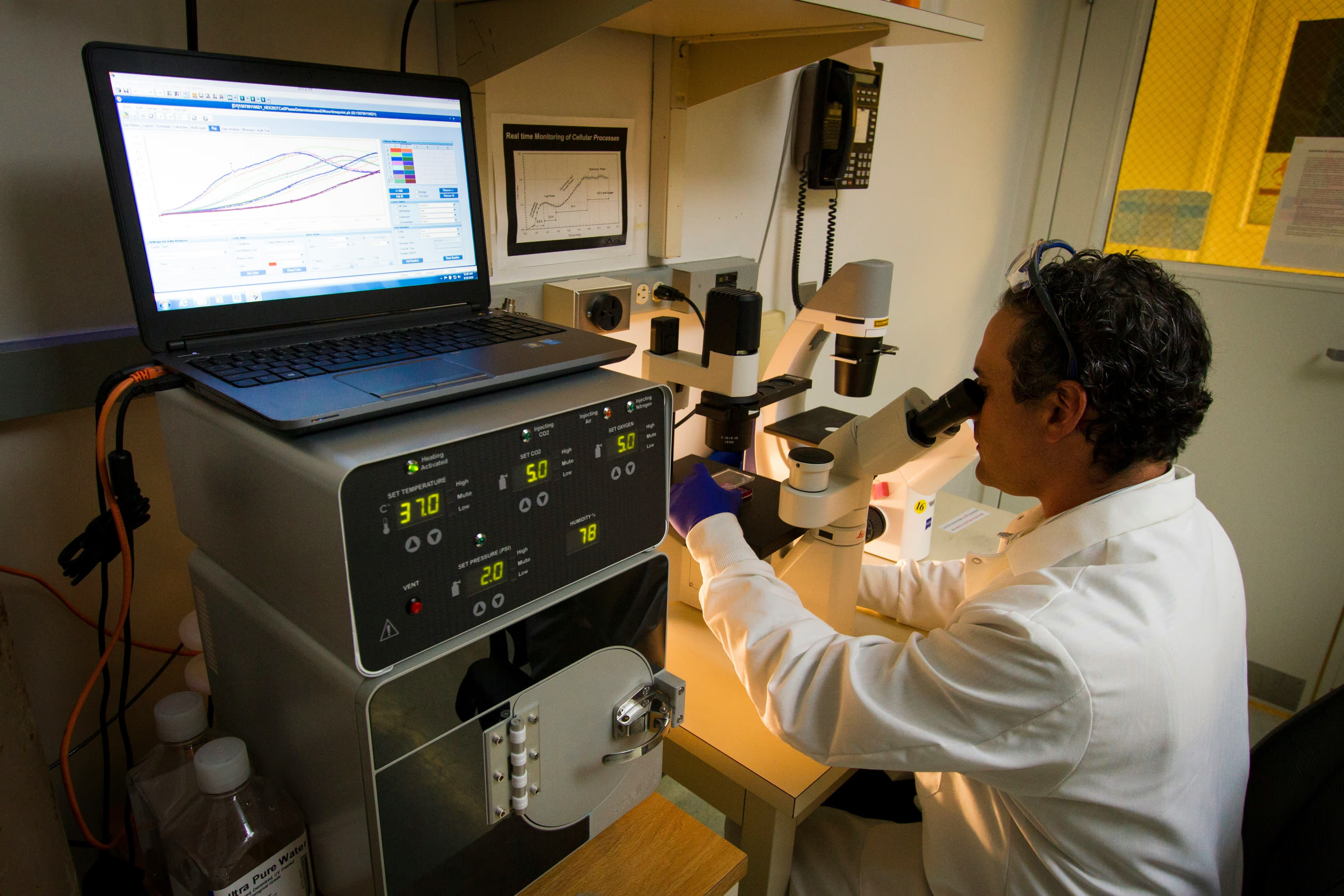
Medicine is always evolving and so are we. Our expert team stays up to date with the latest research and clinical guidelines, so you’re always getting advice that’s current, trusted, and tailored to you.
What happens if my DNA shows a higher-risk gene?
Our pre-test genetic counselling is designed to help you understand the scope, benefits, limitations and potential outcomes of genetic testing. They will discuss your personal and family history.
We will offer you a complimentary consultation with our genetics clinician specialising in cancer genetics to further discuss the implications of the higher risk test result.
Our clinical team will make personalised recommendations based on your test results, which may include further tests, scans or other risk management options.
Transparent. Personalised. No surprises.
At Jeen, our private genetic testing for cancer uses a simple cheek swab you can do at home. Your DNA is analysed in a certified lab to look for inherited changes that may increase your cancer risk.
Whether you're in London or anywhere in the UK, our private cancer screening helps you take control of your health with expert guidance.
If you’re looking for comprehensive genetic testing to check for inherited risks linked to breast, ovarian, prostate, bowel, pancreatic, or skin cancers, Jeen offers at-home DNA tests across the UK.
The test analyses 50 carefully chosen genes, each backed by strong scientific evidence linked to prostate cancer risk. Our testing gives you a clearer view of your genetic risk and helps you make confident, informed decisions about your health.
Some tests, such as mammograms or FIT tests, are used to screen for or diagnose cancer. At Jeen, we offer genetic testing that looks for inherited gene changes that could raise your risk of certain cancers, often before any symptoms appear.
It doesn’t detect cancer itself, but it gives you the chance to take early, proactive steps like tailored screening or prevention. With this insight, you can understand your health better and stay one step ahead.
Jeen Health offers a range of genetic cancer risk panels designed to identify inherited gene changes that may increase the risk of certain cancers. Available options include:
Targeted multi-gene panels, focusing on a defined set of clinically actionable genes linked to cancers such as breast, ovarian, bowel, or prostate cancer
Comprehensive multi-gene panels, analysing a broader range of cancer-related genes; some genes are included only in specific cases and require approval from our genetic counsellors due to limited clinical evidence
Known familial variant testing, for individuals with a close relative known to carry a cancer-related genetic variant
All options are discussed during a consultation with one of our genetic counsellors or clinical geneticists, who will help you choose the most appropriate test and understand its benefits and limitations.
Our partner lab uses accurate and advanced technology, examining the target regions of your DNA about 50 times to make sure the results are reliable. While no genetic test can tell you if you will or will not get cancer, accurate testing can help give you useful insights about your personal risk.
While no test can guarantee you’ll or won’t get cancer, ours gives you trusted insights to help you plan ahead. Learn more about the statistics here at Jeen.
At Jeen, your genetic testing journey takes up to four weeks from start to finish. You’ll have a consultation with a genetic counsellor, receive an at-home cheek swab kit, and send it back by post.
Your DNA is analysed in a certified lab, and results are shared with you promptly, so you can take the next steps with confidence.
If you have a family history of cancer, genetic testing can provide useful information about your own risk. With support from Jeen’s expert genetic counsellors, your genetic test results can help you make informed decisions around risk management and plan ahead with confidence.
If you have a close relative who carries a change in a gene that is confirmed to increase risk of developing cancer, you may choose to have a genetic test to find out if you carry the same gene change. In this case, it is helpful if you can provide a copy of you relative’s genetic test report to ensure the most accurate testing possible.
The statistics and clinical claims on this page are supported by the following authoritative sources.
Choose a time that suits you - no account needed.
Trouble loading? Open the booking page.
Our team of expert specialists is here to help - whether you're curious about testing, your results, or what's right for you. We're just a message away.