

On this page
Brown-Vialetto-Van Laere syndrome
BVVLS is characterised by progressive weakness, hearing loss, and issues with nerve function in the head and neck. It is a severe condition that typically presents in infancy or adolescence, and is caused by genetic changes affecting riboflavin transport.
Overview
Brown-Vialetto-Van Laere syndrome (BVVLS) is a very rare neurological condition that primarily affects the nervous system, particularly nerves originating in the brainstem, known as cranial nerves. It results in a range of symptoms including progressive muscle weakness and problems with hearing and breathing. The condition is progressive, meaning symptoms tend to worsen over time. Historically, BVVLS was classified into types based on age of onset, but it is now understood as a spectrum, often appearing in infancy, childhood, or adolescence.
BVVLS is caused by specific genetic changes that disrupt the body's ability to transport riboflavin (vitamin B2), a vital nutrient for energy production and nerve health. While currently no cure exists, early diagnosis and treatment with high-dose riboflavin supplementation can sometimes slow or halt the progression of symptoms and significantly improve the quality of life for affected individuals. The condition is inherited in an autosomal recessive pattern.
Symptoms & clinical features
Individuals with Brown-Vialetto-Van Laere syndrome often experience a variety of symptoms that typically progress over time. One of the most common early signs is progressive sensorineural hearing loss, which can affect one or both ears [PMID:24075110]. Muscle weakness, particularly in the limbs and torso, is also characteristic and can lead to difficulties with movement and coordination.
Neurological symptoms are prominent, including problems with the cranial nerves that control functions like facial movement, swallowing, and breathing. This can manifest as facial muscle weakness (facial palsy), difficulty speaking (dysarthria), and trouble swallowing (dysphagia). In some severe cases, respiratory difficulties may occur, requiring support. Other possible features include optic atrophy (wasting of the optic nerve affecting vision), balance problems, and sensory neuropathy (nerve damage affecting sensation) [PMID:24075110]. The severity and combination of symptoms can vary between individuals, even within the same family.
Video: Genetics 101
Affected organs
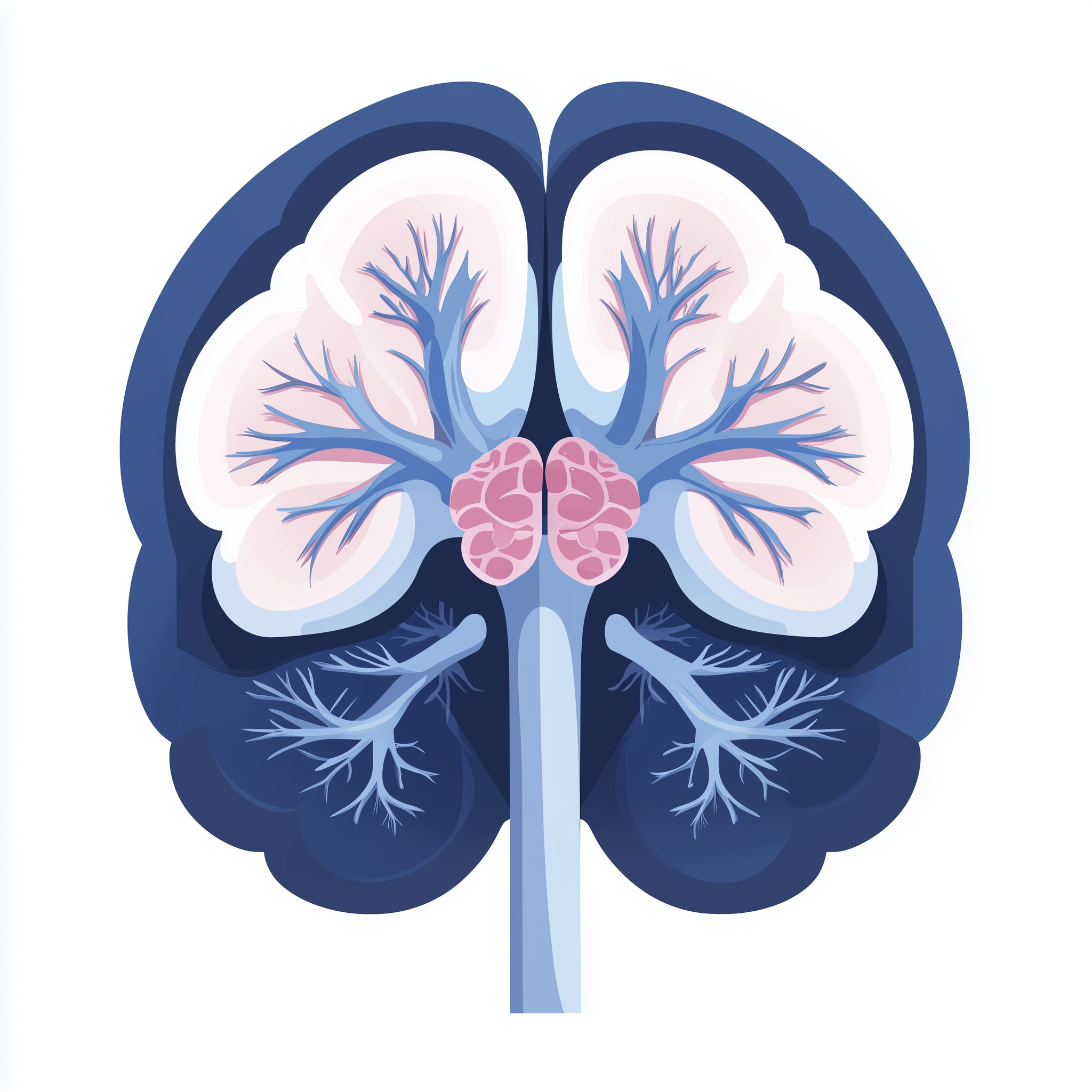
The primary organs affected in Brown-Vialetto-Van Laere syndrome are parts of the nervous system. The brainstem, which controls vital functions like breathing and heart rate, and the cranial nerves are particularly vulnerable. Damage to these nerves leads to many of the characteristic symptoms including hearing loss, facial weakness, and swallowing difficulties. The peripheral nerves, which extend throughout the body, can also be affected, leading to muscle weakness and sensory changes [PMID:24075110].
While the condition is mainly neurological, the underlying issue is a problem with cellular metabolism, specifically the transport of riboflavin. This vitamin is crucial for the function of all cells, so its deficiency primarily impacts highly energetic tissues like nerve cells, leading to their progressive dysfunction and damage.

Risks & severity
Brown-Vialetto-Van Laere syndrome is a severe, progressive condition. If left untreated, the disease can lead to significant disability and, in some cases, can be life-threatening, particularly due to respiratory complications. The age of onset is variable, with symptoms typically appearing in infancy, childhood, or adolescence. Early-onset cases tend to be more severe and progress more rapidly.
With early diagnosis and intervention involving high-dose riboflavin, the prognosis has significantly improved. Some individuals treated early can experience stabilisation or even improvement in their symptoms [PMID:24075110]. However, the response to treatment can vary, and some neurological damage may be irreversible if treatment is delayed. Regular monitoring and tailored management are essential to optimise outcomes.
Genetic causes
Brown-Vialetto-Van Laere syndrome is caused by genetic changes in either the SLC52A2 or SLC52A3 genes. Both of these genes provide instructions for making proteins that act as transporters for riboflavin (vitamin B2) [PMID:22080344]. Riboflavin is essential for various metabolic processes, including energy production and the proper functioning of the nervous system.
Pathogenic variants in SLC52A2 or SLC52A3 mean that the body cannot effectively absorb or transport riboflavin into cells, particularly within the brain and spinal cord. This leads to a severe deficiency of riboflavin in these critical tissues, even if dietary intake is adequate. Without sufficient riboflavin, nerve cells cannot function correctly and begin to degenerate, resulting in the progressive neurological symptoms observed in BVVLS [PMID:22080344].
- SLC52A2 solute carrier family 52 member 2
- SLC52A3 solute carrier family 52 member 3
Inheritance pattern
Brown-Vialetto-Van Laere syndrome is inherited in an autosomal recessive pattern. This means that an individual must inherit two copies of a pathogenic gene variant - one from each parent - to develop the condition. People who have only one copy of a pathogenic variant are called carriers; they typically do not show symptoms of the disorder themselves but can pass the variant on to their children.
If both parents are carriers of the same pathogenic variant, there is a 1 in 4 (25%) chance with each pregnancy that their child will inherit two copies of the variant and develop BVVLS. There is a 2 in 4 (50%) chance that their child will be a carrier like them, and a 1 in 4 (25%) chance that their child will not inherit any copies of the pathogenic variant and will not be a carrier or have the condition.
When both parents are carriers, each child has a 25% chance of being affected, 50% of being a carrier, and 25% of being unaffected.
Diagnosis & testing
Diagnosis of Brown-Vialetto-Van Laere syndrome often begins with a clinical evaluation based on the characteristic neurological symptoms, such as progressive hearing loss, muscle weakness, and cranial nerve palsies [PMID:24075110]. Imaging studies of the brain, such as an MRI, may show abnormalities in the brainstem or other areas of the brain.
The definitive diagnosis is confirmed through genetic testing, which identifies pathogenic variants in the SLC52A2 or SLC52A3 genes. Genetic testing can be accessed through the NHS Genomic Medicine Service (GMS) after a referral from a specialist clinician, such as a neurologist or clinical geneticist. The relevant NHS National Genomic Test Directory R-codes for this condition are typically associated with neurodegenerative disorders with a genetic basis.
Management & lifestyle
Management of Brown-Vialetto-Van Laere syndrome primarily focuses on high-dose riboflavin supplementation, which can be very effective in treating or stabilising the condition, especially if started early [PMID:24075110]. The exact dosage and duration of treatment will be determined by specialist clinicians. Regular monitoring of neurological function, hearing, and vision is crucial to assess the effectiveness of treatment and manage any ongoing symptoms.
Supportive care is also an important aspect of management. This may include physiotherapy to help maintain muscle strength and mobility, speech and language therapy for swallowing and communication difficulties, and audiology services for hearing loss. In cases of respiratory compromise, ventilatory support may be necessary. A multidisciplinary clinical team, coordinated through NHS specialist centres, typically provides care for individuals with BVVLS. Genetic counselling is also recommended for affected individuals and their families to understand the condition, its inheritance, and implications for family planning.
UK care pathway
In the UK, individuals suspected of having conditions like Brown-Vialetto-Van Laere syndrome would typically enter the NHS Genomic Medicine Service (GMS) pathway. Referral to a clinical geneticist or neurologist is usually the first step. These specialists can assess symptoms, determine the suitability for genetic testing, and arrange for genomic analysis. Genetic testing for BVVLS-related genes (SLC52A2, SLC52A3) would be performed using the relevant National Genomic Test Directory R-codes. Following diagnosis, individuals and their families can receive support from genetic counsellors, who provide information, guidance, and help with understanding the implications of a genetic diagnosis and family planning.
Frequently asked questions
What is riboflavin and why is it important in BVVLS?
Riboflavin, also known as vitamin B2, is a crucial vitamin for many bodily functions, especially energy production in cells and the health of the nervous system. In BVVLS, genetic changes affect proteins that transport riboflavin into cells, leading to a deficiency that damages nerve cells and causes the symptoms of the syndrome. High-dose riboflavin treatment helps to overcome this transport problem.
Can Brown-Vialetto-Van Laere syndrome be treated?
Yes, high-dose riboflavin supplementation is the primary treatment for BVVLS. When started early, this treatment can often stabilise symptoms or even lead to improvements. However, responses can vary, and some neurological damage might not be reversible if treatment is delayed. Ongoing supportive care is also important.
How is BVVLS inherited?
BVVLS follows an autosomal recessive inheritance pattern. This means an individual must inherit a pathogenic genetic variant from both parents to develop the condition. Parents who each carry one copy of the variant are typically healthy but have a 25% chance with each child of having an affected child.
What is the long-term outlook for someone with BVVLS?
The long-term outlook for individuals with BVVLS has significantly improved with the advent of high-dose riboflavin treatment. With early diagnosis and consistent treatment, many individuals can achieve stabilisation of their symptoms and an improved quality of life. Regular follow-up with a specialised medical team is essential.
Where can I find support for BVVLS in the UK?
In the UK, individuals and families affected by rare neurological conditions like BVVLS can access support through their NHS clinical teams, including neurologists and genetic counsellors. Organisations supporting rare diseases and neurological conditions may also provide valuable information and community connections.
References
- Sathasivam S. Brown-Vialetto-Van Laere syndrome. Orphanet journal of rare diseases. 2008. PMID: 18416855
- Imannezhad S, Ghayoor Karimiani E, Sezavar M. Brown-Vialetto-Van Laere syndrome. Iranian journal of child neurology. 2024. PMID: 38617395
- Tazir M, Nouioua S. Distal hereditary motor neuropathies. Revue neurologique. 2024. PMID: 38702287
- Allison T, Roncero I, Forsyth R. Brown-Vialetto-Van Laere Syndrome as a Mimic of Neuroimmune Disorders: 3 Cases From the Clinic and Review of the Literature. Journal of child neurology. 2017. PMID: 28116953
- Francis DA, Ponsford JR, Wiles CM. Brown-Vialetto-Van Laere syndrome. Neuropathology and applied neurobiology. 1993. PMID: 8474605
- Gayathri S, Gowda VK, Udhayabanu T. Brown-Vialetto-Van Laere and Fazio-Londe syndromes: SLC52A3 mutations with puzzling phenotypes and inheritance. European journal of neurology. 2021. PMID: 33325104
- Bosch AM, Stroek K, Abeling NG. The Brown-Vialetto-Van Laere and Fazio Londe syndrome revisited: natural history, genetics, treatment and future perspectives. Orphanet journal of rare diseases. 2012. PMID: 23107375
- Rabbani B, Bakhshandeh MK, Navaeifar MR. Brown-Vialetto-Van Laere syndrome and Fazio-Londe syndrome: A novel mutation and in silico analyses. Journal of clinical neuroscience : official journal of the Neurosurgical Society of Australasia. 2020. PMID: 31959559