

On this page
Congenital dyserythropoietic anaemia type II
CDAII is a genetic condition typically causing anaemia from birth or early childhood. It results from faulty development of red blood cells in the bone marrow, leading to their premature destruction and various associated health issues.
Available at Jeen Health
Clinical tests that include this
Overview
Congenital dyserythropoietic anaemia type II (CDAII) is a rare inherited condition affecting the production of red blood cells. In individuals with CDAII, the bone marrow, which is responsible for creating blood cells, produces red blood cells that are abnormal and easily damaged. These faulty red blood cells are then destroyed prematurely, most notably in the spleen and liver, resulting in anaemia [PMID:33671212].
Anaemia means the body does not have enough healthy red blood cells to carry oxygen effectively, leading to symptoms like fatigue and paleness. CDAII is one of several types of congenital dyserythropoietic anaemias (CDAs), each with distinct genetic causes and characteristics. CDAII is the most common form of CDA.
Symptoms & clinical features
The symptoms of CDAII can vary in severity between individuals. They often appear during infancy or childhood, though milder cases might only be recognised later in life. The primary symptom is anaemia, which can lead to fatigue, shortness of breath, and pale skin [PMID:33671212]. Jaundice, a yellowing of the skin and whites of the eyes, can also occur due to the breakdown of red blood cells.
Over time, iron can build up in the body because of repeated blood transfusions or the body's attempt to compensate for the anaemia. This iron overload can damage organs like the heart, liver, and pancreas. Another common feature of CDAII is an enlarged spleen (splenomegaly) and sometimes an enlarged liver (hepatomegaly), as these organs become active in removing the abnormal red blood cells from circulation [PMID:35261350]. Gallstones are also frequently observed.
Video: Genetics 101
Affected organs
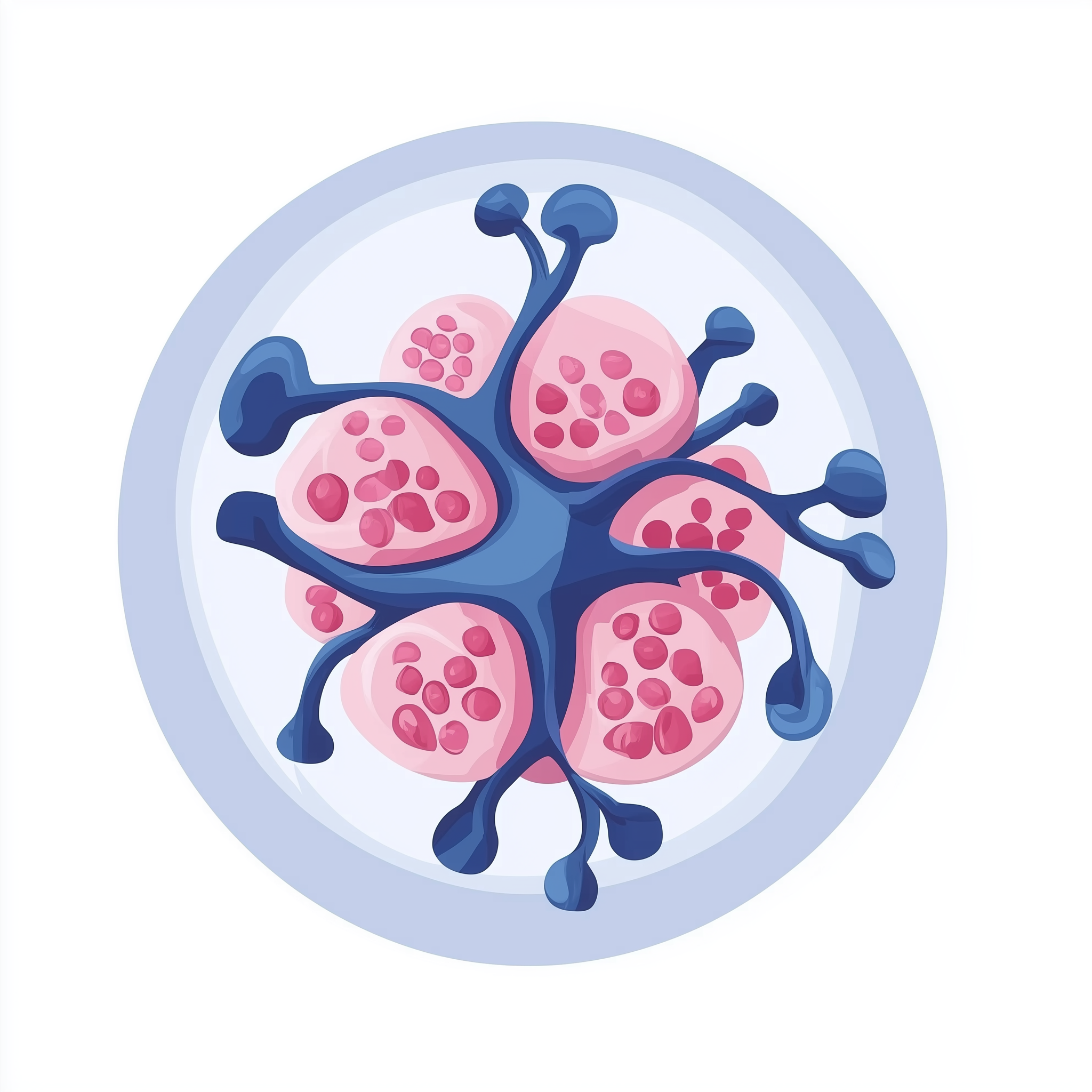
CDAII primarily affects the blood and blood-forming organs. The bone marrow is central, as it produces the abnormal red blood cells. The spleen and liver are also significantly impacted; they become enlarged due to their role in filtering and breaking down these faulty blood cells. This increased activity can lead to splenomegaly and hepatomegaly.
Over time, iron overload can affect many other organs, including the heart, leading to heart failure; the liver, causing fibrosis or cirrhosis; and the pancreas, potentially leading to diabetes. Gallstones, which are clumps of digestive fluid that harden in the gallbladder, are also a common complication.

Risks & severity
The severity of CDAII can range from mild anaemia that requires minimal intervention to severe anaemia necessitating regular blood transfusions. The condition is nearly always present from birth, although symptoms may not become apparent until later childhood or adulthood in milder cases. The main long-term risks are associated with chronic anaemia and iron overload.
Untreated iron overload can lead to significant organ damage, including cardiac complications, liver disease, and endocrine issues such as diabetes. Regular monitoring and management are crucial to reduce these risks. While CDAII is a chronic condition, with appropriate medical management, many individuals can lead full lives.
Genetic causes
CDAII is caused by pathogenic variants in the SEC23B gene. The SEC23B gene provides instructions for making a protein that plays a vital role in the endoplasmic reticulum (ER), a cell structure involved in processing and transporting proteins. Specifically, the SEC23B protein is part of a complex called COPII, which helps to move proteins from the ER to other parts of the cell.
In CDAII, changes in the SEC23B gene lead to a faulty SEC23B protein. This disrupts the normal process of protein transport within developing red blood cells, particularly affecting the formation of their cell membranes. The resulting red blood cells are structurally abnormal and fragile, leading to their premature destruction and the characteristic features of CDAII [PMID:35261350].
- SEC23B SEC23 homolog B, COPII componentThe SEC23B gene provides instructions for a protein crucial to cell transport, specifically forming COPII vesicles which are vital for moving proteins from the endoplasmic reticulum.
Inheritance pattern
CDAII has an autosomal recessive inheritance pattern. This means that an individual must inherit two altered copies of the SEC23B gene - one from each parent - to develop the condition. If a person inherits only one altered copy and one normal copy, they are considered a carrier. Carriers typically do not show symptoms of CDAII.
When both parents are carriers of a pathogenic SEC23B variant, for each pregnancy, there is a 25% chance of their child inheriting two altered copies and developing CDAII, a 50% chance of their child being a carrier, and a 25% chance of their child inheriting two normal copies of the gene. Genetic counselling can provide detailed information and support for families concerned about autosomal recessive inheritance.
When both parents are carriers, each child has a 25% chance of being affected, 50% of being a carrier, and 25% of being unaffected.
Diagnosis & testing
Diagnosing CDAII typically involves a combination of clinical evaluation and laboratory tests. Blood tests may show characteristic features of anaemia, and examination of bone marrow samples can reveal abnormal red blood cell development. Specific laboratory tests, such as analysis for unusual red blood cell forms with multiple nuclei, can help distinguish CDAII from other types of anaemia.
Genetic testing for pathogenic variants in the SEC23B gene is used to confirm the diagnosis and is available through the NHS Genomic Medicine Service (GMS). Referral for genetic testing, under an appropriate R-code, would typically be made by a haematologist or clinical geneticist. This allows for a definitive diagnosis and can help guide management and family planning. The relevant NHS National Genomic Test Directory R-code for anaemias is typically R259 Anaemia.
Management & lifestyle
Management of CDAII is focused on addressing the anaemia and preventing complications, especially iron overload. Regular blood transfusions may be necessary for individuals with severe anaemia to improve oxygen delivery to the body. Iron chelation therapy is a key part of management, involving medications that help remove excess iron from the body to prevent organ damage from iron accumulation. This treatment is often essential, especially for individuals who receive frequent blood transfusions.
Monitoring for complications like jaundice, gallstones, and spleen enlargement is also important. In some cases, surgical removal of the spleen (splenectomy) may be considered if it is severely enlarged and contributing to significant red blood cell destruction or discomfort, though this decision is carefully weighed due to potential risks. An individual's care plan for CDAII would be managed by a team of specialists, including haematologists, and would be tailored to their specific needs within the NHS framework.
UK care pathway
In the UK, individuals suspected of having a rare genetic condition like CDAII would typically be referred to a clinical genetics service or a specialist haematology centre. These centres can offer expert diagnostic testing and advice. Genetic testing for CDAII is available through the NHS Genomic Medicine Service (GMS), guided by the National Genomic Test Directory. A referral from a GP or another specialist, such as a haematologist, would usually initiate this process.
Genetic counsellors are an integral part of this pathway, providing information and support to individuals and families regarding genetic test results, inheritance patterns, and the implications of a diagnosis. They help families understand their options and navigate the complexities of genetic conditions.
Frequently asked questions
What does 'autosomal recessive' inheritance mean for my family?
Autosomal recessive inheritance means that you inherit one altered gene copy from each parent to have the condition. Your parents are typically carriers and do not have symptoms. For each child you have, there is a 25% chance they will have CDAII if both parents are carriers.
Will my child with CDAII always need blood transfusions?
Not necessarily. The need for blood transfusions varies widely among individuals with CDAII. Some may only need them occasionally, while others with more severe anaemia might require regular transfusions. This is carefully managed by a haematologist.
What is iron chelation therapy and why is it important?
Iron chelation therapy involves taking medication to remove excess iron from your body. It is important for CDAII patients, especially those who receive blood transfusions, because too much iron can build up and damage organs like the heart and liver over time. This therapy helps prevent such complications.
Are there any lifestyle changes that can help manage CDAII?
While there are no specific lifestyle changes that can cure CDAII, maintaining a healthy diet and engaging in appropriate physical activity, as advised by your medical team, can generally support overall well-being. It is important to work closely with your healthcare providers for personalised advice.
Can CDAII be prevented?
CDAII is a genetic condition caused by inherited gene variants, so it cannot be prevented. However, for families with a known history of CDAII, genetic counselling can provide information about the risks of passing on the condition and discuss reproductive options.
References
- Fukuda MN. Congenital dyserythropoietic anaemia type II (HEMPAS) and its molecular basis. Bailliere's clinical haematology. 1993. PMID: 8043936
- Pinto CJ, Narayanaswamy MH, Khatawkar AV. Congenital dyserythropoietic anaemia type II in a teenager presenting with severe anaemia. BMJ case reports. 2023. PMID: 36750299
- Fukuda MN. HEMPAS disease: genetic defect of glycosylation. Glycobiology. 1990. PMID: 2136385
- Christoforidou A, Fasoulakis Z, Kontomanolis EN. Diagnosis and Management of Congenital Dyserythropoietic Anaemia Type II in a Secundigravida. Cureus. 2017. PMID: 29308339
- Zdebska E, Anselstetter V, Pacuszka T. Glycolipids and glycopeptides of red cell membranes in congenital dyserythropoietic anaemia type II (CDA II). British journal of haematology. 1987. PMID: 3620357
- Zdebska E, Gołaszewska E, Fabijańska-Mitek J. Glycoconjugate abnormalities in patients with congenital dyserythropoietic anaemia type I, II and III. British journal of haematology. 2001. PMID: 11564084
- Danise P, Amendola G, Nobili B. Flow-cytometric analysis of erythrocytes and reticulocytes in congenital dyserythropoietic anaemia type II (CDA II): value in differential diagnosis with hereditary spherocytosis. Clinical and laboratory haematology. 2001. PMID: 11422224
- Doolan E, Ryan A. A Case of Angioid Streaks in Congenital Dyserythropoietic Anaemia Type II. Case reports in ophthalmology. 2022. PMID: 35221973