

On this page
Polymerase proofreading-associated polyposis
PPAP is caused by changes in POLE or POLD1 and is passed down in families in an autosomal dominant way. It is associated with multiple bowel polyps, colorectal cancer and, in some families, womb cancer, often at younger ages than usual.
Available at Jeen Health
Clinical tests that include this
Overview
Polymerase proofreading-associated polyposis (PPAP, OMIM 615083) is a rare inherited cancer predisposition condition. Cells copy their DNA before dividing, and specialised enzymes called polymerases both build the new strand and check it for mistakes. In PPAP, the checking step is weakened, so small copying errors accumulate over time.
The condition is mainly recognised through a tendency to develop bowel polyps (small growths in the lining of the bowel) and colorectal cancer. Some families also show an increased chance of cancer of the womb lining (endometrial cancer) and other tumours. Exact prevalence is not well established, but PPAP is considered rare.
PPAP was described only in the last decade or so, so knowledge is still developing. Estimates of risk come from relatively small numbers of families and are likely to be refined as more cases are reported.
Symptoms & clinical features
Many people with a PPAP-related variant have no symptoms for years. When symptoms occur, they generally reflect bowel polyps or bowel cancer, such as blood in the stools, a lasting change in bowel habit, abdominal pain, or tiredness from iron-deficiency anaemia. These signs are common and have many other causes.
The number of polyps varies widely. Some people have only a few, others have dozens, and some have many more. Polyps are often adenomas, a type that can become cancerous over time. Bowel cancer may develop with few or no polyps beforehand.
In women, abnormal vaginal bleeding, particularly after the menopause, can be a sign of endometrial cancer. Features outside the bowel and womb are less well defined, though brain, ovarian, breast and small-bowel tumours have been reported in some families.
Video: Is cancer in your genes?
Affected organs
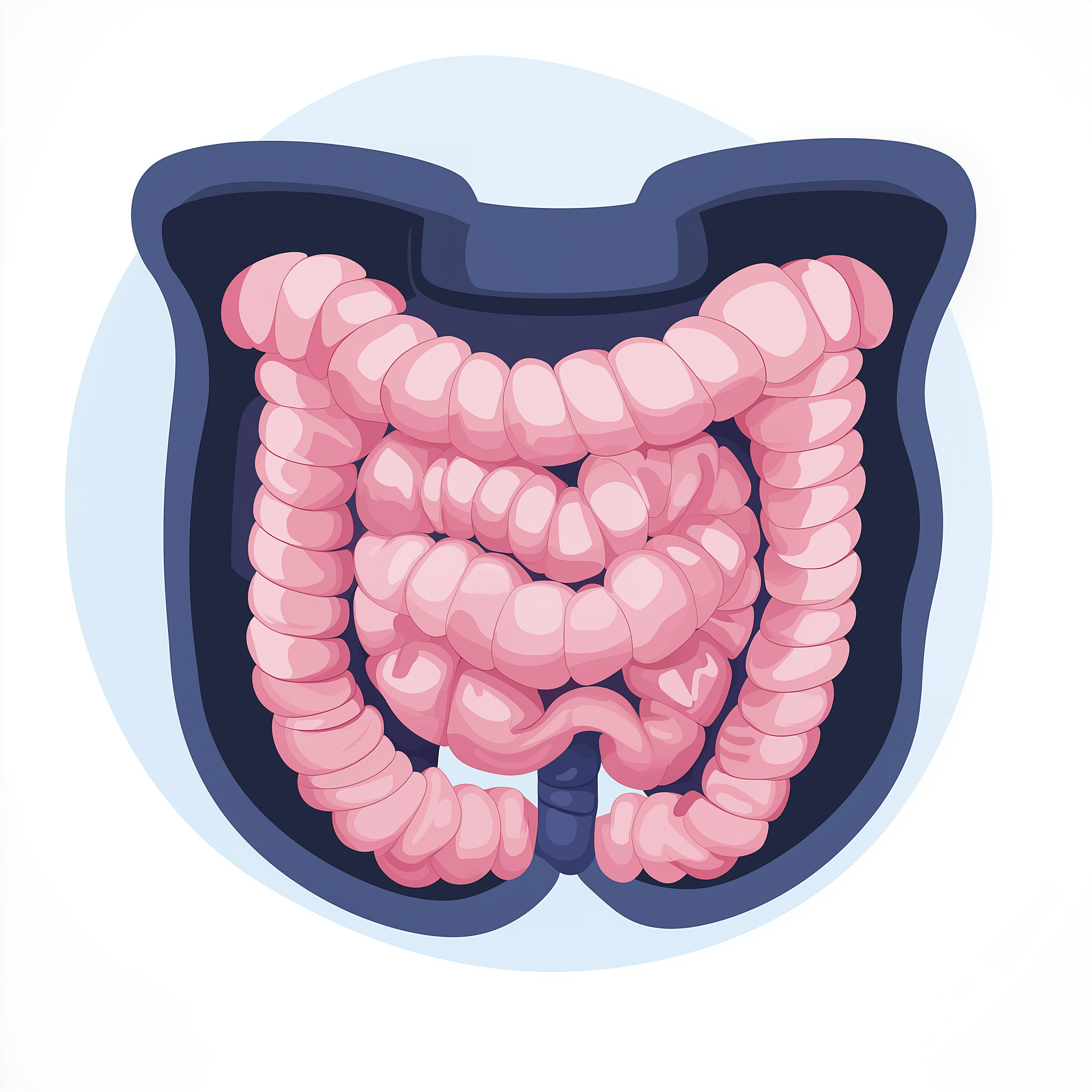
The large bowel (colon and rectum) is the main site affected. The duodenum, the first part of the small bowel, may also develop polyps in some people. The womb lining is the next most commonly reported site of cancer.
Other organs, including the brain, ovaries and breast, have been involved in a minority of reported families. Whether these cancers are truly linked to PPAP, and how strongly, remains uncertain.

Risks & severity
Severity ranges from few or no polyps to a markedly polyp-rich bowel. Colorectal cancer in PPAP is often diagnosed earlier than in the general population, commonly from the twenties through to middle age, though ages vary considerably between families. Not everyone who carries a pathogenic variant develops cancer, a feature known as incomplete penetrance.
Lifetime risk figures are uncertain because they derive from small studies, and they may differ between POLE and POLD1 and between specific variants. Risk estimates are best discussed with a clinical genetics team, who can interpret them in light of the variant and the family history.
Genetic causes
PPAP is caused by specific pathogenic variants in POLE or POLD1. POLE encodes the main catalytic part of DNA polymerase epsilon, while POLD1 encodes the equivalent part of DNA polymerase delta. Together these enzymes copy most of the genome during cell division with high accuracy.
Each enzyme contains an exonuclease (proofreading) region that detects and removes wrongly inserted DNA letters. The variants linked to PPAP typically fall in this region. They reduce proofreading while leaving the copying function intact, so mistakes pass into new cells at a higher rate.
The resulting build-up of errors produces tumours with a very high number of changes in their DNA, often described as hypermutated or ultramutated. This feature is sometimes noticed on tumour testing and can prompt a referral for genetic assessment. Not every variant in these genes causes PPAP, so classification of each variant matters.
- POLD1 DNA polymerase delta 1, catalytic subunitThe POLD1 gene provides instructions for making a subunit of DNA polymerase delta, a crucial enzyme involved in DNA replication and repair, particularly in correcting errors during DNA synthesis.
- POLE DNA polymerase epsilon, catalytic subunitThe POLE gene provides instructions for making a crucial subunit of DNA polymerase epsilon, an enzyme vital for accurate DNA replication and repair processes within cells.
Inheritance pattern
PPAP follows an autosomal dominant pattern. A person has two copies of each gene, and a change in one copy of POLE or POLD1 is enough to raise risk. Each child of an affected person has a 1 in 2 (50%) chance of inheriting the variant.
Brothers, sisters, parents and children of a carrier may therefore also carry it. Some people have a new variant that arose for the first time in them (a de novo variant), so a family history is not always present. Relatives can be offered testing once the variant is known in the family, usually through clinical genetics.
Each child of an affected parent has a 50% chance of inheriting the pathogenic variant, regardless of sex.
Diagnosis & testing
Diagnosis rests on finding a pathogenic or likely pathogenic variant in POLE or POLD1 through genetic testing. Testing is usually considered after a person has many bowel polyps, early-onset colorectal cancer, or a family history suggestive of inherited risk. Within the NHS National Genomic Test Directory, these genes are generally included in the germline test R211 (inherited polyposis and early-onset colorectal cancer).
Referral typically comes from a gastroenterologist, colorectal surgeon, oncologist or GP to a regional clinical genetics service. Variants of uncertain significance are relatively common in these genes and are interpreted by specialist laboratories, often with ClinGen-style evidence criteria.
Management & lifestyle
Care is individualised and led by specialist teams, so the points below are a general framework only. Surveillance usually centres on regular colonoscopy, with polyps removed during the procedure, and the starting age and interval are set by the specialist team. Awareness of gynaecological symptoms is also generally encouraged, and some clinicians discuss womb cancer risk in more detail.
Decisions about surgery or other risk-reducing measures depend on polyp burden and personal circumstances. Evidence is limited, so recommendations may change. A genetic counsellor can explain options and support family communication.
UK care pathway
In England, genetic testing for PPAP is commissioned through the NHS Genomic Medicine Service, with polyposis genes covered by R211 in the National Genomic Test Directory. Genomics England PanelApp lists the genes reviewed for each R-code.
A GP or hospital specialist can refer to the regional clinical genetics service, where genetic counsellors provide pre-test and post-test discussion. Relatives of a confirmed carrier can usually be offered a targeted test for the known variant. Equivalent services operate in Scotland, Wales and Northern Ireland.
Frequently asked questions
Does carrying a POLE or POLD1 variant mean I will get cancer?
No. Risk is raised but not certain, and penetrance is incomplete. Exact risks are still being studied, so a clinical genetics team can explain what is known for your variant.
Should my children be tested?
Each child has a 1 in 2 chance of inheriting the variant. Testing of children is generally considered when it would change their care, and a genetic counsellor can discuss timing with the family.
I have no family history of bowel cancer. Could I still have PPAP?
Yes. A variant can arise for the first time in one person, and cancers may be missed or occur later in other relatives. Many people are identified through their own polyps or early-onset cancer.
How is PPAP different from Lynch syndrome?
Lynch syndrome arises from changes in DNA mismatch repair genes, whereas PPAP involves the proofreading function of POLE or POLD1. Both raise colorectal and womb cancer risk, but PPAP often involves more polyps and the two are told apart by genetic testing.
References
- Mur P, García-Mulero S, Del Valle J. Role of POLE and POLD1 in familial cancer. Genetics in medicine : official journal of the American College of Medical Genetics. 2020. PMID: 32792570
- Joo JE, Viana-Errasti J, Buchanan DD. Genetics, genomics and clinical features of adenomatous polyposis. Familial cancer. 2025. PMID: 40237887
- Mur P, Viana-Errasti J, García-Mulero S. Recommendations for the classification of germline variants in the exonuclease domain of POLE and POLD1. Genome medicine. 2023. PMID: 37848928
- Kim JC, Bodmer WF. Genomic landscape of colorectal carcinogenesis. Journal of cancer research and clinical oncology. 2022. PMID: 35048197
- Sehested A, Meade J, Scheie D. Constitutional POLE variants causing a phenotype reminiscent of constitutional mismatch repair deficiency. Human mutation. 2022. PMID: 34816535
- Heitzer E, Tomlinson I. Replicative DNA polymerase mutations in cancer. Current opinion in genetics & development. 2014. PMID: 24583393
- Kim JC, Bodmer WF. Genotypic and Phenotypic Characteristics of Hereditary Colorectal Cancer. Annals of coloproctology. 2021. PMID: 34961301
- Ito H, Chino A, Ueki A. A Case of Polymerase Proofreading-Associated Polyposis: Challenges in Genetic Diagnosis. JGH open : an open access journal of gastroenterology and hepatology. 2025. PMID: 40741356