

On this page
Ovarian cancer (polygenic risk)
Also known as Ovarian cancer
Most epithelial ovarian cancers do not stem from a single faulty gene. Instead, dozens of common DNA variants, each with a tiny individual effect, add together to shift a woman's background risk. A polygenic risk score sums these variants to estimate where she sits on the population's continuous risk distribution. This is distinct from inherited BRCA-type syndromes, which involve rare high-impact faults.
Available at Jeen Health
Clinical tests that include this
Overview
Epithelial ovarian cancer is the most common form of ovarian cancer, arising from the cells lining or covering the ovaries and fallopian tubes. The most aggressive subtype, high-grade serous carcinoma, is now thought often to originate in the fallopian tube. It affects women across adulthood, with incidence rising sharply after the menopause and greatest in those in their late seventies. In the UK, around 7,500 women are diagnosed each year, and a woman's lifetime risk is roughly 1 in 56, or about 2 per cent. Because early disease causes vague, easily missed symptoms, many cases are found at a later stage, which is why ovarian cancer carries a heavier burden than its incidence alone suggests. A polygenic risk framing addresses the great majority of cases that are not explained by a single inherited high-risk gene, instead reflecting the combined influence of many common variants together with reproductive, hormonal and lifestyle factors.
Symptoms & clinical features
Polygenic risk does not change how ovarian cancer presents; a higher score reflects a greater chance of developing the disease, not a different illness. Symptoms are often non-specific and persistent rather than dramatic. Common features include abdominal or pelvic bloating, feeling full quickly or loss of appetite, abdominal or pelvic pain, and needing to pass urine more often or more urgently. Some women notice changes in bowel habit, unexplained weight loss, fatigue or, in later disease, abdominal swelling from fluid (ascites). Because these symptoms overlap with common benign conditions, they are frequently attributed to other causes, contributing to later diagnosis. Symptoms that are new, frequent (for example occurring more than around twelve times a month) or persistent warrant prompt assessment by a GP.
Video: Is cancer in your genes?
Affected organs
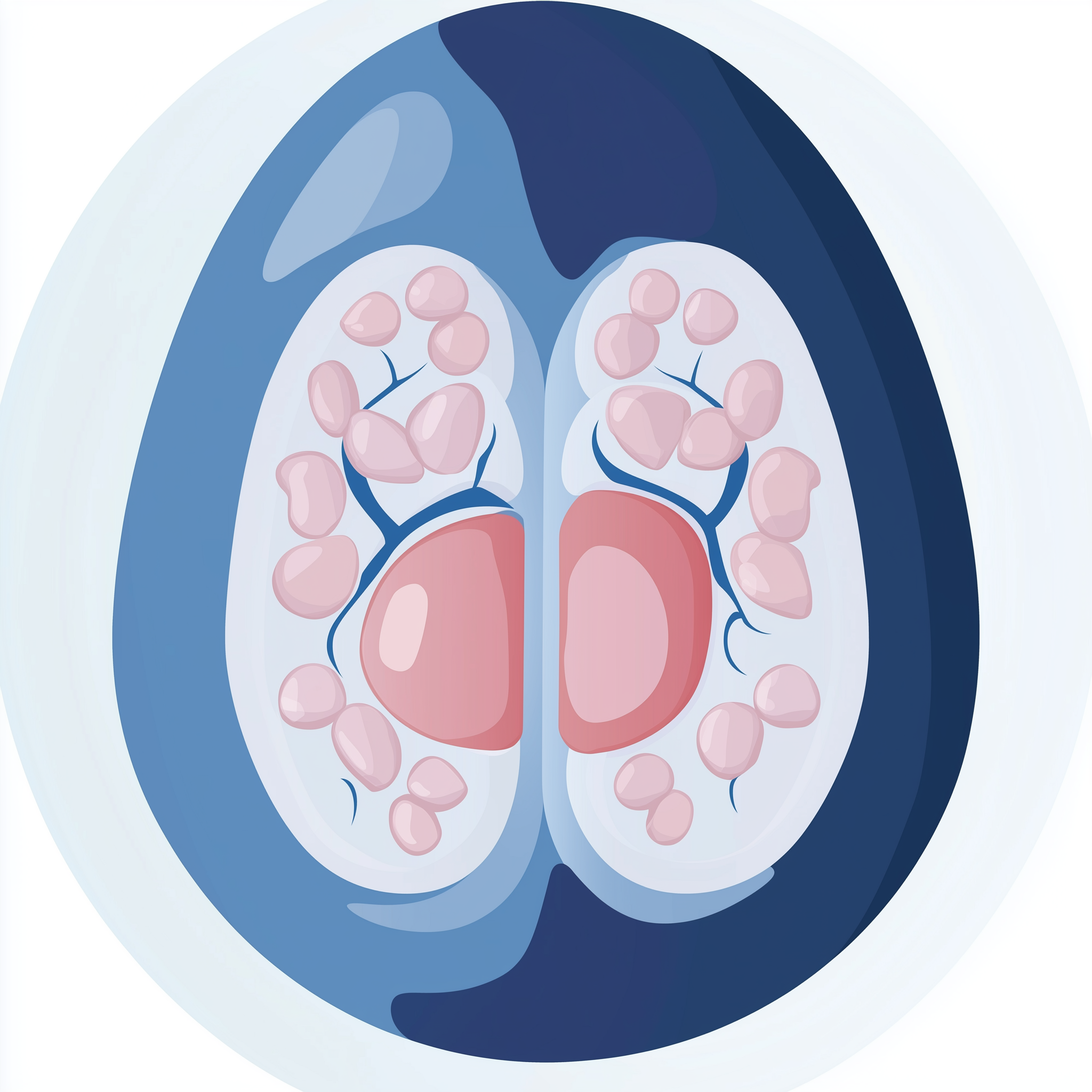
Epithelial ovarian cancer affects the female reproductive system, primarily the ovaries and the fallopian tubes, with the most common aggressive subtype now thought often to arise in the fallopian tube lining. As disease advances it can spread within the abdomen and pelvis, affecting the peritoneum (the abdominal lining), omentum and nearby organs, and can cause fluid to accumulate in the abdomen.

Risks & severity
A polygenic risk score is typically reported as a percentile, showing where a woman sits relative to others, and as a relative risk, indicating how her chance compares with the population average. In ovarian cancer research, scores have been associated with roughly a 1.4 to 1.5-fold change in risk per standard deviation, so those at the higher end carry a meaningfully greater, though far from certain, chance. Crucially, the predictive performance of polygenic scores varies by condition and is generally more modest for ovarian cancer than for some other cancers. Performance also varies by genetic ancestry, because most underlying studies were conducted in people of European descent, so scores may be less accurate for other groups. A score adjusts a probability; it does not determine an outcome.
Genetic causes
Polygenic ovarian cancer risk reflects common-variant architecture: many single-letter DNA differences, each shifting risk only slightly, that are widespread in the population. Genome-wide association studies (GWAS) have identified more than 30 susceptibility regions for the various ovarian cancer subtypes, with a substantial number linked to invasive epithelial disease; collectively these common variants are estimated to account for only around 6 per cent of the inherited (familial) component of risk. Real, replicated loci include BNC2 at 9p22, TIPARP at 3q25, HNF1B at 17q12 (a subtype-specific signal), a signal near HOXD1 at 2q31 and one in SKAP1 at 17q21, alongside a region at 8q24. Associations tend to be strongest for high-grade serous carcinoma. These common variants are distinct from the rare, high-impact faults seen in hereditary syndromes, and a polygenic score aggregates many such variants into one estimate.
Inheritance pattern
Polygenic risk is not inherited in the clear-cut Mendelian way that single-gene conditions are. Rather than one faulty copy passing down with a fixed probability, a woman inherits a particular mix of many common variants, half from each parent, that together place her somewhere on a continuous bell-shaped distribution of risk. Most people sit near the middle; smaller numbers fall at the lower and higher ends. Because the contributing variants are common and widely shared, relatives tend to have correlated but not identical scores, and a high score does not guarantee disease while a low score does not rule it out. This continuous, probabilistic pattern is why ovarian cancer often clusters modestly in families without following a single-gene inheritance pattern.
Diagnosis & testing
A polygenic risk score is a risk estimate, not a diagnosis. It is calculated from a DNA sample, often a saliva or blood test, by counting how many risk-raising variants a person carries and weighting each by its measured effect, then combining them into a single figure usually expressed as a percentile against a reference population. It says nothing about whether cancer is currently present. Diagnosis of ovarian cancer itself is a separate clinical process, typically prompted by symptoms: a GP may arrange a CA125 blood test and pelvic or transvaginal ultrasound, with onward referral to a specialist for further imaging and, ultimately, tissue confirmation. A polygenic score informs how closely someone might wish to attend to symptoms and discuss prevention, but it neither confirms nor excludes the disease.
Management & lifestyle
There is no proven population screening test for ovarian cancer, so management for women at elevated polygenic risk centres on awareness, prompt assessment and modifiable risk reduction. Knowing symptoms well and seeking timely GP review for persistent bloating, pelvic pain, early satiety or urinary changes supports earlier presentation. Established protective factors that can be discussed include use of the combined oral contraceptive pill (which substantially lowers risk over time), childbearing and breastfeeding, and not smoking; maintaining a healthy weight is also advisable. For women whose overall risk is high enough, particularly when combined with family history, specialist services may discuss risk-reducing options such as removal of the fallopian tubes and ovaries, though such surgery is generally reserved for those at substantially elevated risk rather than on the basis of a polygenic score alone. Any score-based decisions should be made with NHS clinicians, complementing rather than replacing standard care.
UK care pathway
The NHS does not run a national screening programme for ovarian cancer: the large UK Collaborative Trial of Ovarian Cancer Screening (UKCTOCS) found that screening the general population did not reduce deaths. Care therefore relies on recognising symptoms early. A GP assessing concerning symptoms can request a CA125 blood test and pelvic or transvaginal ultrasound, and refer urgently, usually via the suspected-cancer (two-week-wait) pathway, when ovarian cancer is suspected, in line with NICE guidance and the 28-day Faster Diagnosis Standard. A polygenic score sits outside this NHS pathway and is not used by the NHS to allocate screening.
Frequently asked questions
How is polygenic ovarian cancer risk different from a single-gene fault like BRCA?
A single-gene fault, such as a BRCA1 or BRCA2 mutation, is a rare, high-impact change that on its own substantially raises risk and follows a clear inheritance pattern. Polygenic risk is the opposite: it comes from the combined effect of many common variants, each with a tiny influence, that together place you somewhere on a continuous risk distribution. A high polygenic score is not a mutation and does not guarantee disease; it simply shifts your estimated probability up or down.
Is a polygenic risk score for ovarian cancer available on the NHS?
No. The NHS does not offer polygenic risk scoring for ovarian cancer, and there is no national ovarian cancer screening programme, because trials such as UKCTOCS showed screening the general population did not reduce deaths. NHS genetic testing focuses on rare high-risk genes (for example BRCA1/2) in people with a relevant personal or family history. Polygenic scores are currently available privately and should be interpreted alongside, not instead of, NHS care.
Does a high polygenic score mean I will get ovarian cancer?
No. A polygenic score is a risk estimate, not a diagnosis or a prediction of certainty. A higher score means a greater chance than average, but most women with higher scores will never develop ovarian cancer, and some with lower scores still will. Many other factors, including reproductive history, hormonal influences and chance, also matter. The score is most useful as a prompt to be alert to symptoms and discuss prevention with a clinician.
Should I act on my ovarian cancer polygenic score, and how?
Acting on an elevated score does not mean rushing into surgery. Sensible steps include learning the symptoms well and seeking prompt GP review for persistent bloating, pelvic pain, early fullness or urinary changes, and discussing protective factors such as the combined contraceptive pill. Share your result with a GP, who can decide whether referral to NHS genetics is appropriate, particularly if you also have a family history. Risk-reducing surgery is generally reserved for those at substantially elevated risk.
References
- Sambasivan S. Epithelial ovarian cancer: Review article. Cancer treatment and research communications. 2022. PMID: 36127285
- Sessa C, Balmaña J, Bober SL. Risk reduction and screening of cancer in hereditary breast-ovarian cancer syndromes: ESMO Clinical Practice Guideline. Annals of oncology : official journal of the European Society for Medical Oncology. 2023. PMID: 36307055
- González-Martín A, Harter P, Leary A. Newly diagnosed and relapsed epithelial ovarian cancer: ESMO Clinical Practice Guideline for diagnosis, treatment and follow-up. Annals of oncology : official journal of the European Society for Medical Oncology. 2023. PMID: 37597580
- Hollis RL. Molecular characteristics and clinical behaviour of epithelial ovarian cancers. Cancer letters. 2023. PMID: 36627048
- García García Y, Marín Alcalá M, Martínez Vila C. Anti-angiogenic therapy for ovarian cancer. EJC supplements : EJC : official journal of EORTC, European Organization for Research and Treatment of Cancer ... [et al.]. 2020. PMID: 33240446
- Baek AE. Interferon with ovarian cancer. Science signaling. 2023. PMID: 37643242
- Elorbany S, Malacrida B, Balkwill F. Interferon epsilon and ovarian cancer. Trends in cancer. 2023. PMID: 37778961
- DiFeo A. Immune memory shapes ovarian cancer recurrence. Cancer cell. 2025. PMID: 40749673