

On this page
SYNGAP1-related ID
This condition typically causes developmental delay, intellectual disability, and epilepsy, impacting individuals from early childhood. It is caused by changes in the SYNGAP1 gene and is usually diagnosed through genetic testing.
Overview
SYNGAP1-related intellectual disability (ID) is a neurodevelopmental disorder characterised by varying degrees of intellectual disability, developmental delay, and often epilepsy [PMID:33675071]. The condition typically manifests in early childhood, with delays in reaching developmental milestones such as walking and talking. While the severity can vary between individuals, many experience moderate to severe intellectual disability.
This condition is part of a group of disorders known as neurodevelopmental disorders, which affect the growth and development of the brain. Recognising the signs early can help in providing appropriate support and interventions to improve developmental outcomes. The exact prevalence of SYNGAP1-related ID is estimated to be between 1 in 10,000 and 1 in 20,000 people.
Symptoms & clinical features
Individuals with SYNGAP1-related ID typically present with significant developmental delay during infancy or early childhood. This often includes delays in acquiring motor skills, such as sitting and walking, and speech development [PMID:33675071]. Speech is often severely affected, with many individuals having limited or no verbal communication.
Intellectual disability is a core feature, ranging from moderate to severe. Epilepsy is also a very common symptom, affecting a large proportion of individuals with this condition. Seizures can begin in early childhood and may take various forms, including absence seizures, myoclonic seizures, and generalised tonic-clonic seizures. Other features that may be observed include autism spectrum disorder characteristics, behavioural difficulties such as hyperactivity, and problems with sleep [PMID:33675071]. Some individuals may also have problems with their balance and coordination.
Video: Genetics 101
Affected organs
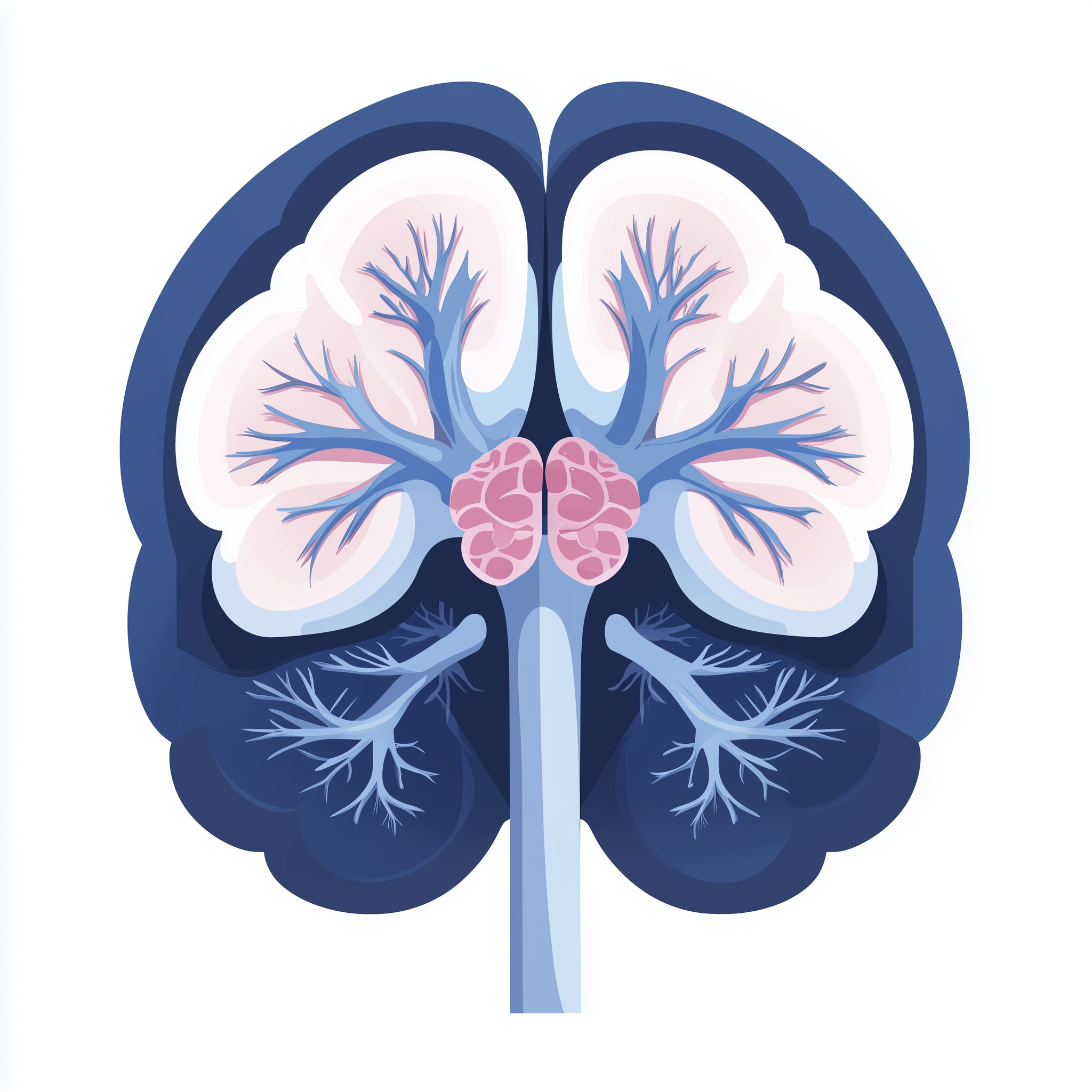
The primary organ affected in SYNGAP1-related ID is the brain. The SYNGAP1 gene plays a crucial role in the proper development and function of brain cells, particularly at the synapses, which are the junctions where nerve cells communicate. Disruptions to this process lead to the neurological symptoms observed.
As a result, the condition mainly impacts cognitive function, motor skills, speech development, and seizure control, all of which are governed by the brain. There are typically no significant effects on other major organ systems in the body.

Risks & severity
The severity of SYNGAP1-related ID can vary, but most individuals experience moderate to severe intellectual disability and significant developmental delays. Epilepsy is a common complication, occurring in about 80-90% of individuals, and can sometimes be challenging to manage with medication [PMID:33675071]. Seizures often begin in the preschool years.
Developmental progress can be slow, and individuals typically require lifelong support. While the condition primarily affects brain function, it does not generally shorten lifespan. The focus of care is on managing symptoms, supporting development, and improving quality of life.
Genetic causes
SYNGAP1-related ID is caused by pathogenic changes in the SYNGAP1 gene. This gene provides instructions for making a protein called synaptic Ras GTPase activating protein 1, also known as SynGAP [PMID:33675071]. This protein is essential for the normal function of synapses, which are the connections between nerve cells in the brain. SynGAP helps regulate the strength of these connections, playing a vital role in learning and memory.
When a pathogenic variant occurs in SYNGAP1, the resulting protein may be non-functional or produced in insufficient quantities. This disruption to synaptic function impairs communication between brain cells, leading to the developmental delays, intellectual disability, and epilepsy seen in individuals with the condition. Most of the pathogenic variants are de novo, meaning they are new changes in the gene that are not inherited from either parent.
- SYNGAP1 synaptic Ras GTPase activating protein 1
Inheritance pattern
SYNGAP1-related ID follows an autosomal dominant inheritance pattern. This means that a person only needs one copy of the altered SYNGAP1 gene in each cell to develop the condition. In most cases, the genetic change occurs spontaneously (de novo) in the affected individual and is not inherited from either parent [PMID:31548408].
If a parent has a SYNGAP1 pathogenic variant, there is a 50% chance for each child to inherit the altered gene. However, because most cases are de novo, the risk of having another child with the condition for parents who do not have the variant themselves is typically very low, though germline mosaicism can occur, meaning the variant is present in some egg or sperm cells of a parent without affecting their other cells.
Each child has a 50% chance of inheriting the pathogenic variant, regardless of sex.
Diagnosis & testing
Diagnosis of SYNGAP1-related ID is typically confirmed through genetic testing, often initiated after clinical observation of developmental delay, intellectual disability, and/or epilepsy in a child. Genetic tests can identify pathogenic variants in the SYNGAP1 gene. Whole exome sequencing (WES) or a gene panel specifically looking at neurodevelopmental genes are common methods used to identify such changes.
In the UK, referrals for genetic testing are usually made by paediatricians, neurologists, or clinical geneticists within the NHS. Genetic testing for intellectual disability, developmental delay, and epilepsy falls under specific NHS Genomic Medicine Service (GMS) pathways, often covered by relevant R-codes (e.g., R14 - Severe developmental delay/intellectual disability, R18 - Early-onset epilepsy). A genetic counsellor can help families understand the testing process and implications of the results.
Management & lifestyle
Management of SYNGAP1-related ID focuses on providing supportive care to address the individual's specific symptoms and developmental needs. This typically involves a multidisciplinary team approach. Early intervention therapies, such as speech and language therapy, occupational therapy, and physiotherapy, are crucial for supporting development.
Epilepsy management usually involves anticonvulsant medications to control seizures, often prescribed and monitored by a paediatric neurologist. Educational support tailored to the individual's learning needs is also vital. Behavioural interventions may be helpful for managing associated challenges. Regular follow-up with healthcare professionals, including paediatricians and clinical geneticists, is recommended to monitor progress and adjust care plans as needed within the NHS framework.
UK care pathway
In the UK, individuals suspected of having SYNGAP1-related ID would typically enter the NHS Genomic Medicine Service (GMS) pathway. This usually begins with a referral from a general practitioner or a specialist (such as a paediatrician or neurologist) to a clinical genetics service. Clinical geneticists can then guide the diagnostic process, which often includes genomic testing, such as whole exome sequencing, under specific NHS R-codes like R14 (Severe developmental delay/intellectual disability) or R18 (Early-onset epilepsy). Following a diagnosis, ongoing care is coordinated by a multidisciplinary team, with access to genetic counsellors for family support and information.
Frequently asked questions
What does 'de novo' mean for SYNGAP1-related ID?
'De novo' means that the genetic change in the SYNGAP1 gene occurred spontaneously in the affected individual and was not inherited from either parent. This is the case for most individuals with SYNGAP1-related ID.
Will my future children be affected if I already have a child with SYNGAP1-related ID?
If the SYNGAP1 change in your child is de novo (not present in either parent), the chance of having another child with the condition is very low, typically less than 1%. A genetic counsellor can provide a more precise risk assessment.
What kind of support is available for individuals with SYNGAP1-related ID?
Support typically involves a multidisciplinary team providing therapies such as speech and language therapy, occupational therapy, and physiotherapy. Educational support and medical management for symptoms like epilepsy are also key components of care within the NHS.
Is there a cure for SYNGAP1-related ID?
Currently, there is no cure for SYNGAP1-related ID. However, management focuses on treating symptoms, supporting development, and improving the individual's quality of life through various therapies and interventions.
How is SYNGAP1-related ID diagnosed in the UK?
Diagnosis in the UK is primarily through genetic testing, often ordered by a paediatrician or clinical geneticist after observing developmental concerns. This testing is typically carried out under the NHS Genomic Medicine Service.
References
- Bednarczuk N, Housby H, Lee IO. Behavioural and neurodevelopmental characteristics of SYNGAP1. Journal of neurodevelopmental disorders. 2024. PMID: 39148034
- Wright D, Kenny A, Eley S. Clinical and behavioural features of SYNGAP1-related intellectual disability: a parent and caregiver description. Journal of neurodevelopmental disorders. 2022. PMID: 35655128
- Wright D, Kenny A, Eley S. Visual social attention in SYNGAP1-related intellectual disability. Autism research : official journal of the International Society for Autism Research. 2024. PMID: 38698724
- Wright D, Kenny A, Mizen LAM. The Behavioral Profile of SYNGAP1-Related Intellectual Disability. American journal on intellectual and developmental disabilities. 2024. PMID: 38657965
- Wright D, Kenny A, Mizen LAM. Profiling Autism and Attention Deficit Hyperactivity Disorder Traits in Children with SYNGAP1-Related Intellectual Disability. Journal of autism and developmental disorders. 2025. PMID: 38055183
- Nakajima R, Takao K, Hattori S. Comprehensive behavioral analysis of heterozygous Syngap1 knockout mice. Neuropsychopharmacology reports. 2019. PMID: 31323176