

How does genetic testing help manage my risk of pancreatic cancer if it runs in my family?
If pancreatic cancer runs in your family, genetic testing can identify inherited gene changes that increase your risk. This information helps guide screening and prevention decisions.
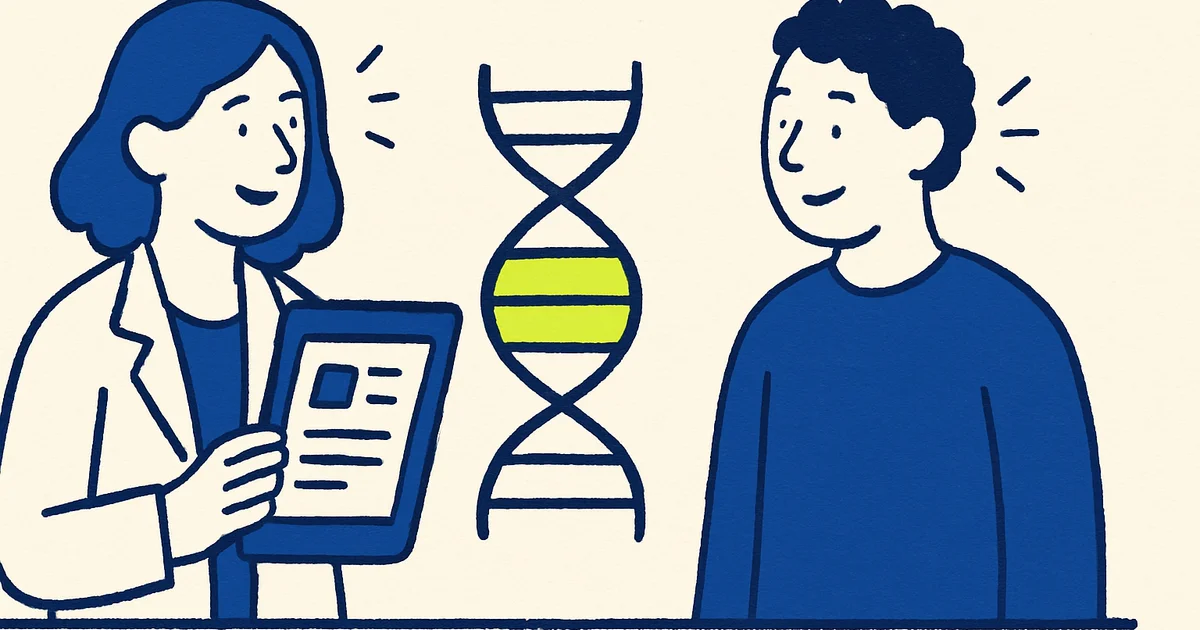
Pancreatic cancer is rare in the general population, but having a close relative with the condition can increase your own risk. Most cases occur without a clear genetic cause, but some families carry inherited gene changes (variants) that make pancreatic cancer more likely. Genetic testing can identify these variants and help you and your doctor decide on screening and prevention strategies.
Why family history matters for pancreatic cancer
Pancreatic cancer tends to cause symptoms late, which is why most people are diagnosed at an advanced stage. If you have a parent, sibling, or child who developed pancreatic cancer—especially before age 60—your risk is higher than average. The risk increases further if multiple relatives on the same side of the family have been affected, or if close relatives have had other cancers such as breast, ovarian, or bowel cancer.
Not everyone with a family history carries a gene variant that can be tested for. Most pancreatic cancer still arises from a combination of common genetic factors and environmental influences, such as smoking. However, when an inherited variant is present, it can be passed from parent to child. Identifying it means other family members can be tested, and those who carry it can be offered closer monitoring.
What genetic testing can tell you
Genetic testing looks for changes in genes known to increase pancreatic cancer risk. The most well-known are BRCA1 and BRCA2—the same genes linked to hereditary breast and ovarian cancer—but several other genes can also play a role, including PALB2, ATM, and STK11 (associated with Peutz-Jeghers syndrome).
A genetic test typically involves a blood sample or a cheek swab. The laboratory analyses your DNA to look for variants in these genes. Results fall into three categories:
- Pathogenic (disease-causing) variant found. This confirms you carry an inherited change that increases pancreatic cancer risk. You can be offered enhanced screening, and relatives can be tested.
- Variant of uncertain significance (VUS). A change is found, but it’s unclear whether it raises risk. These findings do not change your management, and most turn out to be harmless over time as more data accumulates.
- No variant found. This does not mean you have no risk—it may simply mean your family’s risk arises from causes not yet understood, or from common genetic factors not covered by the test.
Genetic testing guidelines, such as those from the National Comprehensive Cancer Network (NCCN), recommend testing for individuals with a strong family history of pancreatic cancer or related cancers, particularly if multiple relatives are affected or if cancers occurred at younger ages.
Who should consider genetic testing
You may benefit from genetic testing if:
- A parent, sibling, or child has had pancreatic cancer, especially if they were diagnosed before age 60.
- Two or more relatives on the same side of your family have had pancreatic cancer, or a combination of pancreatic, breast, ovarian, or bowel cancer.
- You are of Ashkenazi Jewish ancestry and have a family history of pancreatic or related cancers—certain BRCA variants are more common in this population.
- You or a close relative have already tested positive for a BRCA1, BRCA2, or other relevant gene variant.
- You have a personal history of breast, ovarian, or bowel cancer alongside a family history of pancreatic cancer.
Your GP or a genetic counsellor can help assess whether testing is appropriate for you. The NHS offers genetic testing and counselling through regional genetics services for families meeting clinical criteria.
What happens if a variant is found
If genetic testing identifies a pathogenic variant, you will be offered specialist advice on managing your risk. This may include:
- Enhanced screening. This typically involves periodic imaging (such as MRI or endoscopic ultrasound) to detect early changes in the pancreas. Screening programmes vary, and your doctor will tailor the plan based on your gene variant and family history.
- Lifestyle advice. Stopping smoking is the single most important modifiable risk factor for pancreatic cancer. Maintaining a healthy weight and limiting alcohol also contribute to lower risk.
- Family testing. Your close relatives (parents, siblings, children) can be offered predictive genetic testing. Those who do not carry the variant can be reassured that their risk is not elevated by this particular genetic cause.
- Consideration of other cancers. Some gene variants, particularly BRCA1 and BRCA2, also raise the risk of breast, ovarian, and prostate cancer. You may be offered additional screening or risk-reducing options for these cancers.
It is important to understand that having a genetic variant does not mean you will definitely develop cancer—it means your risk is higher than average. Many people with these variants never develop pancreatic cancer. Equally, screening can sometimes detect changes early, when treatment is more likely to be successful.
What you can do at Jeen
Jeen offers three testing options aligned with NHS Genomic Medicine Service standards, depending on the breadth of risk assessment you need.
Our Pancreatic Cancer Risk Screening is a focused 10-gene panel covering the most actionable genes for hereditary pancreatic cancer predisposition. Genetic counselling is included with every test, an at-home buccal swab is included (or an in-clinic blood draw is available for an additional £40), and results are available within 17-21 working days of the sample reaching the laboratory.
If your family history includes breast, ovarian, or prostate cancer alongside pancreatic cancer, our BRCA Testing panel covers 10 genes in the BRCA pathway, including BRCA1, BRCA2, and the most actionable related genes. A 45-minute specialist genetic counselling session is included, an at-home buccal swab is provided (or in-clinic blood draw for +£40), and results are returned within 17-21 working days.
For the most comprehensive assessment, our Cancer Risk Screening analyses 50 genes associated with hereditary cancer risk across multiple cancer types. This test includes 45-minute specialist genetic counselling, an at-home buccal swab (or in-clinic blood draw for +£40), and results within 17-21 working days.
All three tests use NHS-aligned variant interpretation, ensuring consistency with NHS clinical genetics services. The NHS typically offers genetic testing to families meeting specific clinical criteria, focusing on genes with the strongest evidence. Jeen’s panels provide broader access and may identify risks in genes not covered by standard NHS pathways, though enhanced surveillance for certain findings may still need to be arranged through the NHS.
If you are unsure which test is right for you, or whether genetic testing is appropriate given your family history, speak to your GP or contact Jeen to discuss your options with a genetic counsellor.
Sources & further reading
- NCCN Guidelines Insights: Genetic/Familial High-Risk Assessment: Breast, Ovarian, Pancreatic, and Prostate, Version 2.2026 DOI:
10.6004/jnccn.2026.0007. Accessed 22 September 2026. - Clinical practice guidelines for BRCA1 and BRCA2 genetic testing DOI:
10.1016/j.ejca.2020.12.023. Accessed 22 September 2026. - NHS: Pancreatic Cancer Accessed 22 September 2026.