

On this page
Crigler-Najjar syndrome type II
This condition results from changes in the UGT1A1 gene, leading to increased levels of unconjugated bilirubin and causing jaundice. CNS2 is typically less severe than Crigler-Najjar syndrome type I, but still requires monitoring and management.
Available at Jeen Health
Clinical tests that include this
Overview
Crigler-Najjar syndrome type II (CNS2) is a rare genetic disorder affecting how the liver processes bilirubin. Bilirubin is a yellow substance formed when red blood cells break down naturally. Normally, the liver changes bilirubin into a form that can be removed from the body. In CNS2, this process is partially impaired, leading to a build-up of unconjugated bilirubin in the bloodstream [PMID:17953259]. This accumulation is known as hyperbilirubinaemia and causes the skin and eyes to appear yellow, a symptom called jaundice.
CNS2 is considered less severe than Crigler-Najjar syndrome type I, exhibiting some residual enzyme activity. The condition is hereditary and present from birth, though its effects may become noticeable at different ages. Effective management helps to control bilirubin levels and prevent complications.
Symptoms & clinical features
The primary symptom of Crigler-Najjar syndrome type II is persistent jaundice, often appearing shortly after birth. This is caused by the elevated levels of unconjugated bilirubin in the blood. While jaundice is common in newborns, in CNS2 it persists and can be more pronounced.
Unlike CNS type I, individuals with CNS2 typically have a lower risk of severe neurological damage known as kernicterus, which can occur from very high bilirubin levels affecting the brain. However, if bilirubin levels become extremely high, particularly during illnesses or stress, there remains a potential risk of neurological symptoms, though this is less common and generally less severe than in CNS Type I [PMID:17953259]. Some individuals may experience fatigue or other non-specific symptoms related to their liver function.
Video: Genetics 101
Affected organs
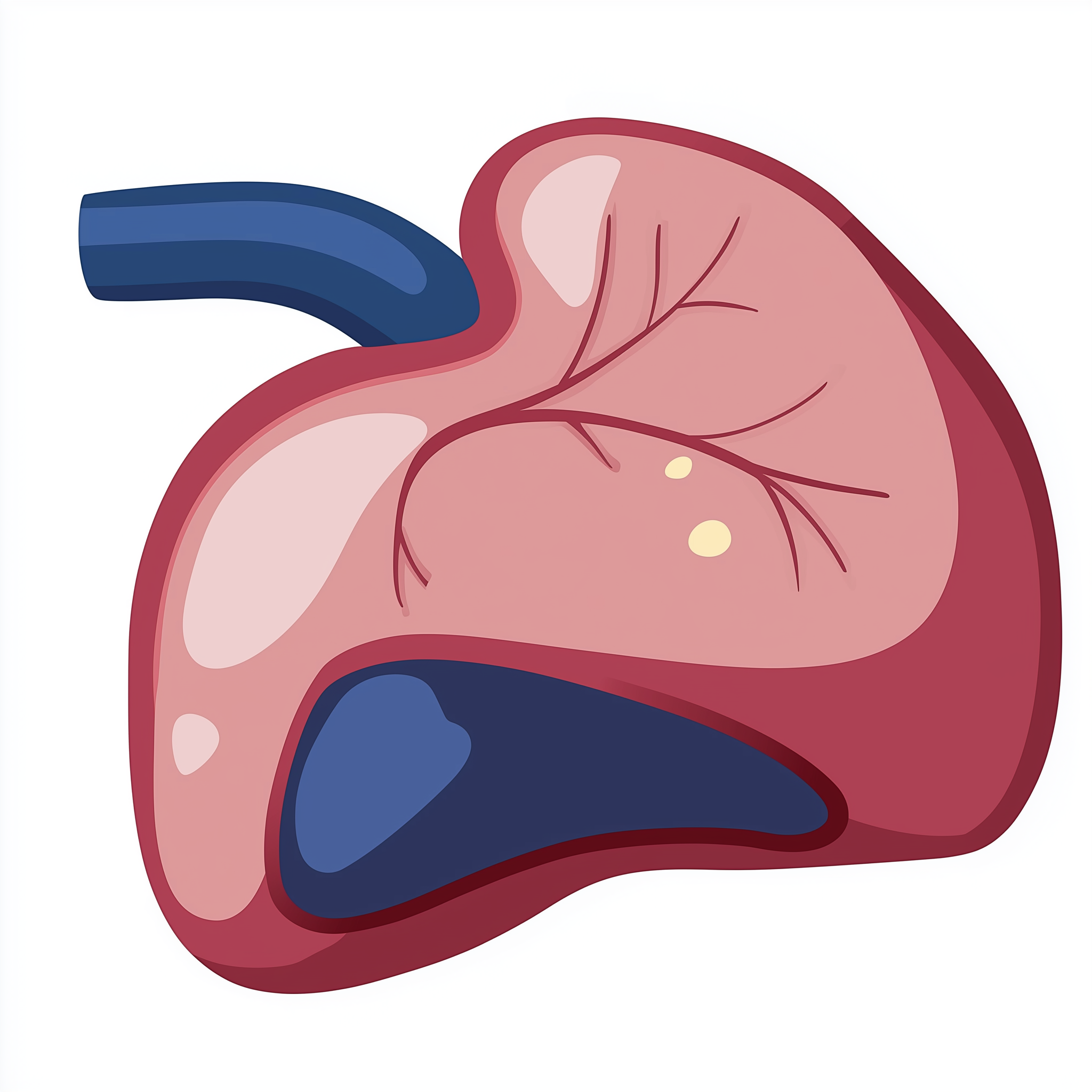
The main organ affected in Crigler-Najjar syndrome type II is the liver. Although the liver itself is typically structurally normal, its ability to chemically modify bilirubin is reduced. This reduced function leads to the accumulation of unconjugated bilirubin in the blood, which then deposits in various tissues, causing the characteristic yellowing of the skin and eyes.
While the primary impact is on the liver's metabolic function, if bilirubin levels become dangerously high, there is a potential for bilirubin to cross the blood-brain barrier and affect the brain. This can lead to a type of brain damage called kernicterus, although the risk is significantly lower and less severe in CNS2 compared to CNS type I, due to some remaining enzyme activity and generally lower bilirubin levels [PMID:17953259].

Risks & severity
Crigler-Najjar syndrome type II is generally milder than type I because there is still some functional activity of the UGT1A1 enzyme, meaning bilirubin can be processed, albeit inefficiently. This typically results in lower, albeit still elevated, levels of unconjugated bilirubin in the blood. The lifetime risk of severe neurological complications like kernicterus is substantially reduced compared to CNS type I, but the risk is not entirely absent, particularly during periods of illness or fasting that can further elevate bilirubin [PMID:24765620].
The age of onset for CNS2 typically presents with persistent jaundice from birth or early infancy. The condition requires ongoing monitoring and management to maintain bilirubin levels within a safe range. While it is a lifelong condition, many individuals with CNS2 can lead relatively normal lives with appropriate care.
Genetic causes
Crigler-Najjar syndrome type II is caused by pathogenic variants in the UGT1A1 gene. This gene provides instructions for making an enzyme called bilirubin-UGT (UDP-glucuronosyltransferase 1-A1). This enzyme is crucial for conjugating bilirubin, which means converting it into a water-soluble form that can be excreted from the body via bile.
In individuals with CNS2, the UGT1A1 gene changes lead to a reduced, but not completely absent, activity of the bilirubin-UGT enzyme. This residual enzyme activity allows for some bilirubin processing, distinguishing CNS2 from CNS type I, where enzyme activity is almost entirely absent. The reduced enzyme function causes unconjugated bilirubin to build up in the bloodstream, leading to jaundice and the associated clinical features.
- UGT1A1 UDP glucuronosyltransferase family 1 member A1UGT1A1 encodes the only enzyme capable of converting toxic bilirubin into a form the body can safely eliminate, with variants affecting bilirubin metabolism and drug processing.
Inheritance pattern
Crigler-Najjar syndrome type II has an autosomal recessive inheritance pattern. This means that a person must inherit two altered copies of the UGT1A1 gene-one from each parent-to develop the condition.
Parents who are carriers of a single altered UGT1A1 gene typically do not show symptoms of CNS2 because they have one working copy of the gene, which is usually sufficient to process bilirubin. If both parents are carriers, there is a 25% chance with each pregnancy that their child will inherit two altered gene copies and develop CNS2. There is a 50% chance the child will be a carrier like their parents, and a 25% chance the child will inherit two unaffected gene copies.
When both parents are carriers, each child has a 25% chance of being affected, 50% of being a carrier, and 25% of being unaffected.
Diagnosis & testing
Diagnosis of Crigler-Najjar syndrome type II is typically suspected based on persistent jaundice, especially during infancy, and elevated levels of unconjugated bilirubin in blood tests. Further confirmation involves genetic testing to identify pathogenic variants within the UGT1A1 gene [PMID:24765620].
In the UK, genetic testing for UGT1A1-related conditions, including Crigler-Najjar syndrome type II, would generally be accessed through the NHS Genomic Medicine Service. A referral to a clinical genetics service or a specialist paediatric or liver centre would typically initiate this process. The relevant NHS National Genomic Test Directory R-code may be R149 (for Crigler-Najjar syndrome).
Management & lifestyle
Management for Crigler-Najjar syndrome type II focuses on reducing bilirubin levels and preventing complications. The primary treatment involves daily oral phenobarbital, which can stimulate the activity of the remaining UGT1A1 enzyme and help to lower unconjugated bilirubin levels [PMID:24765620]. Response to phenobarbital is often a key differentiator from CNS type I, which typically does not respond to this medication.
Regular monitoring of bilirubin levels is essential to ensure they remain within a safe range. During periods of illness, fasting, or stress, bilirubin levels may rise, potentially requiring closer monitoring or temporary adjustments to treatment. While diet and lifestyle changes are not a primary treatment, maintaining good hydration and avoiding certain medications that interfere with bilirubin metabolism may be advised. Management is typically guided by specialist paediatricians or hepatologists within the NHS.
UK care pathway
In the UK, individuals suspected of having Crigler-Najjar syndrome type II would typically enter the NHS Genomic Medicine Service pathway. Initial investigations often occur within paediatric or gastroenterology departments. If a genetic cause is suspected, a referral to a clinical genetics service is made. Genetic counsellors play a vital role in explaining the condition, inheritance patterns, and implications for family planning. Genetic testing, covered by specific NHS National Genomic Test Directory R-codes such as R149, would then be arranged to confirm the diagnosis.
Frequently asked questions
What is the difference between Crigler-Najjar syndrome type I and type II?
The main difference is the severity and residual enzyme activity. In type II, there is some remaining UGT1A1 enzyme function, leading to lower bilirubin levels and less severe symptoms. Type I involves almost no enzyme activity, resulting in very high bilirubin and a greater risk of severe neurological complications.
Can Crigler-Najjar syndrome type II be cured?
Crigler-Najjar syndrome type II is a lifelong genetic condition and there is currently no cure. However, with appropriate daily medication and regular monitoring, bilirubin levels can be effectively managed, allowing individuals to lead healthy lives.
Does Crigler-Najjar syndrome type II affect development?
If bilirubin levels are well-controlled with medication, most individuals with CNS2 have normal neurological development. However, very high and unchecked bilirubin levels, particularly during infancy, could potentially pose a risk to neurological development, though this is less common than in CNS type I.
What should I do if I suspect my child has Crigler-Najjar syndrome type II?
If you suspect your child has persistent jaundice or another liver condition, it is important to seek medical advice promptly. Your GP can arrange initial tests and refer you to a paediatric specialist or a clinical genetics service for further evaluation and diagnosis.
Is Crigler-Najjar syndrome type II hereditary?
Yes, Crigler-Najjar syndrome type II is an inherited condition. It follows an autosomal recessive pattern, meaning a child must inherit an altered gene from both parents to develop the condition. Parents who each carry one altered gene copy are typically unaffected.
References
- Singh S, Tayade S, Makhija N. A Case of Crigler-Najjar Syndrome Type II During Pregnancy and Its Management. Cureus. 2024. PMID: 38800243
- Liaqat A, Shahid A, Attiq H. Crigler-Najjar Syndrome Type II Diagnosed in a Patient with Jaundice Since Birth. Journal of the College of Physicians and Surgeons--Pakistan : JCPSP. 2018. PMID: 30266131
- Bai J, Li L, Liu H. UGT1A1-related Bilirubin Encephalopathy/Kernicterus in Adults. Journal of clinical and translational hepatology. 2021. PMID: 34007799
- Xiong QF, Zhou H, Yang YF. p.Cys223Tyr mutation causing Crigler-Najjar syndrome type II. JGH open : an open access journal of gastroenterology and hepatology. 2020. PMID: 33102778
- Ranjan P, Kohli S, Saxena R. Mutation Analysis in Crigler-Najjar Syndrome Type II-Case Report and Literature Review. Journal of clinical and experimental hepatology. 2011. PMID: 25755387
- Maruo Y, Nakahara S, Yanagi T. Genotype of UGT1A1 and phenotype correlation between Crigler-Najjar syndrome type II and Gilbert syndrome. Journal of gastroenterology and hepatology. 2016. PMID: 26250421
- Abdul Raffay E, Liaqat A, Khan M. A Rare Case Report of Crigler Najjar Syndrome Type II. Cureus. 2021. PMID: 33604208
- Li L, Deng G, Tang Y. Spectrum of UGT1A1 Variations in Chinese Patients with Crigler-Najjar Syndrome Type II. PloS one. 2015. PMID: 25993113