

On this page
Focal cortical dysplasia (type II)
This condition is a common cause of drug-resistant epilepsy, particularly in children and young adults. It arises from errors in brain development before birth, affecting how nerve cells form and connect, leading to seizures.
Available at Jeen Health
Clinical tests that include this
Overview
Focal cortical dysplasia (FCD) is a group of brain abnormalities that occur during foetal development, specifically affecting the outer layer of the brain, known as the cerebral cortex. Type II FCD is a specific form characterised by particularly severe cellular disorganisation, including abnormal nerve cells (neurons) and often balloon cells, which are unusually large and misshapen cells [PMID:24855474]. These cellular changes disrupt the normal electrical activity of the brain, leading to epilepsy.
FCD Type II is one of the most frequent causes of focal epilepsy, especially in children and young adults where seizures do not respond well to medication. The precise location and size of the affected brain area can vary, influencing the type and severity of seizures experienced. Understanding FCD Type II is crucial for diagnosis and treatment planning for individuals with drug-resistant epilepsy.
Symptoms & clinical features
The primary symptom of FCD Type II is recurrent seizures (epilepsy). The specific characteristics of these seizures depend on the region of the brain where the FCD is located. For instance, if the FCD is in an area controlling movement, seizures might involve involuntary jerking or twitching of a limb or side of the body. If it is in a sensory area, individuals might experience unusual sensations, such as tingling or altered perception.
Seizures in FCD Type II are often focal, meaning they start in one specific part of the brain before potentially spreading. These can manifest as changes in awareness, behaviour, or movement. In many cases, epilepsy associated with FCD Type II is considered drug-resistant, meaning it does not respond well to standard anti-epileptic medications, posing significant challenges for patients and their families [PMID:33676770]. In some individuals, developmental delays or learning difficulties may also be present, depending on the extent and location of the brain abnormality.
Video: Genetics 101
Affected organs
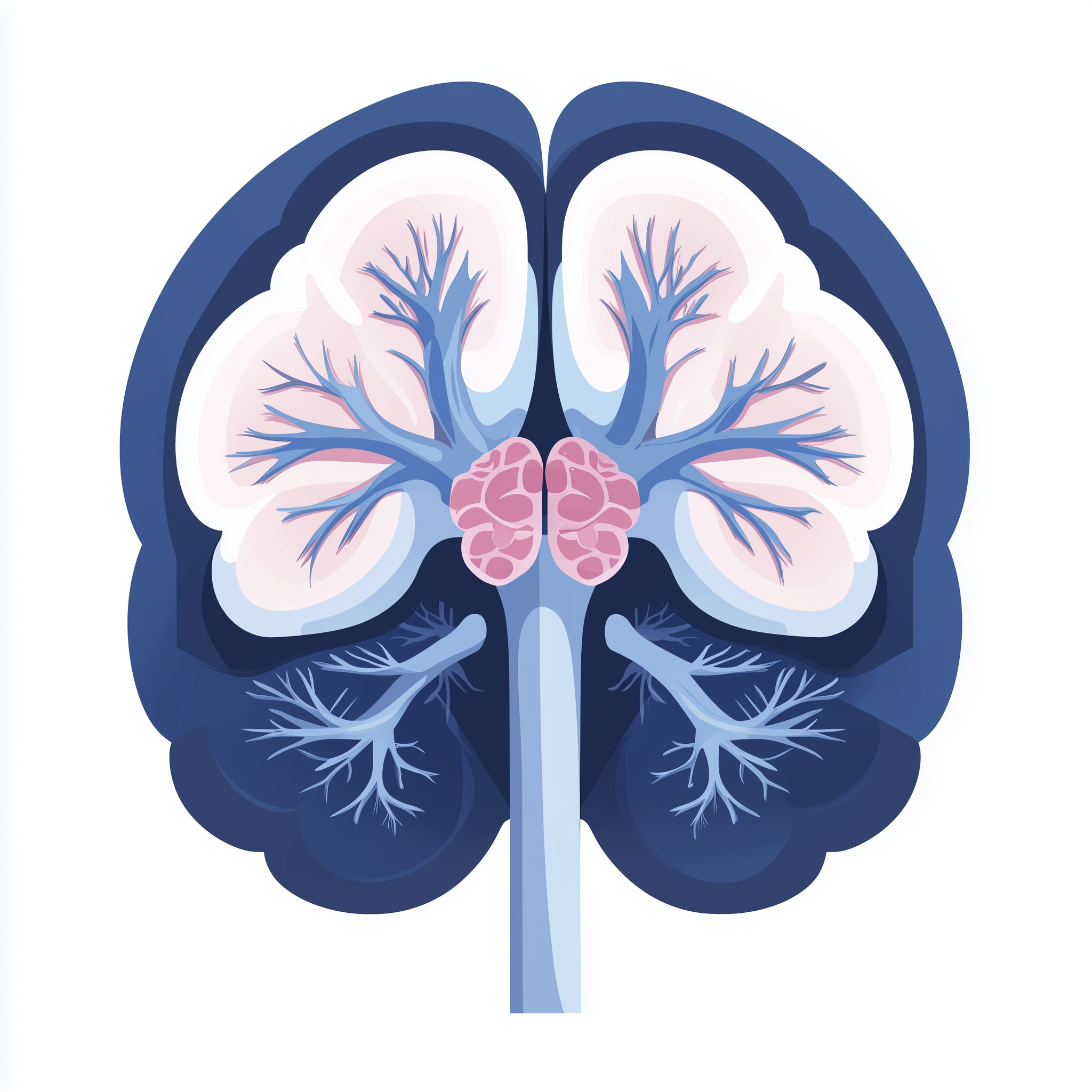
Focal cortical dysplasia (Type II) primarily affects the brain, specifically the cerebral cortex. This is the outermost layer of the brain, responsible for higher functions such as thought, language, memory, and voluntary movement. The characteristic features of FCD Type II are found within this brain tissue, including abnormal nerve cells, disorganised layering of the cortex, and the presence of unusual 'balloon cells' [PMID:24855474].
Although the condition is confined to a specific area of the brain, the impact of the resulting epilepsy can affect various bodily functions indirectly. Uncontrolled seizures can lead to injuries from falls, cognitive challenges, and, in severe cases, a reduced quality of life. The brain is the sole organ directly affected by the structural abnormality, but its central role means wider bodily impacts.

Risks & severity
FCD Type II is a common cause of focal epilepsy, particularly in children. The severity of the condition is largely determined by the location and size of the dysplastic area in the brain, as well as the frequency and type of seizures experienced. Many individuals with FCD Type II experience drug-resistant epilepsy, which can significantly impact their daily life and development [PMID:33676770].
The age of seizure onset can vary, but it often begins in childhood. The lifetime risk of epilepsy is high for individuals with FCD Type II, and the challenges associated with managing drug-resistant seizures can be substantial. While FCD Type II itself is not progressive, the chronic nature of epilepsy can lead to secondary complications such as cognitive difficulties or mood disorders in some individuals. Early diagnosis and appropriate management are important for improving outcomes.
Genetic causes
Focal cortical dysplasia (Type II) is often caused by genetic changes (mutations) that occur in the brain during early development, meaning they are somatic or mosaic. This implies the genetic change is not inherited from parents but arises spontaneously in some cells after fertilisation, leading to a patch of affected brain tissue. Genes commonly implicated include *DEPDC5*, *MTOR*, *TSC1*, and *TSC2* [PMID:29661914].
These genes are involved in critical cellular pathways, such as the mTOR pathway, which regulates cell growth, proliferation, and survival. Pathogenic changes in *DEPDC5* can disrupt the GATOR1 complex, a negative regulator of the mTOR pathway, leading to its overactivity. Similarly, changes in *MTOR* can directly cause overactivity of this pathway. The *TSC1* and *TSC2* genes provide instructions for proteins that form a complex, also acting as a tumour suppressor by inhibiting the mTOR pathway. When these genes have pathogenic changes, the mTOR pathway can become overactive, leading to the abnormal cell growth and organisation seen in FCD Type II [PMID:30138947]. These genetic alterations lead to the characteristic malformation of brain cells and architecture.
- DEPDC5 DEP domain containing 5, GATOR1 subcomplex subunit
- MTOR mechanistic target of rapamycin kinase
- TSC1 TSC complex subunit 1The TSC1 gene provides instructions for producing hamartin, a protein that plays a vital role in regulating cell growth, proliferation, and size.
- TSC2 TSC complex subunit 2TSC2 encodes tuberin, a tumour suppressor protein that regulates cell growth and division, with pathogenic variants causing tuberous sclerosis complex and related disorders.
Inheritance pattern
Focal cortical dysplasia (Type II) typically follows a somatic or mosaic inheritance pattern. This means the genetic change responsible for the condition is not present in every cell of the body but arises spontaneously in a subset of cells during early foetal development. As a result, only specific brain cells carry the genetic alteration, leading to a localised area of dysplasia.
Because the genetic change is somatic and not inherited, it is generally not passed on to future children. This differs from germline mutations, which are present in all cells and can be inherited. For individuals with somatic or mosaic conditions, the risk of passing the condition to offspring is typically very low, and often considered negligible.
Diagnosis & testing
Diagnosis of FCD Type II typically begins with clinical observation of seizures, particularly those that are frequent or difficult to control with medication. Neuroimaging, especially magnetic resonance imaging (MRI) of the brain, is a crucial diagnostic tool. MRI scans can reveal characteristic abnormalities in the cerebral cortex, such as blurring of the grey-white matter junction, cortical thickening, or abnormal signal intensity, which are indicative of FCD [PMID:24855474].
Genetic testing is increasingly used to identify the underlying somatic or mosaic genetic changes in affected brain tissue. This often involves performing genetic tests on tissue samples obtained during epilepsy surgery, which can help confirm the diagnosis and inform prognosis. In the UK, individuals with suspected FCD Type II and drug-resistant epilepsy may be referred to specialist epilepsy centres within the NHS. Genetic testing for epilepsy aetiology falls under specific NHS National Genomic Test Directory R-codes, and referrals are usually made by neurologists or clinical geneticists following a detailed clinical assessment.
Management & lifestyle
The management of FCD Type II primarily focuses on controlling seizures and improving the individual's quality of life. For many individuals, anti-epileptic medications are the first line of treatment. However, since epilepsy associated with FCD Type II is often drug-resistant, other interventions may be necessary [PMID:33676770].
For suitable candidates, epilepsy surgery to remove the dysplastic brain tissue can be a highly effective treatment option, potentially leading to significant reduction in seizure frequency or even seizure freedom. Pre-surgical evaluation typically involves detailed neuroimaging, electroencephalography (EEG), and sometimes functional mapping to precisely locate the FCD and assess surgical risks. Following surgery, ongoing neurological care and rehabilitation may be required. Management in the UK is coordinated through specialist NHS epilepsy centres, where multidisciplinary teams including neurologists, neurosurgeons, and genetic counsellors work together to provide comprehensive care. Genetic counsellors can provide support and information regarding the genetic basis of the condition.
UK care pathway
In the UK, individuals with suspected or diagnosed Focal Cortical Dysplasia (Type II) typically access care through the NHS. Initial assessment and management of epilepsy are usually handled by a general neurologist. If epilepsy is drug-resistant or atypical features are present, referral to a specialist epilepsy centre is often recommended. These centres provide multidisciplinary care, including advanced neuroimaging and consideration for epilepsy surgery.
Genetic testing, particularly for somatic or mosaic variants, may be considered, often on resected brain tissue obtained during surgery. This testing falls under specific R-codes within the NHS National Genomic Test Directory for epilepsy aetiology. Referrals for genetic testing and counselling are typically made by clinical geneticists or neurologists. Genetic counsellors play a vital role in explaining the genetic basis of FCD Type II, discussing its implications, and offering support to individuals and families.
Frequently asked questions
What causes Focal Cortical Dysplasia (Type II)?
Focal cortical dysplasia (Type II) is caused by genetic changes that occur spontaneously in brain cells during early development, meaning they are not inherited from parents. These changes affect genes like *DEPDC5*, *MTOR*, *TSC1*, and *TSC2*, which are important for normal brain cell growth and organisation.
Is Focal Cortical Dysplasia (Type II) an inherited condition?
No, FCD Type II is typically not inherited. The genetic changes that cause it are usually somatic or mosaic, meaning they happen randomly in a small group of cells in the developing brain and are not present in the reproductive cells. Therefore, the risk of passing it on to children is extremely low.
How is Focal Cortical Dysplasia (Type II) diagnosed?
Diagnosis usually involves observing seizure symptoms and performing brain imaging, especially an MRI scan, to identify the abnormal brain tissue. In some cases, genetic testing on surgically removed brain tissue can confirm the diagnosis and pinpoint the specific genetic change.
Can Focal Cortical Dysplasia (Type II) be cured?
There isn't a 'cure' in the traditional sense, but the primary goal of treatment is to control seizures. For many, anti-epileptic medications are used. If medication is not effective, surgery to remove the affected brain area can be very successful in reducing or stopping seizures for suitable candidates.
What kind of specialist care is available in the UK for FCD Type II?
In the UK, care for FCD Type II is typically provided by specialist NHS epilepsy centres. These centres have multidisciplinary teams, including neurologists, neurosurgeons, and genetic counsellors, who work together to diagnose and manage the condition, often considering advanced treatments like epilepsy surgery.
References
- Gerasimenko A, Baldassari S, Baulac S. mTOR pathway: Insights into an established pathway for brain mosaicism in epilepsy. Neurobiology of disease. 2023. PMID: 37149062
- Almacellas Barbanoj A, Graham RT, Maffei B. Anti-seizure gene therapy for focal cortical dysplasia. Brain : a journal of neurology. 2024. PMID: 38100333
- Ribierre T, Bacq A, Donneger F. Targeting pathological cells with senolytic drugs reduces seizures in neurodevelopmental mTOR-related epilepsy. Nature neuroscience. 2024. PMID: 38710875
- Baldassari S, Klingler E, Teijeiro LG. Single-cell genotyping and transcriptomic profiling of mosaic focal cortical dysplasia. Nature neuroscience. 2025. PMID: 40307383
- Sisodiya SM, Fauser S, Cross JH. Focal cortical dysplasia type II: biological features and clinical perspectives. The Lancet. Neurology. 2009. PMID: 19679275
- Macdonald-Laurs E, Warren AEL, Lee WS. Intrinsic and secondary epileptogenicity in focal cortical dysplasia type II. Epilepsia. 2023. PMID: 36527426
- Noebels JL, Avoli M, Rogawski MA. Brain Mosaicism in Epileptogenic Cortical Malformations. 2024. PMID: 39637218
- Shankar A, Saikia MJ, Dandapat S. Focal cortical dysplasia (type II) detection with multi-modal MRI and a deep-learning framework. Npj imaging. 2024. PMID: 40603523