
Why Genetics?
Know your and your family's genetic risks. Get expert support and reliable genetic testing in UK with Jeen.

Why Genetics Matters?
Your DNA holds valuable clues about your health. Genetic testing helps you discover inherited risks like certain cancers or conditions you could pass to your children. At Jeen Health, we make this science simple, accessible, and personal.
With expert-led guidance and an easy at-home test, you can take control of your health journey. Whether you're planning a family, concerned about cancer, or just want answers, genetic testing offers clarity and confidence.
How it works
Chat with our Genetic Counsellor, receive your at-home DNA kit with a quick cheek swab, send it back, and get your results in under 4 weeks.
Gene List
1,008 genes across 13 clinical categories. Tap a category for the full gene list and the conditions it screens for.
Metabolic Disorders 273 genes
Inborn errors of metabolism including amino acid disorders (PKU, maple syrup urine disease), organic acidemias, fatty acid oxidation disorders, urea cycle disorders, glycogen storage diseases, lysosomal storage disorders, and peroxisomal disorders.
AAAS, ABCA12, ABCA3, ABCA4, ABCB11, ABCB4, ABCC8, ABCD1, ABCD4, ACAD9, ACADM, ACADS, ACADSB, ACADVL, ACAT1, ACOX1, ACSF3, ADA, AGA, AGL, AGPAT2, AGPS, AGXT, AHCY, AKR1D1, ALDH3A2, ALDH4A1, ALDH7A1, ALDOB, ALG1, ALG12, ALG3, ALG6, ALOX12B, ALOXE3, ALPL, AMN, AMT, ANTXR2, ARG1, ARSA, ARSB, ARSE, ASL, ASNS, ASPA, ASS1, ATM, ATP7A, ATP7B, ATP8B1, BCHE, BCKDHA, BCKDHB, BCS1L, BTD, CANT1, CBS, COQ4, COX10, COX15, COX20, COX6B1, CP, CPS1, CPT1A, CPT2, CRADD, CTNS, CTSA, CTSC, CTSD, CTSF, CTSK, CYBA, CYBB, DBT, DDC, DGUOK, DHCR24, DHCR7, DHDDS, DLAT, DLD, DPYD, ETFA, ETFB, ETFDH, ETHE1, FA2H, FAH, FBXL4, FBP1, FH, FMO3, FOLR1, FOXRED1, FTCD, FUCA1, FXN, G6PC, G6PC3, G6PD, GAA, GALC, GALE, GALK1, GALNS, GALNT3, GALT, GAMT, GATM, GBA, GBE1, GCDH, GDAP1, GFPT1, GLA, GLB1, GLDC, GNE, GNS, GRHPR, GSS, GUSB, GYS2, HADH, HADHA, HADHB, HAX1, HCFC1, HEXA, HEXB, HGD, HGSNAT, HINT1, HLCS, HMGCL, HMGCS2, HOGA1, HPD, HPS1, HPS3, HPS4, HPS5, HPS6, HSD17B10, HSD17B3, HSD17B4, HSD3B2, HSD3B7, HYAL1, IDH3B, IDS, IDUA, ITPA, IVD, LIPA, LIPN, MAT1A, MCCC1, MCCC2, MCEE, MCOLN1, MLYCD, MMAA, MMAB, MMACHC, MMADHC, MPI, MPV17, MTHFD1, MTHFR, MTR, MTRR, MTTP, MUT, MVK, NAGA, NAGLU, NAGS, NEU1, NGLY1, NPC1, NPC2, OAT, OTC, PAH, PANK2, PC, PCBD1, PCCA, PCCB, PDHA1, PDHB, PDHX, PDP1, PEPD, PET100, PFKM, PGK1, PHGDH, PHKA1, PHKA2, PHKB, PHKG2, PHYH, PMM2, PNP, PNPO, PPT1, PRPS1, PSAP, PTS, PYGL, PYGM, QDPR, RTEL1, SACS, SAMD9, SAMHD1, SARS2, SBDS, SCO1, SCO2, SERPINA1, SGSH, SLC12A1, SLC12A3, SLC16A2, SLC17A5, SLC19A2, SLC19A3, SLC22A5, SLC25A13, SLC25A15, SLC25A20, SLC26A2, SLC26A3, SLC27A4, SLC34A3, SLC35A3, SLC37A4, SLC39A4, SLC3A1, SLC45A2, SLC46A1, SLC4A1, SLC5A5, SLC6A19, SLC6A8, SLC7A7, SLC7A9, SMPD1, SPR, SUCLA2, SUMF1, SUOX, SURF1, TAT, TERT, TF, TFR2, TG, TGM1, TH, TK2, TPP1, TTPA, TYMP, TYR, TYRP1, UGT1A1
Blood & Coagulation Disorders 28 genes
Hemoglobinopathies (sickle cell disease, thalassemias), bleeding disorders (hemophilia, von Willebrand disease), platelet disorders, iron metabolism disorders, and other hematological conditions.
EPB42, F11, F2, F5, F7, F8, F9, GP1BA, GP9, HAMP, HBA1, HBA2, HBB, HFE, HJV, ITGA2B, ITGA6, ITGB3, ITGB4, MPL, NBEAL2, NBN, NCF2, NCF4, RHAG, SEC23B, CDAN1, PGM3
Neuromuscular Disorders 31 genes
Muscular dystrophies (Duchenne, Becker, limb-girdle), congenital myopathies, spinal muscular atrophy, myasthenic syndromes, and neuromuscular junction disorders.
CAPN3, CASP14, CHAT, CHRNE, CHRNG, CLCN1, COLQ, DMD, DOK7, DYSF, FKBP10, FKRP, FKTN, FHL1, MTM1, MTMR2, NEB, PLEKHG5, POMGNT1, POMT1, POMT2, RAPSN, SELENON, SGCA, SGCB, SGCD, SGCG, SLC5A7, SMN1, TAZ, ESCO2
Sensory Disorders (Hearing & Vision) 53 genes
Hereditary hearing loss (non-syndromic and syndromic), Usher syndrome, retinitis pigmentosa, Leber congenital amaurosis, albinism, color blindness, and other vision/hearing disorders.
ABCA4, AIPL1, CDH23, CERKL, CHM, CHST6, CIB2, CLRN1, CNGA1, CNGA3, CNGB1, CNGB3, CRYL1, EYS, FAM161A, GJB1, GJB2, GJB6, GPR143, GUCY2D, LHCGR, LOXHD1, LRAT, MAK, MYO7A, NDP, NR2E3, OCA2, OPA3, OTOF, PCDH15, PDE6A, PJVK, PRCD, PRDM5, RD3, RDH12, RDH5, RLBP1, RP2, RPE65, RPGR, RPGRIP1, RPGRIP1L, RS1, SAG, TMPRSS3, USH1C, USH1G, USH2A, WHRN, SLC26A4, CRB1
Neurological & Neurodevelopmental Disorders 68 genes
Intellectual disability, autism spectrum disorders, epilepsy, leukodystrophies, spastic paraplegias, ataxias, and other neurological conditions affecting brain development and function.
ADGRG1, ADGRV1, AFF2, AHI1, AIMP1, AIRE, ARX, ATRX, BLM, BRWD3, CC2D1A, CC2D2A, CDCA7, CLP1, CNTNAP2, CTC1, CUL4B, DCX, DLG3, DNMT3B, EIF2AK3, EIF2B1, EIF2B2, EIF2B3, EIF2B4, EIF2B5, ELP1, EMD, FGD1, FMR1, FTSJ1, HELLS, IGHMBP2, IL1RAPL1, INPP5E, KCTD7, KDM5C, L1CAM, LMNA, LPAR6, LRPPRC, MED17, MEFV, MEGF8, MID1, MLC1, MRE11, NDRG1, NHEJ1, NONO, OPHN1, PAK3, PHF8, PQBP1, PUS1, SH3TC2, SLC12A6, SLC1A4, SMARCAL1, SYN1, SYNE4, THOC2, UPF3B, VPS13A, VPS13B, ZDHHC9, ZNF469, ZNF711
Connective Tissue & Skeletal Disorders 39 genes
Ehlers-Danlos syndromes, osteogenesis imperfecta, chondrodysplasias, epidermolysis bullosa, Alport syndrome, and other connective tissue and skeletal disorders.
ADAMTS2, ALMS1, BMPER, COL11A2, COL17A1, COL27A1, COL4A3, COL4A4, COL4A5, COL7A1, CRTAP, CUL7, DDR2, DLL3, EDA, EFEMP2, EVC, EVC2, GDF5, GRIP1, KIF14, LAMA2, LAMA3, LAMB3, LAMC2, LARS, LTBP4, MESP2, OBSL1, P3H1, PLOD1, PLOD2, PLP1, PRICKLE1, SERPINF1, TNXB, WISP3, WNT1, WNT10A
Primary Immunodeficiencies 46 genes
Severe combined immunodeficiency (SCID), X-linked agammaglobulinemia, chronic granulomatous disease, Wiskott-Aldrich syndrome, and other primary immunodeficiency disorders.
AK2, BTK, CD247, CD3D, CD3E, CD3G, CD40LG, CD59, CD8A, CIITA, CORO1A, DCLRE1C, DOCK8, FOXN1, FOXP3, IKBKB, IL2RA, IL2RG, IL7R, JAK3, LCK, LIG4, MALT1, NDUFA11, NDUFAF2, NDUFAF5, NDUFS4, NDUFS6, NDUFS7, NDUFV1, PRF1, PRKDC, PTPRC, RAG1, RAG2, RFX5, RFXANK, RFXAP, SNX10, SP110, STK4, STX11, STXBP2, UNC13D, WAS, ZAP70
Kidney & Urinary Tract Disorders 26 genes
Polycystic kidney disease, nephrotic syndrome, renal tubular acidosis, Dent disease, Bartter syndrome, Gitelman syndrome, and other kidney disorders.
AGPAT2, AQP2, ATP6V0A2, ATP6V0A4, ATP6V1B1, ATP6V1E1, AVPR2, CLCN5, CLCNKB, GNPAT, GNPTAB, GNPTG, INVS, KCNJ1, KCNJ11, LMAN1, LMBRD1, NPHP1, NPHP3, NPHS1, NPHS2, OCRL, PKHD1, SLC4A11, VDR, VLDLR
Endocrine Disorders 36 genes
Congenital adrenal hyperplasia, disorders of sex development, congenital hypothyroidism, growth hormone deficiency, and other endocrine disorders.
AMH, AMHR2, AR, CASR, CYP11A1, CYP11B1, CYP11B2, CYP17A1, CYP19A1, CYP1B1, CYP21A2, CYP27A1, CYP27B1, CYP4F22, CYP7B1, DUOX2, DUOXA2, GHR, GHRHR, GNRHR, IYD, LHX3, LIFR, NR0B1, POU1F1, POU3F4, PROP1, SRD5A2, ST3GAL5, STAR, TBX19, TCIRG1, TPO, TRHR, TSHB, TSHR
Ciliopathies & Cell Biology Disorders 44 genes
Bardet-Biedl syndrome, Joubert syndrome, Meckel syndrome, nephronophthisis, primary ciliary dyskinesia, and other ciliopathy disorders.
B9D1, B9D2, BBS1, BBS10, BBS12, BBS2, BBS4, BBS5, BBS7, BBS9, BSND, CASQ2, CCDC103, CCDC151, CCDC39, CCDC8, CCDC88C, CEP104, CEP152, CEP290, MKKS, MKS1, RSPH9, SDCCAG8, TCTN1, TCTN2, TCTN3, TMEM138, TMEM216, TMEM231, TMEM237, TMEM38B, TMEM67, TMEM70, DNAH5, DNAI1, DNAI2, DNAL1, DYNC2H1, HYLS1, SPATA7, RAB23, IFT140, TRAPPC11
Cancer Predisposition & DNA Repair 33 genes
Fanconi anemia, xeroderma pigmentosum, Bloom syndrome, ataxia-telangiectasia, and other DNA repair disorders that predispose to cancer.
ATM, BLM, BRIP1, DDB2, ERCC2, ERCC3, ERCC4, ERCC5, ERCC6, ERCC8, FANCA, FANCB, FANCC, FANCD2, FANCE, FANCF, FANCG, FANCI, FANCL, LYST, MRE11, NBN, POLG, POLH, POLR1C, RNASEH2A, RNASEH2B, RNASEH2C, TREX1, WRN, XPA, XPC, ZBTB24
Peroxisomal Disorders 15 genes
Zellweger spectrum disorders, rhizomelic chondrodysplasia punctata, and other peroxisome biogenesis disorders.
PEX1, PEX10, PEX11B, PEX12, PEX13, PEX14, PEX16, PEX19, PEX2, PEX26, PEX3, PEX5, PEX6, PEX7, GNPAT
Other Genetic Conditions 89 genes
Various rare genetic disorders including mitochondrial disorders, neuronal ceroid lipofuscinoses, spastic paraplegias, and other miscellaneous genetic conditions.
ADK, ANO10, ANO5, AP1S1, AP1S2, AP3B1, AP3D1, APOPT1, ARL13B, ARL6, BLOC1S3, BLOC1S6, BMP1, C19orf12, C8orf37, CAD, CAVIN1, CHMP1A, CLCF1, CLN3, CLN5, CLN6, CLN8, COASY, CPLANE1, CRLF1, DCAF17, DDX11, DOLK, DTNBP1, EXOSC3, FRAS1, FREM2, GORAB, LDLR, LDLRAP1, LPL, LRP2, MANBA, MAN2B1, MCPH1, MFSD8, NIPAL4, NTRK1, OSTM1, PIP5K1C, PIGN, PLA2G6, PNPLA1, POC1A, PPIB, RMRP, ROGDI, SDR9C7, SELENON, SEPSECS, SGP11, SGP21, SGP7, SKIV2L, SLC2A10, SLC2A2, SNAP29, SPG11, SPG21, SPG7, SPINK5, TBCE, TECPR2, TNFSF11, TRDN, TRIM32, TRIM37, TRMU, TRPM6, TSEN2, TSEN34, TSEN54, TSFM, TTC37, TTC7A, TTC8, TULP1, VPS45, VPS53, VRK1, VSX2, AMPD2, ERBB3
Browse the full Jeen library - gene profiles covering inherited cancers, metabolic conditions, neurological disorders, blood disorders, ciliopathies, peroxisomal disorders and more.
Open the gene libraryType of Cancers
We offer expert advice and testing for a range of genes that may increase your risk of developing certain types of cancer.

Breast Cancer
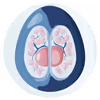
Ovarian Cancer
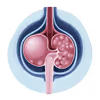
Prostate Cancer

Pancreatic Cancer
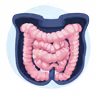
Colorectal Cancer
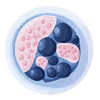
Melanoma
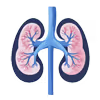
Kidney Cancer
Endometrial Cancer
Stomach Cancer
Thyroid Cancer
Sarcomas
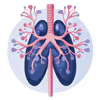
Lung Cancer
Brain Cancer
Nervous System Tumors
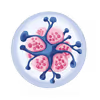
Leukemia
Lymphoma
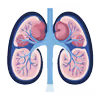
Adrenal Gland Tumors
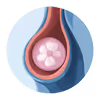
Lobular Breast Cancer
Retinoblastoma
Another 23andMe?
At Jeen, we focus on health, not hair colour. Our genetic testing uses 50x sequencing depth (NGS) for greater accuracy and confidence in detecting inherited conditions.
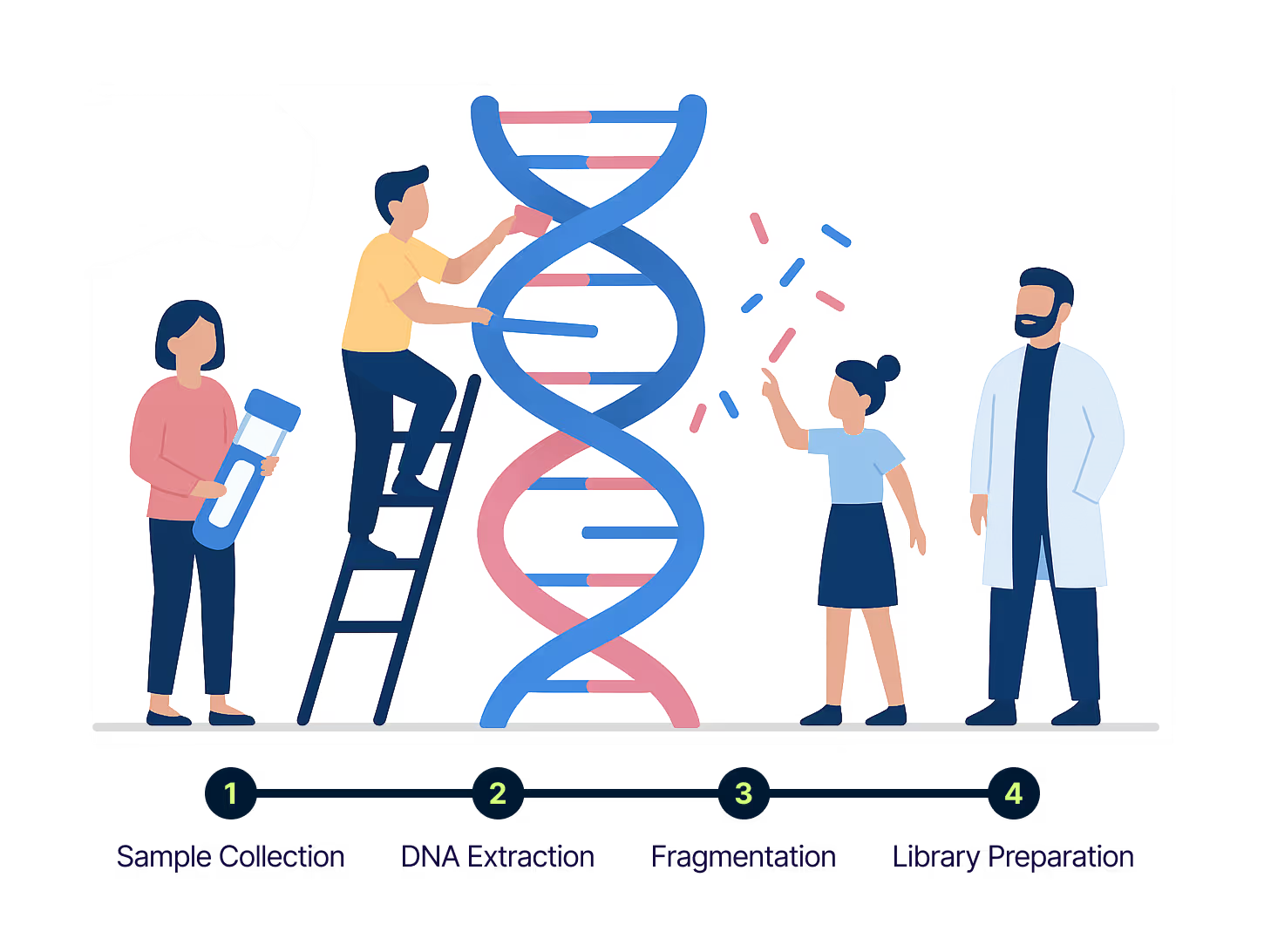
How DNA Sequencing Works
DNA is broken into small fragments, sequenced, and computationally assemble into the full genome.
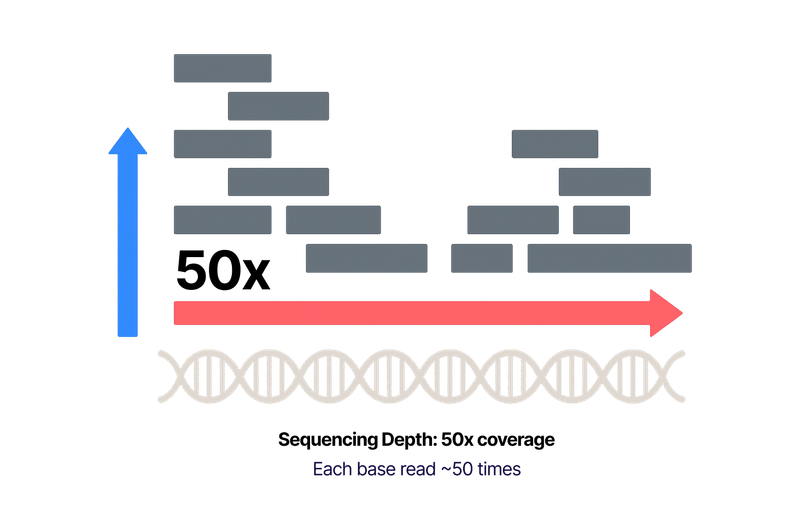
What is Sequencing Depth?
Sequencing depth is how many times your DNA is read. Higher depth = more accurate results, lower depth = risk of missed mutations.
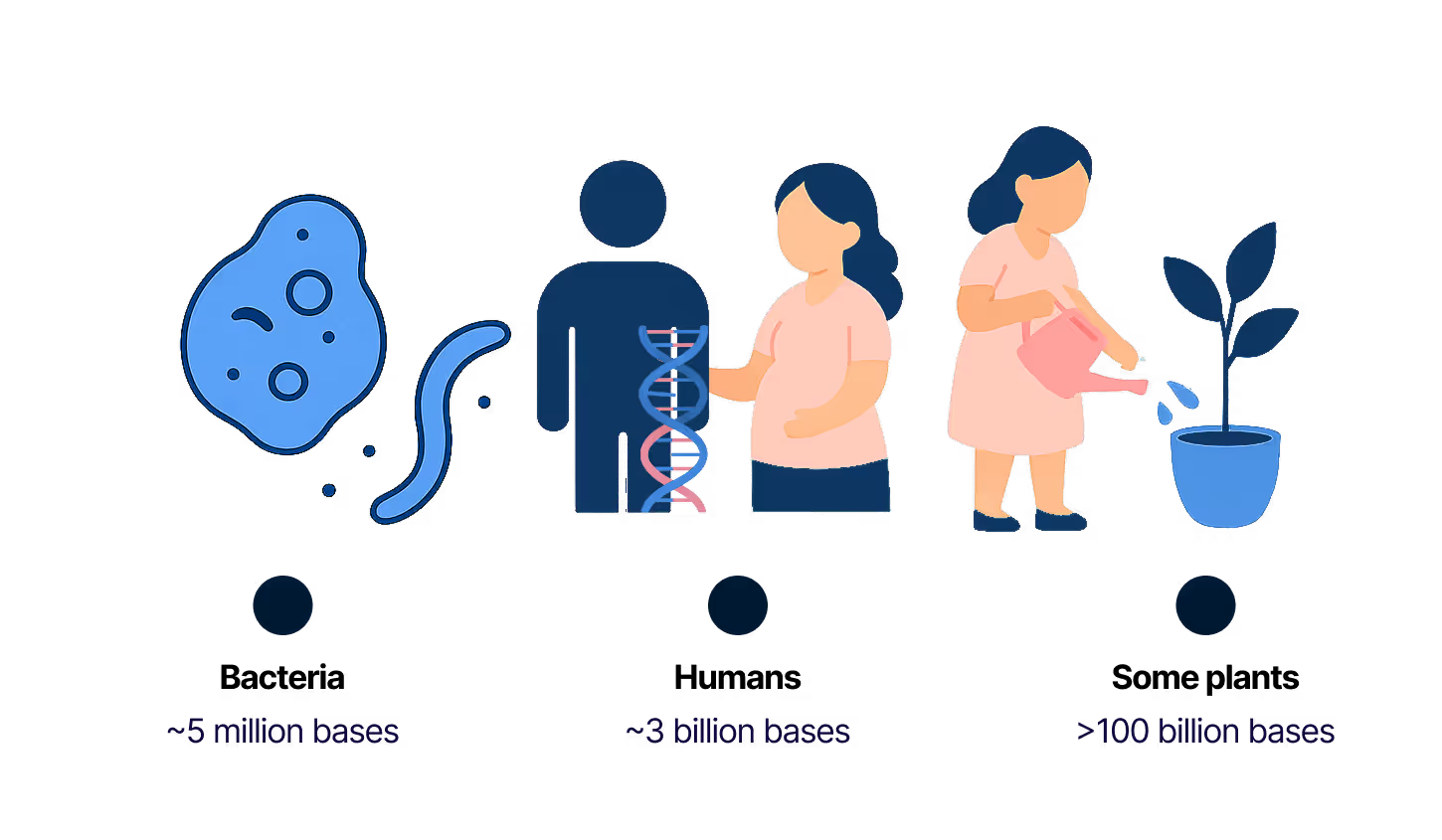
Genome Size Matters!
Larger genomes (like humans) need more sequencing reads. That’s why high-depth testing matters-it ensures nothing is missed.
Why Jeen?
Not all genetic tests are created equal. At Jeen, we use 50x sequencing coverage, which means each section of your DNA is read around 50 times. Here’s why it makes a difference:
- Bigger genome → more data needed
- Higher depth → better accuracy
- Balance cost vs. detail!
What Now?
Have questions? We’re here to help. Genetic testing can feel overwhelming, but it doesn’t have to be. Our genetic counsellors are here to walk you through your options, explain the science in plain English, and help you decide if testing is right for you.
Genetics 101
Watch Ailidh Watson's, our genetic counsellor lead, video on what genetics is.
Genetic Counselling
Book a genetic counsellor
What do we test for?
Know your genes, protect your future. Over 5,000 diseases are linked to genetic mutations. Early insights through genetic testing can help with prevention, early detection and personalised healthcare decisions.
Hereditary Cancer Risk
Testing 50 Genes Linked With Various Cancers.
Carrier Screening
Testing 1,008 Conditions That Could Affect Your Baby.
Other Genetic Conditions
Over 5,000 diseases are linked to genetic mutations.

Newborn Genetic Screening
A simple oral-swab screen of your newborn for inherited conditions where early intervention changes outcomes - including treatable metabolic disorders, hearing impairment risk, and immune deficiencies.
From £720
Karyotype Chromosome Analysis
Chromosome-level analysis of all 46 chromosomes - detects numerical changes (aneuploidies) and large structural rearrangements. Useful for couples investigating recurrent miscarriage or fertility issues.
From £290
Polycystic Kidney Disease (PKD) Panel
Genetic screening for autosomal-dominant and recessive polycystic kidney disease. Identifies pathogenic variants in PKD1, PKD2 and PKHD1 - useful for at-risk family members and reproductive planning.
From £930
Pharmacogenomic Test
A DNA medication-compatibility test (PGx) that screens 112+ medications across 14 therapy areas - find out which drugs are likely to work for you, which won't, and what doses to start at.
From £210NIPT Testing Options
NIPT gives you a safe and early look at your baby's health – explore the conditions we can screen for during pregnancy.
Panorama by Natera
A highly accurate NIPT that screens for common and rare genetic conditions in your baby including microdeletions.
KNOVA by Fulgent
The broadest prenatal screen - chromosomal trisomies, sex-chromosome conditions, microdeletions and 30+ single-gene conditions from a maternal blood sample, with results guided by medical specialists.
PrenatalSafe all panels
Advanced NIPT available for single or twin pregnancies, egg donors and IVF. Optional panels for microdeletions and rare syndromes.
Affordable NIPT
A cost-effective, high-quality NIPT that screens for common conditions and can include testing for inherited conditions.
Frequently Asked Questions
What is genetic testing?
Genetic testing looks at your DNA to find changes or variants in your genes. These changes can tell us if you’re at risk for certain inherited conditions, like hereditary cancers or if you’re a carrier for a genetic condition.
What can genetic testing tell me?
It can reveal if you have a higher genetic risk for certain cancers (like breast, ovarian or bowel), if you’re a carrier for inherited conditions, or if you have a genetic condition that could impact your health or your family’s.
Will the results tell me if I’ll definitely get a disease?
No - genetic testing shows your risk, not a guarantee. Some people with a genetic variant never develop the condition, while others without a variant might still be affected due to lifestyle or environmental factors.
How does it work?
It’s simple - you speak with one of our expert Genetic Counsellors, receive a home kit in the post, collect a cheek swab, and send it back. Your DNA is analysed in a UK or US lab, and results are ready in under 4 weeks.
Is my data safe and private?
Yes. At Jeen Health, your data is encrypted and stored securely on our GDPR compliant servers, as well as with our vetted laboratories. Your results are only shared with you and your dedicated Genetic Counsellor, never with insurers or third parties.
Is genetic testing only for people with a family history of disease?
Not at all. While a strong family history increases your risk, many people with genetic conditions have no known family history. Testing helps you uncover hidden risks you wouldn’t otherwise know about.
Get in touch
Our team of expert specialists is here to help - whether you're curious about testing, your results, or what's right for you. We're just a message away.
Contact details
- my@jeen.health
- +44 20 3870 9099
- WhatsApp us
- 36 Spital Square, London E1 6DY
Book your appointment
Pick the appointment that suits you and choose a time - no account needed.
Trouble loading? Open the booking page.