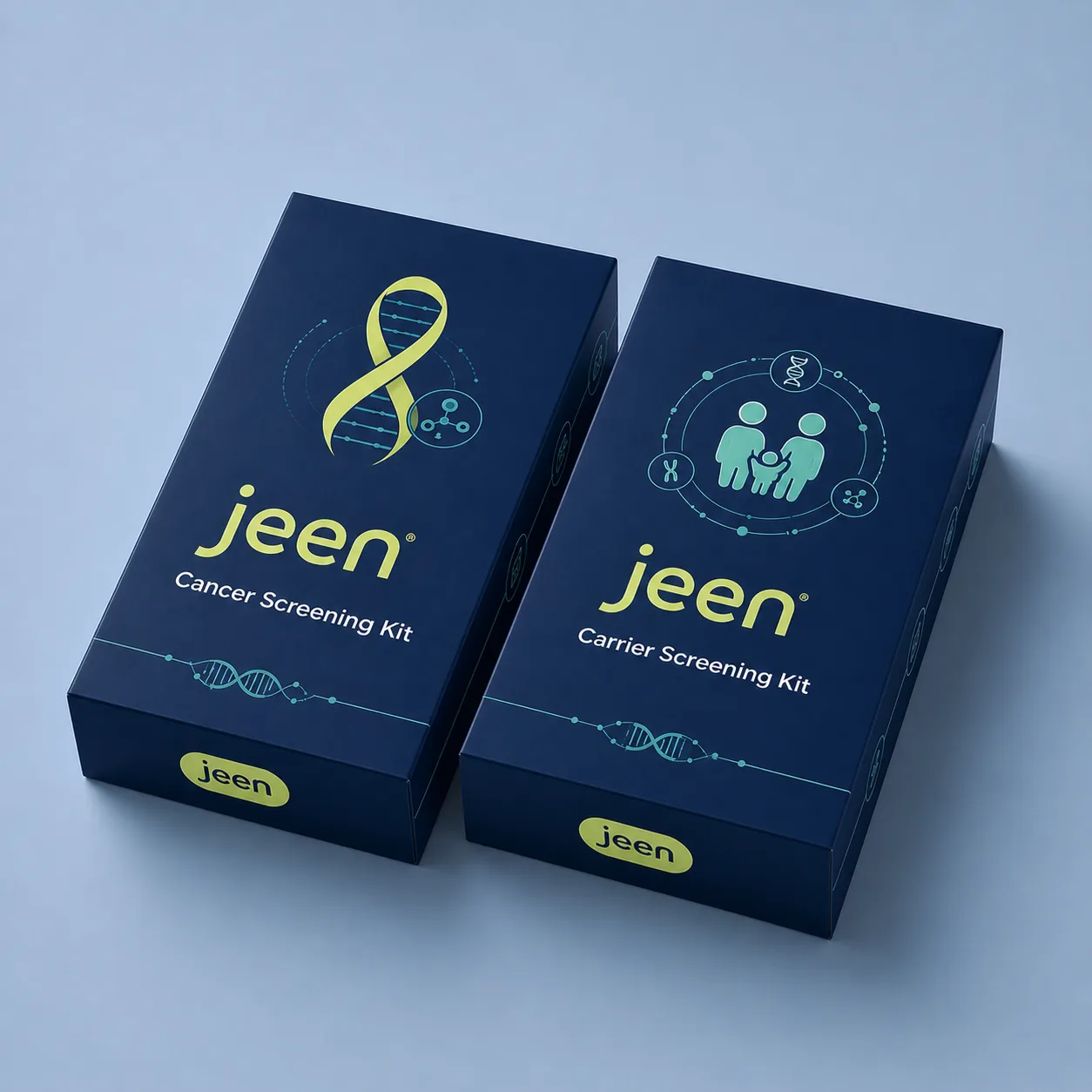

How much cancer risk is actually inherited, and what a genetic test can tell you.




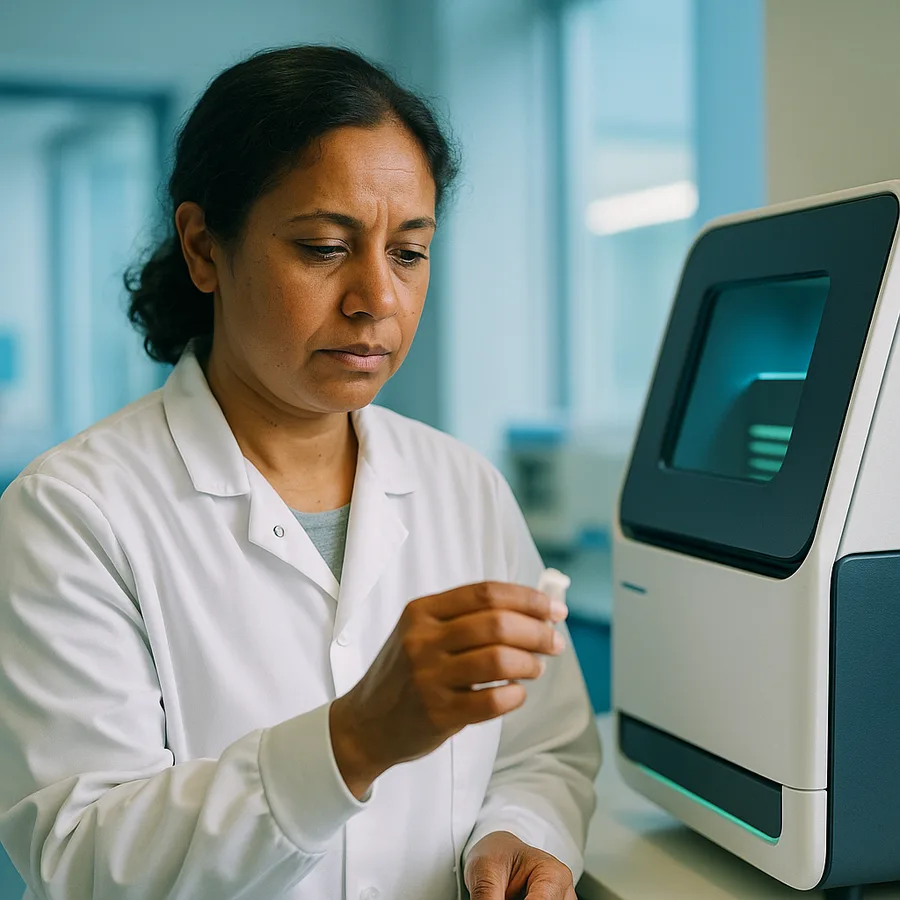
Combined Cancer + Carrier Screening
The 50-gene cancer panel and the 1,008-gene carrier screen together: one counselling session, one report.
- Results in
- 4–6 weeks
- Looks at
- 50 + 1,008 genes
Klarna’s credit agreements are not regulated by the FCA. Use of these and any missed payments may affect your ability to obtain credit from Klarna and other lenders. 18+, UK residents only. Subject to status. T&Cs apply. Klarna terms apply.
What it checks
These tests look for inherited risk. They do not diagnose cancer, and a clear result does not remove all risk.
How it works
Talk to a clinician
Book your included 45-minute consultation with our specialist genetic counsellor. Confirm the test that's right for you.
Consent + collect
Complete your consent form online, receive your kit, and collect your sample at home or via a clinic of your choice.
Results + follow-up
Your results are reviewed by your genetic counsellor. We share them with you securely, and book a follow-up consultation with onward referrals if your result is high-risk.
How much cancer risk is actually inherited, and what a genetic test can tell you.
A short video from the Jeen team.
Is it right for you?
Who this test is for, in plain words.
Suitable if
Genetic testing with Jeen Health is suitable for adults who have completed a pre-test consultation with one of our genetic counsellors - in clinic, over video, or by phone.
Genetic testing with Jeen Health is only available to individuals aged 18 and over.
Good to know
Delivery, the sample and the small print, in plain words.
Delivery and returns
1. Get your kit from us. Free delivery of your test kit, dispatched 1–2 working days after your included 45-minute specialist genetic counsellor consultation and your signed consent form, by next-day delivery. Changed your mind? Return the kit unused within 30 days at no charge.
2. Posting your sample back. After sample collection, send your sample in the pre-paid bag to the nearest depot (details in your email). Turnaround is counted from when your sample reaches the laboratory.
- Turnaround
- 4–6 weeks
How the sample is taken
Saliva kit : Saliva collection kit, sent to your home.
Blood draw : Standard venous blood draw at a Jeen partner clinic or by a mobile phlebotomist - or, with the Tasso Home Collection Kit, a blood sample you collect yourself at home and post back.
How to collect blood with the Tasso device
The Tasso device is a small, single-use kit that collects a blood sample from your upper arm without a needle in your vein. A gentle button-press opens tiny channels just under the skin, and the sample is drawn into a collection tube. It takes a few minutes at home - no clinic visit, no phlebotomist. Follow the four steps below to collect your sample correctly.
- Attach the collection tube. Take the green-capped collection tube from your kit and attach it to the base of the Tasso device until it clicks into place.
- Place on your shoulder and activate. Press the device firmly onto your clean, dry upper shoulder so it sticks, then press the red button to begin collection. Keep it in place and let the tube fill.
- Check the blood level, then remove the tube. The blood level must reach at least another 200 above the 400 mark on the tube - fill close to the top, but do not overfill. Once there is enough blood, remove the collection tube from the device.
- Close, shake and prepare for return. Close the green cap securely and shake the tube gently to mix. Complete the label, seal the tube inside the biohazard bag, and return it using the prepaid packaging in your kit. Don't forget to include your completed test requisition form in the box.
Why bundle the two?
Standalone, the 50-gene hereditary-cancer screen and the 1,008-gene carrier-screening panel cost ~£1,250 combined. The bundled package brings both into a single counselling session, a single at-home saliva sample, and a single integrated report - for £999 total.
This is the right pick when:
- You're planning a pregnancy AND have a personal or family history of early-onset cancer
- You want to understand both your own predisposition and what you might pass to children, in one go
- You want to consolidate the clinical conversation rather than running two parallel pathways
What's included
- 45-minute pre-test consultation with our specialist genetic counsellor - covers both panels' implications, family history, and what each result type means in practice
- Sample collection (a single at-home saliva sample, self-collected with the postal kit, covers both panels)
- Hereditary-cancer 50-gene panel: BRCA1/2, Lynch syndrome genes, plus the standard 50-gene set
- Carrier-screening 1,008-gene panel for inherited recessive disease
- Clinical report integrating findings from both panels, reviewed by your specialist genetic counsellor
- Follow-up consultation offered if a clinically actionable finding is identified on either panel
What this test cannot tell you
Both panels are screening tests, not a diagnosis. The cancer panel tests the 50 genes listed on this page and the carrier panel tests 1,008 genes, so neither covers every gene or every type of variant. A negative cancer result does not rule out an inherited cause of cancer or mean you will not develop cancer, and a negative carrier result lowers, but does not remove, the chance that you carry a recessive condition. Results can include variants of uncertain significance. Genetic testing assesses inherited risk; it does not detect or diagnose cancer.
Compare with similar tests
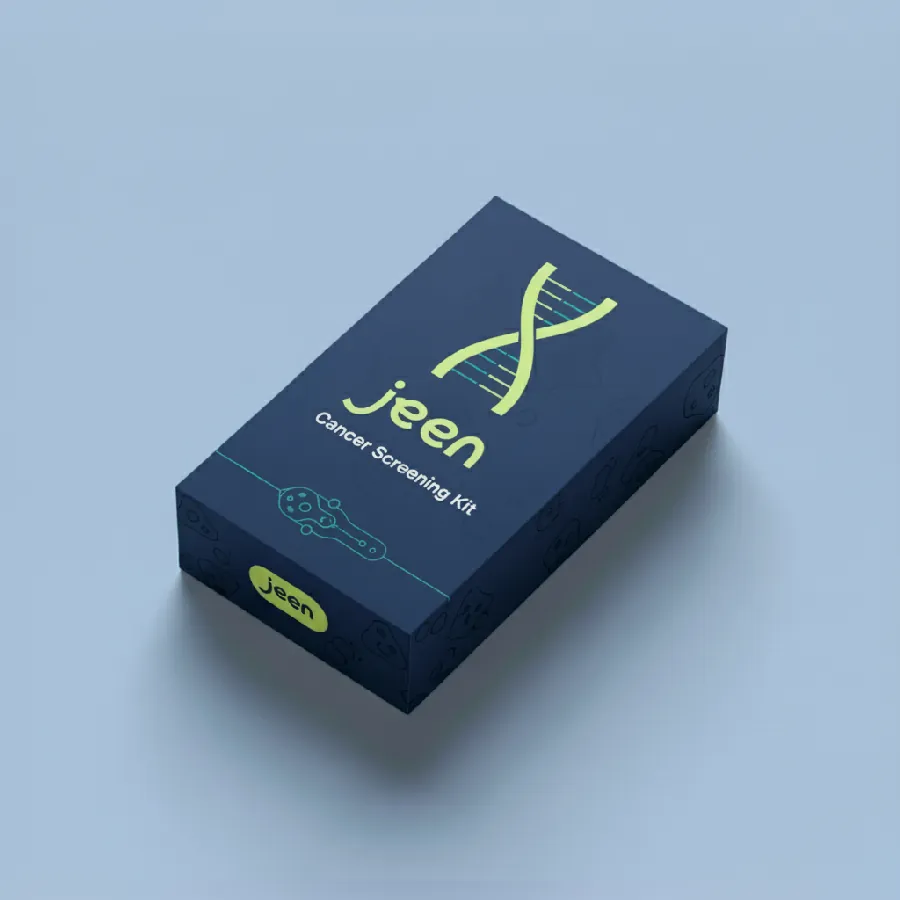 BRCA Testing
£555
Results in 17–21 working days · 10 genes
Cancer Risk Screening
£660
Results in 17–21 working days · 50 genes
Breast Cancer Risk Screening
£660
Results in 17–21 working days · 13 genes
Prostate Cancer Risk Screening
£660
Results in 17–21 working days · 13 genes
Ovarian Cancer Risk Screening
£660
Results in 17–21 working days · 12 genes
Colorectal Cancer Risk Screening
£660
Results in 17–21 working days · 14 genes
Pancreatic Cancer Risk Screening
£660
Results in 17–21 working days · 10 genes
Combined Cancer + Carrier Screening
£999
Results in 4–6 weeks · 50 + 1,008 genes
Common questions
What is genetic testing?
Genetic testing looks at your DNA to find changes or variants in your genes. These changes can tell us if you're at risk for certain inherited conditions, or if you're a carrier for a genetic condition.
What can genetic testing tell me?
It can reveal if you have a higher genetic risk for certain cancers, if you're a carrier for inherited conditions, or - for prenatal testing - whether your baby has an elevated risk of specific chromosomal or genetic conditions.
How does genetic testing work?
It's simple - you speak with one of our expert genetic counsellors, receive a kit, collect a sample at home or in clinic, and send it back. Your DNA is analysed at our partner laboratory and your results are shared with you in a follow-up consultation.
Is my data safe and private?
Yes. At Jeen Health, your data is encrypted and stored securely on our GDPR-compliant servers and with our vetted laboratories. Your results are only shared with you and your dedicated genetic counsellor - never with insurers or third parties.
Should I get tested for cancer if it runs in my family?
If you have a family history of cancer, genetic testing can provide useful information about your own risk. With support from Jeen’s expert genetic counsellors, your genetic test results can help you make informed decisions around risk management and plan ahead with confidence.
One of my relatives has been found to carry a variant in a cancer gene, can I find out if I carry it too?
If you have a close relative who carries a change in a gene that is confirmed to increase risk of developing cancer, you may choose to have a genetic test to find out if you carry the same gene change. In this case, it is helpful if you can provide a copy of your relative’s genetic test report to ensure the most accurate testing possible.
What is carrier screening?
Carrier screening is a type of genetic test that checks whether you carry a gene for a hereditary condition, even if you don’t have any symptoms yourself. It’s most often used by individuals or couples planning a family, to understand the risk of passing on certain inherited conditions to their children. Everyone carries some changes in their genes, but most don’t cause any health problems. Carrier screening looks for specific conditions that could be passed on if both partners carry the same faulty gene. If both you and your partner are carriers for the same condition, there’s a chance your child could be affected.
Do both partners need to get tested?
It’s ideal for both partners to be tested, but we usually start by testing one. If that person is not a carrier, no further testing is needed. If they are, then their partner should be tested to check for the same condition. This step-by-step approach helps keep testing straightforward and cost-effective. Our team will guide you based on the results and help you understand your reproductive risks together.
What are X-linked conditions?
X-linked conditions are genetic disorders caused by changes in genes found on the X chromosome, one of the two sex chromosomes. Since males only have one X chromosome (and one Y), if they inherit a gene variant on the X chromosome, they’re more likely to be affected by the condition. Females have two X chromosomes, so if one carries a faulty gene, the other can often compensate, which means women are usually carriers without symptoms. Some common X-linked conditions include Duchenne muscular dystrophy and fragile X syndrome. If you’re a female carrier of an X-linked condition, there’s a 50% chance of passing the gene to each child. Sons who inherit it are more likely to be affected, while daughters may become carriers like you.
Not sure? Ask a person.
Tell a genetic counsellor what you are worried about and they will point you to the right test, or tell you if you do not need one.