

How much cancer risk is actually inherited, and what a genetic test can tell you.



- A 45-minute personalised session with one of our genetic counsellors, included
- 50 carefully chosen genes, all backed by strong scientific evidence
- Inherited risks linked to breast, ovarian, prostate, bowel, pancreatic and skin cancers, and more
- Analysed by Fulgent Genetics: Illumina sequencing with over 99% accuracy at 50x coverage
- A complimentary follow-up with our genetics clinician if your result shows a higher risk
200+ collection points across the UK · Find your nearest
Medically reviewed by Lily Barnett, Cancer Genetic Counsellor · Last reviewed November 2026
Cancer Risk Screening
Also called cancer risk genetic testing
A comprehensive 50-gene hereditary cancer-risk panel. Every gene on this panel is sequenced end-to-end.
- Looks at
- 50 genes
- Results in
- 17–21 working days
- Your sample
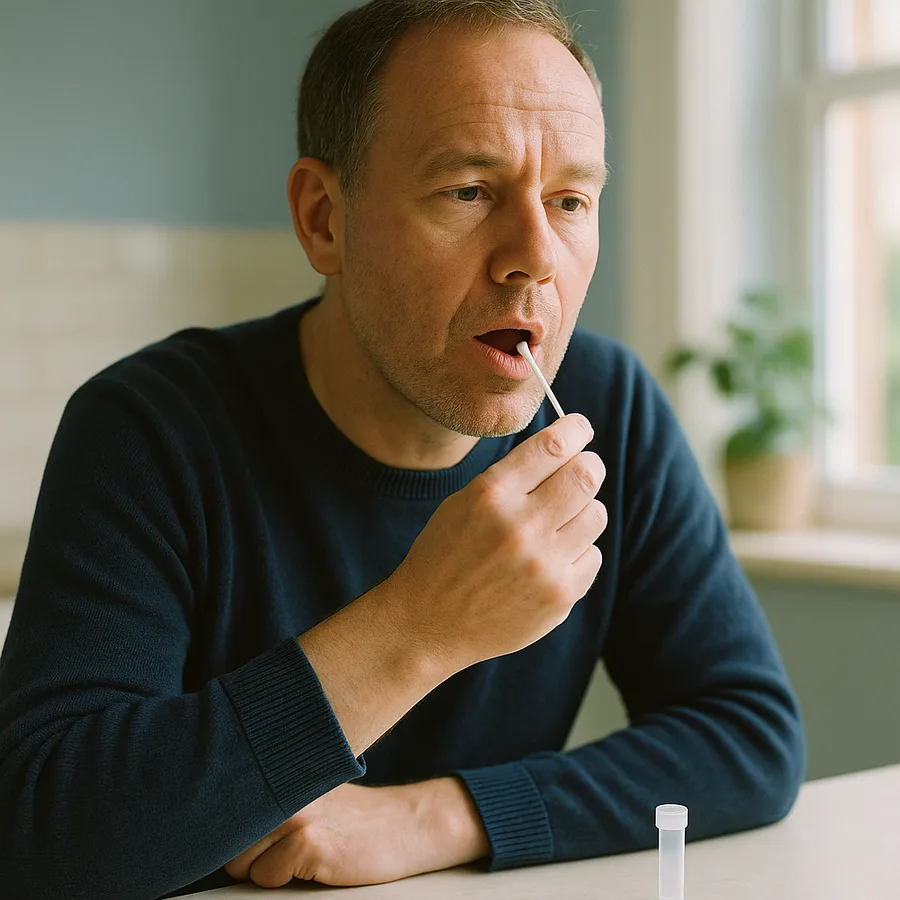
- A cheek swab at home
- Counselling
- 45 minutes, included
- CQC registeredRated Good
- Accredited labFulgent Genetics, USA
- 4.8 on TrustpilotLondon Pregnancy Clinic · 707 reviews
Klarna’s credit agreements are not regulated by the FCA. Use of these and any missed payments may affect your ability to obtain credit from Klarna and other lenders. 18+, UK residents only. Subject to status. T&Cs apply. Klarna terms apply.
Is it right for me?
18+
Genetic testing with Jeen Health is only available to individuals aged 18 and over.
45min
Suitable for adults who have completed a pre-test consultation with one of our genetic counsellors - in clinic, over video, or by phone.
NoGP referral
Anyone aged 18+ can order Cancer Risk Screening directly with Jeen Health.
12cancer types
Breast, ovarian, prostate, pancreatic, colorectal, melanoma, kidney, endometrial, nervous system tumours, stomach, sarcomas and thyroid cancer.

A good choice if you
- Have a personal or family history of cancer
- Have higher-risk ancestry, for example Ashkenazi Jewish (BRCA1/2)
- Want to clarify your risk of developing certain types of cancer, so you can take action early
- Want to understand your inherited risk for proactive screening and lifestyle decisions
Our genetic counsellors and clinical geneticists will guide you through the options, explain the benefits and limitations, and help you decide which test is right for you.
Not the right test if
- You want to know if you have cancer now
- You have symptoms: see your GP first
- You are under 18
What it checks
- 50
- genes linked to hereditary cancer, each sequenced end-to-end
Tap or point at a gene to see what it does.Tap a gene to see what it does.
Our genetic cancer panel focuses on 50 carefully chosen genes, all backed by strong scientific evidence. While some tests look at more genes, many include ones with little clinical value. We focus on what’s most useful, so you get results you can actually act on.
Gene lists are examples of commonly associated genes and may vary by panel design and clinical context.
Click any gene to read its plain-English overview on Jeen Library - function, associated conditions, and inheritance pattern.
Lynch syndrome
5 genesHereditary non-polyposis colorectal cancer · DNA mismatch repair
The *MLH1* gene provides instructions for a protein essential in DNA mismatch repair, a crucial process that corrects errors occurring during DNA replication to maintain genomic integrity. The *MLH1* gene is a key component of the DNA mismatch repair (MMR) system.
Click to read more in the Jeen library.Read more in the Jeen library
The MSH2 gene provides instructions for a protein that is essential for DNA mismatch repair, a critical process for maintaining genomic stability and preventing cancer. MSH2 plays a vital role in correcting errors that occur during DNA replication, acting as part of a complex that identifies and repairs mismatched DNA segments.
Click to read more in the Jeen library.Read more in the Jeen library
The MSH6 gene provides instructions for a protein critical to DNA mismatch repair, playing a vital role in correcting errors that occur during DNA replication. MSH6 is a key component of the mismatch repair (MMR) system, forming a complex with MSH2 to identify and correct replication errors.
Click to read more in the Jeen library.Read more in the Jeen library
The PMS2 gene provides instructions for a protein that is a key component of the DNA mismatch repair system, responsible for correcting errors during DNA replication. The PMS2 gene plays a vital role in maintaining genomic integrity by ensuring accurate DNA replication.
Click to read more in the Jeen library.Read more in the Jeen library
The EPCAM gene provides instructions for the epithelial cell adhesion molecule, a protein essential for cell-to-cell adhesion and critical signalling pathways involved in cell growth, division, and differentiation.
Click to read more in the Jeen library.Read more in the Jeen library
Hereditary breast & ovarian cancer
9 genesBreast / ovarian predisposition
The BRCA1 gene provides instructions for a protein critical in DNA repair and cell growth regulation, acting as a tumour suppressor to prevent uncontrolled cell division.
Click to read more in the Jeen library.Read more in the Jeen library
BRCA2 encodes a tumour suppressor protein critical for repairing DNA double-strand breaks and maintaining genomic stability. The BRCA2 gene produces a protein that coordinates the cellular response to DNA damage, particularly double-strand breaks.
Click to read more in the Jeen library.Read more in the Jeen library
PALB2 (partner and localizer of BRCA2) encodes a protein essential for DNA repair, working closely with BRCA1 and BRCA2 to maintain genome stability. PALB2 provides instructions for a protein that acts as a molecular bridge between BRCA1 and BRCA2, two critical tumour suppressors.
Click to read more in the Jeen library.Read more in the Jeen library
The ATM gene provides instructions for a protein vital for DNA repair and cell cycle regulation, impacting genomic stability, immune function, and neurological development. The ATM gene (ATM serine/threonine kinase) is essential for maintaining the integrity of the genome by coordinating the cell’s response to DNA damage.
Click to read more in the Jeen library.Read more in the Jeen library
CHEK2 encodes checkpoint kinase 2, a tumour suppressor kinase that halts cell division when DNA damage is detected, allowing time for repair or triggering cell death if damage is irreparable. When DNA sustains damage, cells must choose between repairing the lesion or eliminating themselves to prevent propagation of mutations.
Click to read more in the Jeen library.Read more in the Jeen library
The RAD51C gene provides instructions for making a protein critical to DNA repair, and variants in this gene are associated with an elevated risk of developing specific cancers. RAD51C encodes a protein that plays a vital role in maintaining genomic stability through the homologous recombination pathway of DNA repair.
Click to read more in the Jeen library.Read more in the Jeen library
One of the RAD51 family of DNA-repair proteins. It works with RAD51C in the protein complexes essential for DNA repair.
The BRIP1 gene provides instructions for making a protein critical for DNA repair, particularly in the pathways that maintain genomic stability and prevent abnormal cell growth. BRIP1, also known as BRCA1 interacting DNA helicase 1, produces a protein that interacts with the well-known BRCA1 protein to help repair damaged DNA.
Click to read more in the Jeen library.Read more in the Jeen library
The BARD1 gene provides instructions for making a protein that plays a critical role in DNA repair and tumour suppression, often working in conjunction with the BRCA1 protein. The BARD1 gene is essential for maintaining genomic stability and preventing uncontrolled cell growth.
Click to read more in the Jeen library.Read more in the Jeen library
Polyposis syndromes
12 genesGI polyposis / colorectal risk
The APC gene, or APC regulator of Wnt signalling pathway, is crucial for regulating cell growth and division, acting as a tumour suppressor primarily associated with familial adenomatous polyposis (FAP).
Click to read more in the Jeen library.Read more in the Jeen library
The MUTYH gene provides instructions for an enzyme crucial in DNA repair, particularly in correcting errors that can lead to MUTYH-associated polyposis, an inherited condition increasing colorectal cancer risk.
Click to read more in the Jeen library.Read more in the Jeen library
The AXIN2 gene provides instructions for a protein that is a crucial component of the Wnt signalling pathway, which regulates cell growth, development, and differentiation. The AXIN2 gene encodes the axin 2 protein, an essential factor in cellular processes such as cell proliferation and body axis formation.
Click to read more in the Jeen library.Read more in the Jeen library
The RNF43 gene provides instructions for a protein that is involved in regulating cell signalling pathways, particularly the Wnt signalling pathway, and has implications for various cancers. The RNF43 gene encodes the ring finger protein 43, which functions as an E3 ubiquitin ligase.
Click to read more in the Jeen library.Read more in the Jeen library
GREM1, or gremlin 1, is a gene that plays a key role in regulating cell growth and development by inhibiting certain signalling pathways, and is associated with an increased risk of inherited colorectal cancer.
Click to read more in the Jeen library.Read more in the Jeen library
The BMPR1A gene provides instructions for a protein critical in cell growth, division, and differentiation, primarily through the transforming growth factor beta (TGF-β) signalling pathway. BMPR1A, or bone morphogenetic protein receptor type 1A, encodes a receptor protein that plays a pivotal role in cellular communication.
Click to read more in the Jeen library.Read more in the Jeen library
The SMAD4 gene provides instructions for a protein crucial in cellular signalling, regulating cell growth and division, and acting as a tumour suppressor.
Click to read more in the Jeen library.Read more in the Jeen library
The POLE gene provides instructions for making a crucial subunit of DNA polymerase epsilon, an enzyme vital for accurate DNA replication and repair processes within cells. The POLE gene is fundamental to maintaining genomic stability by encoding a key component of DNA polymerase epsilon.
Click to read more in the Jeen library.Read more in the Jeen library
The POLD1 gene provides instructions for making a subunit of DNA polymerase delta, a crucial enzyme involved in DNA replication and repair, particularly in correcting errors during DNA synthesis.
Click to read more in the Jeen library.Read more in the Jeen library
The NTHL1 gene provides instructions for making a protein involved in base excision repair, a key pathway for correcting DNA damage and maintaining genomic stability within cells. The NTHL1 gene is essential for cellular defence against DNA damage, ensuring the integrity of the genome.
Click to read more in the Jeen library.Read more in the Jeen library
MBD4 encodes a specialised DNA repair enzyme that removes damaged methylated cytosine bases, protecting cells from mutations that can lead to cancer. The MBD4 gene provides instructions for making methyl-CpG binding domain protein 4, a DNA glycosylase enzyme that recognises and removes chemically modified bases from DNA.
Click to read more in the Jeen library.Read more in the Jeen library
The STK11 gene provides instructions for making serine/threonine kinase 11, a crucial enzyme that acts as a tumour suppressor, regulating cell growth, division, and energy use. STK11 encodes a protein vital for preventing uncontrolled cell proliferation and maintaining tissue integrity.
Click to read more in the Jeen library.Read more in the Jeen library
Li-Fraumeni syndrome
1 geneBroad tumour predisposition
TP53 encodes tumour protein p53, a critical regulator of cell division and DNA repair often called the guardian of the genome. The TP53 gene provides instructions for making the p53 protein, which controls whether cells with damaged DNA should be repaired or eliminated.
Click to read more in the Jeen library.Read more in the Jeen library
Hereditary diffuse gastric cancer
1 geneGastric / lobular breast cancer risk
The CDH1 gene provides instructions for producing the E-cadherin protein, which is crucial for cell adhesion, tissue organisation, and acts as a tumour suppressor. The CDH1 gene encodes E-cadherin, a protein vital for cell-to-cell adhesion in epithelial tissues throughout the body.
Click to read more in the Jeen library.Read more in the Jeen library
Cowden syndrome
1 geneHamartoma tumour syndrome
PTEN encodes a phosphatase enzyme that regulates cell growth and division, with pathogenic variants causing Cowden syndrome and increased cancer susceptibility. The PTEN gene produces an enzyme that acts as a critical brake on cell proliferation, preventing uncontrolled growth that can lead to tumour formation.
Click to read more in the Jeen library.Read more in the Jeen library
Renal cancer predisposition
4 genesKidney / renal tumour risk
The MET gene provides instructions for making a protein involved in essential cellular processes, including cell growth, movement, and survival, acting as a proto-oncogene. The MET gene is a proto-oncogene that plays a critical role in early development and tissue regeneration.
Click to read more in the Jeen library.Read more in the Jeen library
Explore the FH gene, which codes for fumarate hydratase, a crucial enzyme in cellular energy production. The FH gene provides instructions for producing the fumarate hydratase enzyme, which is vital for cellular energy metabolism and plays a role in various inherited conditions, including certain cancer predisposition syndromes.
Click to read more in the Jeen library.Read more in the Jeen library
The FLCN gene encodes the folliculin protein, which is thought to function as a tumour suppressor, playing roles in cell growth, division, and tissue repair. The FLCN gene is responsible for producing the folliculin protein, which is found in many body tissues, including the kidneys, lungs, and skin.
Click to read more in the Jeen library.Read more in the Jeen library
The VHL gene encodes a tumour suppressor protein that regulates cellular responses to oxygen levels and controls the degradation of proteins involved in blood vessel formation. VHL produces a protein component of the VCB-CUL2 complex, which marks other proteins for breakdown when they are no longer required.
Click to read more in the Jeen library.Read more in the Jeen library
Endocrine tumour syndromes
3 genesMEN / endocrine tumours
The MEN1 gene provides instructions for producing menin, a protein crucial for regulating cell proliferation and acting as a tumour suppressor, with pathogenic variants linked to multiple endocrine neoplasia type 1.
Click to read more in the Jeen library.Read more in the Jeen library
The RET gene provides instructions for a receptor tyrosine kinase protein involved in cell signalling, crucial for the development of various nerve cells, kidneys, and spermatogenesis.
Click to read more in the Jeen library.Read more in the Jeen library
The CDKN1B gene provides instructions for producing the p27 protein, a crucial regulator of cell growth and division, functioning as a tumour suppressor. CDKN1B encodes the p27 protein, which is vital for preventing uncontrolled cell proliferation by inhibiting cell cycle progression.
Click to read more in the Jeen library.Read more in the Jeen library
Neurofibromatosis type 1
1 geneNeurocutaneous tumour risk
The NF1 gene encodes neurofibromin, a tumour suppressor protein that controls cell growth by regulating signalling pathways critical for preventing uncontrolled cell division. Located on chromosome 17, NF1 produces neurofibromin, a large protein that acts as a molecular brake on cell proliferation.
Click to read more in the Jeen library.Read more in the Jeen library
Tuberous sclerosis complex
2 genesHamartomas / benign tumours
The TSC1 gene provides instructions for producing hamartin, a protein that plays a vital role in regulating cell growth, proliferation, and size. Hamartin, produced from the TSC1 gene, interacts with tuberin (from the TSC2 gene) to form a complex that acts as a tumour suppressor.
Click to read more in the Jeen library.Read more in the Jeen library
TSC2 encodes tuberin, a tumour suppressor protein that regulates cell growth and division, with pathogenic variants causing tuberous sclerosis complex and related disorders. The TSC2 gene provides instructions for producing tuberin, a protein that works alongside hamartin to control cell proliferation and size.
Click to read more in the Jeen library.Read more in the Jeen library
Paraganglioma & phaeochromocytoma
6 genesParaganglioma / PCC predisposition
The SDHA gene provides instructions for making a critical component of the succinate dehydrogenase (SDH) enzyme, vital for cellular energy metabolism and preventing uncontrolled cell growth.
Click to read more in the Jeen library.Read more in the Jeen library
SDHB encodes an iron-sulphur subunit of succinate dehydrogenase, a mitochondrial enzyme that bridges the citric acid cycle and oxidative phosphorylation while preventing uncontrolled cell growth.
Click to read more in the Jeen library.Read more in the Jeen library
The SDHC gene provides instructions for a key component of the succinate dehydrogenase enzyme, which is vital for mitochondrial energy production and acts as a tumour suppressor. The SDHC gene codes for a subunit of the succinate dehydrogenase (SDH) enzyme, which is integral to cellular energy conversion within mitochondria.
Click to read more in the Jeen library.Read more in the Jeen library
The SDHD gene provides instructions for a key component of the succinate dehydrogenase enzyme complex, essential for cellular energy conversion within mitochondria.
Click to read more in the Jeen library.Read more in the Jeen library
The TMEM127 gene provides instructions for a protein that acts as a tumour suppressor, regulating cell growth and division, and is associated with inherited forms of phaeochromocytoma and paraganglioma.
Click to read more in the Jeen library.Read more in the Jeen library
MAX encodes a transcriptional regulator that partners with MYC family proteins to control genes involved in cell proliferation, differentiation, and apoptosis. The MAX gene provides instructions for making a protein that forms the core of a transcriptional network regulating cellular growth and division.
Click to read more in the Jeen library.Read more in the Jeen library
Melanoma predisposition
2 genesMelanoma / BAP1-related
The CDKN2A gene provides instructions for producing proteins that act as tumour suppressors, playing a crucial role in preventing uncontrolled cell growth. CDKN2A is fundamental for regulating the cell cycle and safeguarding against tumour development.
Click to read more in the Jeen library.Read more in the Jeen library
The BAP1 gene provides instructions for a protein that acts as a deubiquitinase, playing a crucial role in cell growth, DNA repair, and tumour suppression. BAP1 is a vital gene involved in maintaining cellular health and preventing uncontrolled cell proliferation.
Click to read more in the Jeen library.Read more in the Jeen library
Other cancer-associated genes
3 genesAdditional predisposition genes
The MSH3 gene provides instructions for making a protein critical to DNA mismatch repair, a process that corrects errors during DNA replication to maintain genomic stability.
Click to read more in the Jeen library.Read more in the Jeen library
The MLH3 gene provides instructions for making a protein that is a crucial component of the DNA mismatch repair (MMR) pathway, essential for maintaining genomic integrity and preventing mutations. MLH3 is a gene central to the body’s DNA repair machinery, specifically the mismatch repair system.
Click to read more in the Jeen library.Read more in the Jeen library
The HOXB13 gene provides instructions for a protein that acts as a transcription factor, playing a key role in growth, development, and maintaining normal cell division. HOXB13 is a gene that codes for a transcription factor protein essential for proper cellular development and regulation.
Click to read more in the Jeen library.Read more in the Jeen library
Every gene on the panel, A to ZEach gene with the group it sits in
- 1 in 2
- people in the UK will be diagnosed with cancer at some point in their life
- 12
- types of cancer, from breast and bowel to kidney, stomach and thyroid
- 50x
- coverage: our partner lab examines the target regions of your DNA about 50 times
- >99%
- accuracy with Fulgent’s state-of-the-art Illumina sequencing at 50x coverage
How it works
Simple, clinician-supported steps to take your test with Jeen.
-
Step 1
Talk to a genetic counsellor
Book your included 45-minute consultation with our specialist genetic counsellor. Confirm the test that’s right for you.
They will discuss your personal and family history, and the scope, benefits, limitations and potential outcomes of genetic testing.
-
Step 2
Consent and kit
Complete your consent form online. Your kit is dispatched 1–2 working days after you sign your consent form, by next-day delivery.
-
Step 3
Your sample at home
An at-home cheek swab: you collect the sample yourself and post it back.
Or a blood sample: the Tasso home kit, a partner clinic, or a nurse at home.
-
Step 4
Results and follow-up
Your results are reviewed by your genetic counsellor. We share them with you securely, and book a follow-up consultation with onward referrals if your result is high-risk.
Ways to give your sample
An at-home cheek swab kit: you collect the sample yourself and post it back.
A small blood sample you collect yourself at home, from your upper arm, without a needle in your vein. Post it back any day of the week.
A standard blood draw at one of our 200+ partner clinics across the UK. Find your nearest clinic
Our partner clinics do not keep test kits. We post your kit to you after your consultation: book your blood draw only once it has arrived, and take it with you.
A mobile phlebotomist takes your blood sample at your home.
How to collect blood with the Tasso device
The Tasso device is a small, single-use kit that collects a blood sample from your upper arm without a needle in your vein. A gentle button-press opens tiny channels just under the skin, and the sample is drawn into a collection tube. It takes a few minutes at home - no clinic visit, no phlebotomist. Follow the four steps below to collect your sample correctly.
- Attach the collection tube. Take the green-capped collection tube from your kit and attach it to the base of the Tasso device until it clicks into place.
- Place on your shoulder and activate. Press the device firmly onto your clean, dry upper shoulder so it sticks, then press the red button to begin collection. Keep it in place and let the tube fill.
- Check the blood level, then remove the tube. The blood level must reach at least another 200 above the 400 mark on the tube - fill close to the top, but do not overfill. Once there is enough blood, remove the collection tube from the device.
- Close, shake and prepare for return. Close the green cap securely and shake the tube gently to mix. Complete the label, seal the tube inside the biohazard bag, and return it using the prepaid packaging in your kit. Don’t forget to include your completed test requisition form in the box.
Post it back any day of the week. Your results take the same time as with our other collection methods - the Tasso kit is simply another way to give your sample at home.
Please note: the Tasso blood collection device may very rarely leave a permanent mark of approximately 2 mm on the shoulder. Although the mark is usually barely visible, please consider this before selecting this blood collection option.
Price and what’s included
£660
Included in the price
- 45-minute pre-test consultation with our specialist genetic counsellor
- At-home oral swab kit, with free next-day delivery
- Lab analysis at our partner laboratory
- Clinical-grade report, with a follow-up consultation if a pathogenic variant is found
Your sample choose one
- Oral SwabIncluded
- Tasso Home Collection Kit+£25
- Jeen Clinic NetworkOnce your kit has arrived+£40
- Home Nurse Visit+£65
Good to know
Delivery and returns
1. Get your kit from us. Free delivery of your test kit, dispatched 1–2 working days after your included 45-minute specialist genetic counsellor consultation and your signed consent form, by next-day delivery. Changed your mind? Return the kit unused within 30 days at no charge.
2. Posting your sample back. After sample collection, send your sample in the pre-paid bag to the nearest depot (details in your email). Turnaround is counted in working days from when your sample reaches the laboratory.
- Turnaround
- 17–21 working days
Your result

Results in 17–21 working days
Counted from when your sample reaches the laboratory. Each report is reviewed by your specialist genetic counsellor and shared with you securely.
A higher-risk result?
We will offer you a complimentary consultation with our genetics clinician specialising in cancer genetics to further discuss the implications of the higher risk test result.
A tailored plan
Our clinical team will make personalised recommendations based on your test results, which may include further tests, scans or other risk management options.
How much cancer risk is actually inherited, and what a genetic test can tell you.
A short video from the Jeen team.
What it cannot tell you
Inherited risk, not a diagnosis
Cancer Risk Screening is a screening test for inherited risk, not a diagnosis, and it cannot tell you whether you have cancer now. It does not test for cancer itself.
Only these 50 genes
It reports changes in the 50 genes on this page and does not cover every gene linked to cancer. It may not detect every type of variant, so a negative result does not rule out an inherited cause of cancer or mean you will not develop cancer; a positive result means a higher risk, not that you will develop cancer. Your specialist genetic counsellor can talk through the panel with you before you decide to test.
Keep up your NHS screening
It screens the genes you were born with for inherited risk. It does not replace NHS cancer screening or diagnostic tests (such as mammograms, FIT tests, or scans), which look for cancer or early signs of disease. Please keep taking up NHS screening invitations, and see your GP promptly about any symptoms.
Other cancer tests
Price, turnaround and coverage side by side. Tick “Compare” on up to three.
-
BRCA Testing
Checks BRCA1, BRCA2 and eight other genes linked to inherited breast, ovarian and prostate cancer.
-
Combined Cancer + Carrier Screening
The 50-gene cancer panel and the 1,008-gene carrier screen together: one counselling session, one report.

Questions and answers
What is cancer risk testing?
Cancer risk genetic testing looks for inherited genetic variants that may increase your risk of developing certain cancers. It does not test for cancer itself. Some people may choose broader panels that analyse many genes, while others opt for more targeted testing based on their personal or family history of cancer. If a close relative is known to carry a cancer-related genetic variant, you may choose targeted testing for that specific familial variant. It’s important to distinguish genetic cancer risk testing from cancer screening or diagnostic tests (such as mammograms, FIT tests, or scans), which are designed to detect cancer or early signs of disease. Our genetic counsellors and clinical geneticists will guide you through the options, explain the benefits and limitations, and help you decide which test is right for you.
What cancers can be genetically tested?
If you’re looking for comprehensive genetic testing to check for inherited risks linked to breast, ovarian, prostate, bowel, pancreatic, or skin cancers, Jeen offers at-home DNA tests across the UK. The test analyses 50 carefully chosen genes, each backed by strong scientific evidence linked to cancer risk. Our testing gives you a clearer view of your genetic risk and helps you make confident, informed decisions about your health.
Can genetic testing detect cancer?
Some tests, such as mammograms or FIT tests, are used to screen for or diagnose cancer. At Jeen, we offer genetic testing that looks for inherited gene changes that could raise your risk of certain cancers, often before any symptoms appear. It doesn’t detect cancer itself, but it gives you the chance to take early, proactive steps like tailored screening or prevention. With this insight, you can understand your health better and stay one step ahead.
What are the different cancer risk panels offered through Jeen Health?
Jeen Health offers a range of genetic cancer risk panels designed to identify inherited gene changes that may increase the risk of certain cancers. Available options include:
- Targeted multi-gene panels, focusing on a defined set of clinically actionable genes linked to cancers such as breast, ovarian, bowel, or prostate cancer
- Comprehensive multi-gene panels, analysing a broader range of cancer-related genes; some genes are included only in specific cases and require approval from our genetic counsellors due to limited clinical evidence
- Known familial variant testing, for individuals with a close relative known to carry a cancer-related genetic variant
All options are discussed during a consultation with one of our genetic counsellors or clinical geneticists, who will help you choose the most appropriate test and understand its benefits and limitations.
One of my relatives has been found to carry a variant in a cancer gene, can I find out if I carry it too?
If you have a close relative who carries a change in a gene that is confirmed to increase risk of developing cancer, you may choose to have a genetic test to find out if you carry the same gene change. In this case, it is helpful if you can provide a copy of your relative’s genetic test report to ensure the most accurate testing possible.
Should I get tested for cancer if it runs in my family?
If you have a family history of cancer, genetic testing can provide useful information about your own risk. With support from Jeen’s expert genetic counsellors, your genetic test results can help you make informed decisions around risk management and plan ahead with confidence.
Why is a genetic counselling session part of the test?
The power of pedigree. A key part of your test is a 45-minute personalised session with one of our genetic counsellors. Genetics can be complex, but you’re not alone. We’re here to guide you through it. By exploring your family history, we can uncover valuable insights that could make a real difference to your health.
How is genetic testing for cancer performed?
At Jeen, our private genetic testing for cancer uses a simple cheek swab you can do at home. Your DNA is analysed in a certified lab to look for inherited changes that may increase your cancer risk. Whether you’re in London or anywhere in the UK, our private cancer screening helps you take control of your health with expert guidance.
How accurate is genetic testing for cancer?
Our partner lab uses accurate and advanced technology, examining the target regions of your DNA about 50 times to make sure the results are reliable. While no genetic test can tell you if you will or will not get cancer, accurate testing can help give you useful insights about your personal risk, so you can plan ahead. Learn more about the statistics here at Jeen.
Which lab analyses my sample?
Fulgent Genetics, based in California, is a global leader in genetic testing and analysis. We’ve partnered with them because quality matters, especially when it comes to your health. Their state-of-the-art Illumina sequencing technology delivers over 99% accuracy at 50x coverage, ensuring your results are both reliable and clinically meaningful. Medicine is always evolving and so are we: our expert team stays up to date with the latest research and clinical guidelines, so you’re always getting advice that’s current, trusted, and tailored to you.
Do I need a GP referral?
No. Anyone aged 18+ can order Cancer Risk Screening directly with Jeen Health. Your kit is dispatched 1–2 working days after your included 45-minute pre-test consultation with our specialist genetic counsellor and your signed consent form, by next-day delivery.
Who checked it, and sources
Medically reviewed by Lily Barnett, Cancer Genetic Counsellor.Last reviewed November 2026.
The statistics and clinical claims on this page are supported by the following authoritative sources.
- Cancer Research UK: lifetime risk
- NCBI
- Laboratory analysis: About our testing
Laboratory accreditations
Your sample is analysed by Fulgent Genetics, in the USA. Its laboratories are:
- CAP-accredited: inspected and accredited by the College of American Pathologists
- CLIA-certified: certified to the US federal standards for clinical laboratories (CLIA)
In Fulgent Genetics’ own words: “We currently operate 7 labs across the United States, all of which are CLIA-certified and CAP-accredited” fulgentgenetics.com
The information provided in this article is for educational purposes only and is based on NHS recommendations. It is not a substitute for professional medical advice. Always consult your doctor or a qualified healthcare provider for advice on medical conditions or treatments.
Not sure? Ask a person.
Tell a genetic counsellor what you are worried about and they will point you to the right test, or tell you if you do not need one.