



CGT: Igenomix Carrier Genetic Test
Igenomix’s whole-exome carrier test, covering more than 2,200 inherited conditions.
- Results in
- 25 working days
- Igenomix whole-exome sequencing - 1,993 (M) / 2,057 (F) genes, >2,200 conditions
- 30-minute pre-test genetic counselling included
- Blood draw at any of our 200+ collection points (+£40; home-nurse visit +£65) (+£40; home-nurse visit +£65)
- Results in 25 working days, reviewed by your genetic counsellor
Klarna’s credit agreements are not regulated by the FCA. Use of these and any missed payments may affect your ability to obtain credit from Klarna and other lenders. 18+, UK residents only. Subject to status. T&Cs apply. Klarna terms apply.
How it works
Talk to a clinician
Book your included 30-minute consultation with our genetic counsellor (video or phone). Confirm the test that's right for you.
Consent + collect
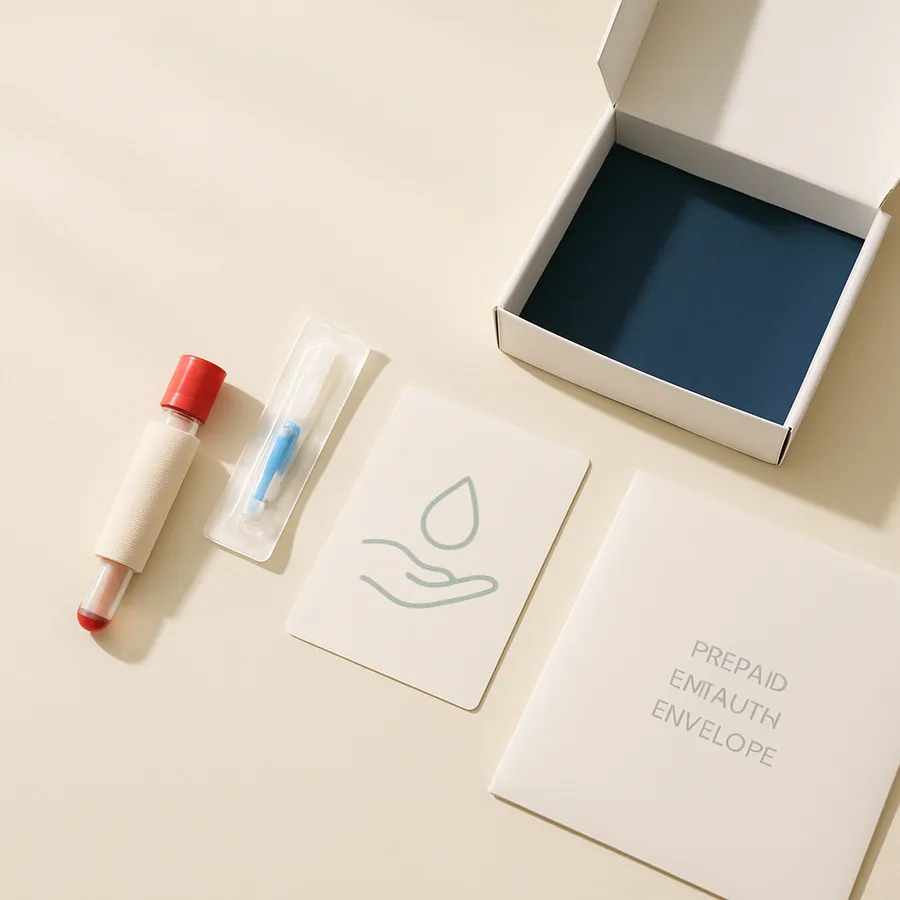
Complete your consent form online, receive your kit, and collect your sample at home or via a clinic of your choice.
Results + follow-up
Your results are reviewed by your genetic counsellor. We share them with you securely, and book a follow-up consultation with onward referrals if your result is high-risk.
Is it right for you?
Who this test is for, in plain words.
Suitable if
Genetic testing with Jeen Health is suitable for adults who have completed a pre-test consultation with one of our genetic counsellors - in clinic, over video, or by phone.
Genetic testing with Jeen Health is only available to individuals aged 18 and over.
Good to know
Delivery, the sample and the small print, in plain words.
Delivery and returns
1. Get your kit from us. Free delivery of your test kit, dispatched 1–2 working days after your included 30-minute genetic counsellor consultation (video or phone) and your signed consent form, by next-day delivery. Changed your mind? Return the kit unused within 30 days at no charge.
2. Posting your sample back. After sample collection, send your sample in the pre-paid bag to the nearest depot (details in your email). Turnaround is counted in working days from when your sample reaches the laboratory.
- Turnaround
- 25 working days
- Laboratory
- Igenomix UK
How the sample is taken
Blood draw : Standard venous blood draw, performed at a clinic or by a mobile phlebotomist.
Where you can have blood taken
200+ partner clinics across the UK. If you choose a clinic blood draw, you pick the one nearest to you. Find your nearest clinic.
Your kit comes first. Our partner clinics do not keep test kits. We post your kit to you after your consultation: book your blood draw only once it has arrived, and take it with you.
London Pregnancy Clinic, no extra fee. Local to London? Have your blood taken at our own clinic, at no extra cost: choose “Arrange your own” when you order. (36 Spital Square, London E1 6DY)
CGT - the whole-exome carrier screen
Standard carrier screening looks at a fixed panel of 1,008 genes. CGT (Carrier Genetic Test) from Igenomix uses whole-exome sequencing - reading the protein-coding regions of the genome and reporting clinically across 1,993 genes (male) or 2,057 genes (female, including 66 X-linked).
CGT is for people and couples who want whole-exome carrier screening before conceiving.
What's included
- Whole-exome sequencing reported across 1,993 (M) / 2,057 (F) genes covering >2,200 inherited recessive and X-linked conditions
- Complementary deep sequencing of difficult regions: CYP21A2, HBA1/2, SMN1 (male & female); DMD, FMR1, F8 (female only)
- 150× mean depth - well above the standard for clinical-grade variant detection
- 30-minute pre-test consultation with our specialist genetic counsellor
- Blood sample drawn at any of our 200+ collection points, via a home nurse visit, or at a phlebotomist you arrange yourself
- Results in 25 working days from lab receipt, reviewed by your genetic counsellor
- High-risk follow-up consultation included if results return a clinically-actionable finding
If you're undecided between CGT and our standard Carrier Screening, our genetic counsellor will walk you through the trade-offs on your pre-test call - there's no commitment to either test until that conversation.
What CGT cannot tell you
CGT is a carrier screening test, not a diagnosis. It reads the protein-coding regions of the genome (with extra analysis of a small number of difficult regions) and reports on a curated set of 1,993 genes (male) or 2,057 genes (female), so it does not cover every gene and may not detect variants outside the regions it reads. A negative result lowers, but does not remove, the chance that you or your partner carry a recessive or X-linked condition, and it cannot say whether a pregnancy is affected. Results can include variants of uncertain significance. Your genetic counsellor will explain what your result does and does not mean.
Resources
- 📄 CGT panel comparison (2024) - full breakdown of the Bank / Plus / Exome / SYNC tiers, gene counts, complementary tests, and turnaround times (Igenomix, PDF)
- 📄 CGT patient guide (2022) - what CGT is, who it's for, and how to interpret the results (Igenomix, PDF)
Methodology
Whole-exome sequencing performed by Igenomix UK. 150× mean depth across coding regions. Variant interpretation follows ACMG/AMP 2015 guidelines and ACOG carrier-screening recommendations. Complementary deep sequencing of difficult regions (CYP21A2, HBA1/2, SMN1; plus DMD, FMR1, F8 in female samples).
References
- Capalbo et al., Eur J Hum Genet (2021) - clinical utility of expanded carrier screening
- Archibald et al., Genet Med (2018) - population carrier frequencies; 88% of carriers have no family history
- ACOG Committee Opinion (March 2017) - carrier screening for genetic conditions
Compare with similar tests
 Sperm Analysis in London
£220
Results in 2–3 working days
 Karyotype Chromosome Analysis
£270
Results in 10–14 working days
Carrier Screening
£660
Results in 17–21 working days · 1,008 genes
 SMA Newborn Testing
£690
Results in 3–4 weeks · 2 genes
 Newborn Genetic Screening
£720
Results in 3–4 weeks · 258 genes
 Carrier Screening + Karyotype
£850
Results in 17–21 working days
CGT: Igenomix Carrier Genetic Test
£990
Results in 25 working days
Common questions
How much does CGT cost?
£990 for a single person and £1,840 for a couple. Both include whole-exome sequencing reported across 1,993 genes (male) or 2,057 genes (female, including 66 X-linked) on the Igenomix CGT Exome panel, a 30-minute pre-test counselling call with a specialist genetic counsellor, and full results review. The home-nurse visit option adds £65 (single) or £130 (couple) to cover the phlebotomist's travel.
How is the sample for CGT collected?
CGT requires a blood sample - collected at any of our 200+ collection points or via a home nurse visit on request. Unlike our standard Carrier Screening, CGT does not offer a swab option because whole-exome sequencing needs the higher DNA yield that blood provides.
How long do CGT results take?
25 working days from the date Igenomix receives your sample. Each result is reviewed by your genetic counsellor; we book a follow-up consultation if findings are high-risk or carry implications for your reproductive planning.
What's the difference between CGT and standard Carrier Screening?
CGT uses whole-exome sequencing and reports clinically across 1,993 genes (male) or 2,057 genes (female, including 66 X-linked) - covering >2,200 inherited recessive and X-linked conditions. Our standard Carrier Screening uses a targeted panel of 1,008 genes. CGT requires a blood sample (no swab option) and costs more. Your genetic counsellor will help you choose between them on the pre-test call.
Do I need a GP referral for CGT?
No. Anyone aged 18+ can book directly with Jeen Health. Our genetic counsellor will be in touch to schedule your 30-minute pre-test consultation before any sample is taken - that conversation also covers consent and confirms CGT is the right test for you.
Do both partners need to get tested?
It’s ideal for both partners to be tested, but we usually start by testing one. If that person is not a carrier, no further testing is needed. If they are, then their partner should be tested to check for the same condition. This step-by-step approach helps keep testing straightforward and cost-effective. Our team will guide you based on the results and help you understand your reproductive risks together.
Can I have carrier screening if I’m already pregnant?
Mostly yes, you can have carrier screening during pregnancy - depending on how far along you are. Ideally, carrier screening is done before conception so you have more time and options, but it’s still valuable if you’re already pregnant. If you’re found to be a carrier during pregnancy, we may recommend testing your partner too. If both partners carry the same gene variant, there’s a 1 in 4 (25%) chance the baby could inherit the condition. Our genetic counsellors will support you through the next steps.
What happens if I’m found to be a carrier?
If you’re found to be a carrier, it means you have one copy of a gene variant linked to a particular condition. Carriers usually do not have symptoms, but if your partner is also a carrier for the same condition, there may be a chance of passing the condition on to your child (depending on the inheritance pattern). Our genetic counsellors will explain your results and what they mean for you. Depending on your partner’s results and your family plans, next steps may include partner testing, discussing reproductive options, or simply keeping this information in mind for future pregnancies. In some situations, such as complex results, a strong family history, or higher-risk findings, you may also be advised to speak with a clinical geneticist for more detailed medical guidance.
What are X-linked conditions?
X-linked conditions are genetic disorders caused by changes in genes found on the X chromosome, one of the two sex chromosomes. Since males only have one X chromosome (and one Y), if they inherit a gene variant on the X chromosome, they’re more likely to be affected by the condition. Females have two X chromosomes, so if one carries a faulty gene, the other can often compensate, which means women are usually carriers without symptoms. Some common X-linked conditions include Duchenne muscular dystrophy and fragile X syndrome. If you’re a female carrier of an X-linked condition, there’s a 50% chance of passing the gene to each child. Sons who inherit it are more likely to be affected, while daughters may become carriers like you.
Not sure? Ask a person.
Tell a genetic counsellor what you are worried about and they will point you to the right test, or tell you if you do not need one.