
Common NIPT questions, and what a positive result really means.



- Fast results: typically 3–4 working days, as samples are processed and reported six days a week
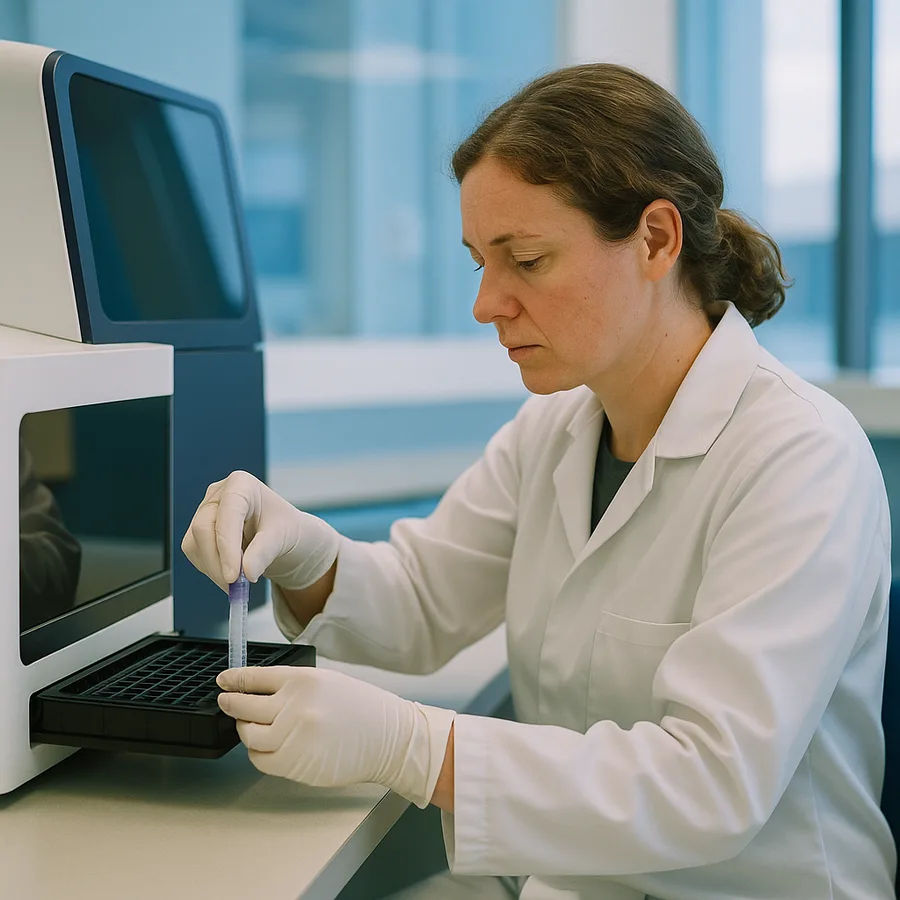
- Analysed in the UK, on Illumina’s VeriSeq v2 platform at TDL Genetics (The Doctors Laboratory)
- Detection rate over 99% for Down’s syndrome (trisomy 21; a screening test, not a diagnosis)
- Safe and simple: a standard blood draw from the pregnant person, with no risk to the pregnancy
- Optional: your baby’s sex, if you wish
200+ collection points across the UK · Find your nearest
Medically reviewed by Dr Fred Ushakov, Medical Director & Founder · Last reviewed November 2026
Express NIPT
Also called VeriSeq v2 NIPT
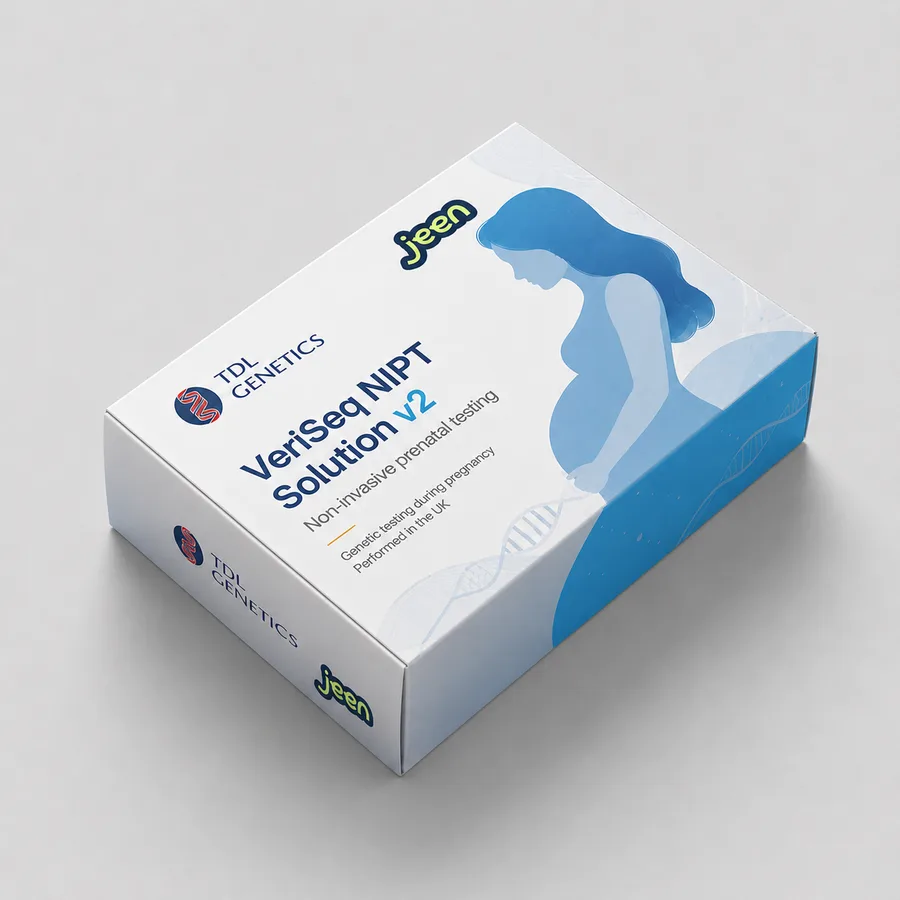
Screens for Down’s, Edwards’ and Patau’s syndromes, analysed in the UK, with results in 3–4 working days. From 10 weeks of pregnancy.
- Take it from
- 10 weeks pregnant
- Results in
- 3–4 working days
- Screens for
- 3 conditions
- Analysed at
- TDL Genetics, UK
- CQC registeredRated Good
- Accredited labTDL Genetics, UK
- 4.8 on TrustpilotLondon Pregnancy Clinic · 707 reviews
Klarna’s credit agreements are not regulated by the FCA. Use of these and any missed payments may affect your ability to obtain credit from Klarna and other lenders. 18+, UK residents only. Subject to status. T&Cs apply. Klarna terms apply.
Is it right for me?
10–16weeks
Best performed between 10 and 16 weeks of pregnancy.
Singlepregnancy
Suitable for singleton pregnancies. If you are expecting twins or have used donor eggs or a surrogate, please speak to our midwife before ordering.
7days
You will need an ultrasound scan from the last 7 days, confirming a normally developing pregnancy.
18+
Genetic testing with Jeen Health is only available to individuals aged 18 and over.

A good choice if you
- Want your result fast: typically in 3–4 working days.
- Would like your sample analysed in the UK.
- Want the three most common chromosomal conditions screened, and your baby’s sex if you wish.
The fastest of our NIPTs, and the one analysed in the UK.
Not suitable if any of these apply
- Pregnancy beyond 16 weeks
- Triplets or more
- History of chromosomal abnormalities
- Parental mosaicism
- Fetal demise
- An active malignancy
- A previous bone marrow / organ transplant
Past 16 weeks? Please reach out before ordering. Our genetic counsellors will discuss your circumstances and recommend the most suitable option.
What it checks
- 3
- conditions checked in a single non-invasive test
- 1 in 240*
- pregnancies are affected by the conditions screened by Express NIPT How we work this out
Conditions like Trisomy 21, 18, and 13 can occur even without family history. Screening helps identify risk early in pregnancy.
* This number is based on UK prevalence data for the conditions screened by Express NIPT.
Common trisomies 3
A genetic condition causing learning disabilities and characteristic physical features.
Click to read more in the Jeen library.Read more in the Jeen library
Associated with severe developmental delays and physical abnormalities.
Click to read more in the Jeen library.Read more in the Jeen library
Linked to serious intellectual disability and physical defects.
Click to read more in the Jeen library.Read more in the Jeen library
Optional 1
Reported only if you wish. If you’d rather not find out, it is not included in your report.
Tap or point at a condition to see what it is.Tap a condition to see what it is.
How it works
Simple, clinician-supported steps to take your test with Jeen.
-
Step 1
Talk to a midwife
Book your included 20-minute consultation with our specialist midwife. Confirm the test that’s right for you.
If you speak with the midwife but testing does not go ahead, a £50 consultation fee applies.
-
Step 2
Consent and kit
Complete your consent form online and receive your kit.
Your kit is dispatched 1–2 working days after you sign your consent form, by next-day delivery.
-
Step 3
One blood sample
A standard blood draw from the pregnant person, from 10 weeks of pregnancy.
No risk to the pregnancy. Send your sample back in the pre-paid bag, to the nearest depot (details in your email).
-
Step 4
Results in 3–4 working days
Your results are reviewed by your midwife. We share them with you securely.
Analysed on Illumina’s VeriSeq NIPT Solution v2, a whole-genome sequencing NIPT platform, at TDL Genetics in the UK.

Where to give your blood sample
You arrange your own blood draw with a local nurse, midwife, phlebotomy service, or clinic.
A blood draw at one of our 200+ partner clinics across the UK. Find your nearest clinic
Our partner clinics do not keep test kits. We post your kit to you after your consultation: book your blood draw only once it has arrived, and take it with you.
We’ll send a qualified nurse to your home to take your blood sample.
Local to London? Have your blood taken at our own clinic, at no extra cost: choose “Arrange your own” when you order.
36 Spital Square, London E1 6DY
What are my blood draw options for Express NIPT?
In line with our flexible, prevention-first approach, Jeen Health offers multiple convenient options for how you provide your DNA sample for Express NIPT:
Self-Arranged Blood Draw (Free)
We’ll send your Express NIPT kit and you can then arrange your own blood draw with a local nurse, midwife, phlebotomy service, or clinic. Many patients ask their private GP, or maternity care provider to assist. Please ensure your provider is comfortable drawing into the NIPT-specific tubes supplied in your kit. If needed, we can share instructions.
- Best if you already have a provider you trust
- No added charge from Jeen, but you may need to pay your chosen provider directly
- Nationwide availability across the UK and some EU regions
Jeen Clinic Network (+£40)
Prefer a clinic-based option? Book a blood draw appointment at one of our 200+ trusted partner locations across the UK. Clinics in major cities including Brighton, Cambridge, London, Manchester, Birmingham, Leeds, Newcastle, Edinburgh, Bristol, Cardiff, and Belfast.
- Quick and easy appointments, often near transport hubs
Home Visit (+£65)
Need maximum convenience? We’ll send a qualified nurse to your home to take your blood sample.
- Ideal for patients with mobility, time or privacy needs
- Available across most of the UK and appointments coordinated by our team
These sample collection options ensure NIPT is accessible on your terms, you choose what’s easiest and most comfortable. No matter where you live, you can pick the collection method that suits you best.
Price and what’s included
£325
Included in the price
- 20-minute midwife consultation
- Test kit, with free next-day delivery
- Lab analysis on the Illumina VeriSeq v2 platform at TDL Genetics in the UK
- Clinical-grade report, reviewed by your midwife
- A specialist follow-up consultation if your result is high-risk
£50 consultation fee if testing does not go ahead after you speak with the midwife. Changed your mind? Return the kit unused within 30 days at no charge.
Your blood draw choose one
- Arrange your ownNo extra charge
- Jeen Clinic NetworkOnce your kit has arrived+£40
- Home Nurse Visit+£65
- London Pregnancy ClinicLocal to London: choose “Arrange your own”No extra charge
Good to know
Delivery and returns
1. Get your kit from us. Free delivery of your test kit, dispatched 1–2 working days after your midwife consultation and your signed consent form, by next-day delivery. Changed your mind? Return the kit unused within 30 days at no charge.
2. Posting your sample back. After sample collection, send your sample in the pre-paid bag to the nearest depot (details in your email). Turnaround is counted in working days from when your sample reaches the laboratory.
- Turnaround
- 3–4 working days
- Laboratory
- TDL Genetics, UK
Can I change my NIPT after ordering?
Yes. You can change your NIPT option following your counselling or midwife appointment. If you decide to switch to a less expensive test, we will issue a refund for the price difference within 5–10 working days. If you choose to upgrade to a more advanced or higher-priced NIPT option, we will invoice you for the additional amount after your consultation.
Our midwife will help you choose the most appropriate test based on your medical history, scan findings, and personal preferences, ensuring you have the right screening option for your pregnancy.
Please note: If you upgrade your test, your NIPT kit will not be sent until the additional invoice has been paid in full.
Your result
Results in 3–4 working days
Typically, counted in working days from when your sample reaches the laboratory.
Samples are processed and reported six days a week. Public holidays can cause delays.
We call you
Once the results arrive, our admin team calls you as soon as they’re ready.
High-risk result?
We book a follow-up consultation, with onward referrals, and the option of a diagnostic test (amniocentesis or CVS) to confirm it.
We support you at every step, with clear information and no pressure.
Common NIPT questions, and what a positive result really means.
A short video from the Jeen team.
What it cannot tell you
A screening test, not a diagnosis
NIPT is a screening test - high-risk results should be confirmed with a diagnostic procedure such as CVS or amniocentesis. If your result is high-risk our specialist team will book a follow-up consultation to talk you through next steps.
Only the three common trisomies
Express NIPT screens for the three most common chromosomal conditions: Down’s syndrome (Trisomy 21), Edwards’ syndrome (Trisomy 18) and Patau’s syndrome (Trisomy 13). Its standard screen does not include sex-chromosome aneuploidies or microdeletions; some of our other NIPTs add those.
It does not check everything
NIPT screens for a specific group of genetic conditions, mainly those caused by extra or missing chromosomes. It does not detect all genetic conditions or structural abnormalities, such as heart defects, brain anomalies, or limb differences. Regardless of the test chosen, it is important to attend all routine pregnancy scans and antenatal appointments, as these play a vital role in monitoring fetal development and identifying conditions that NIPT cannot detect.
Other NIPT tests
From the basic panel to the tests that add microdeletions and single-gene conditions. Tick “Compare” on up to three to see them side by side with Express NIPT.
-
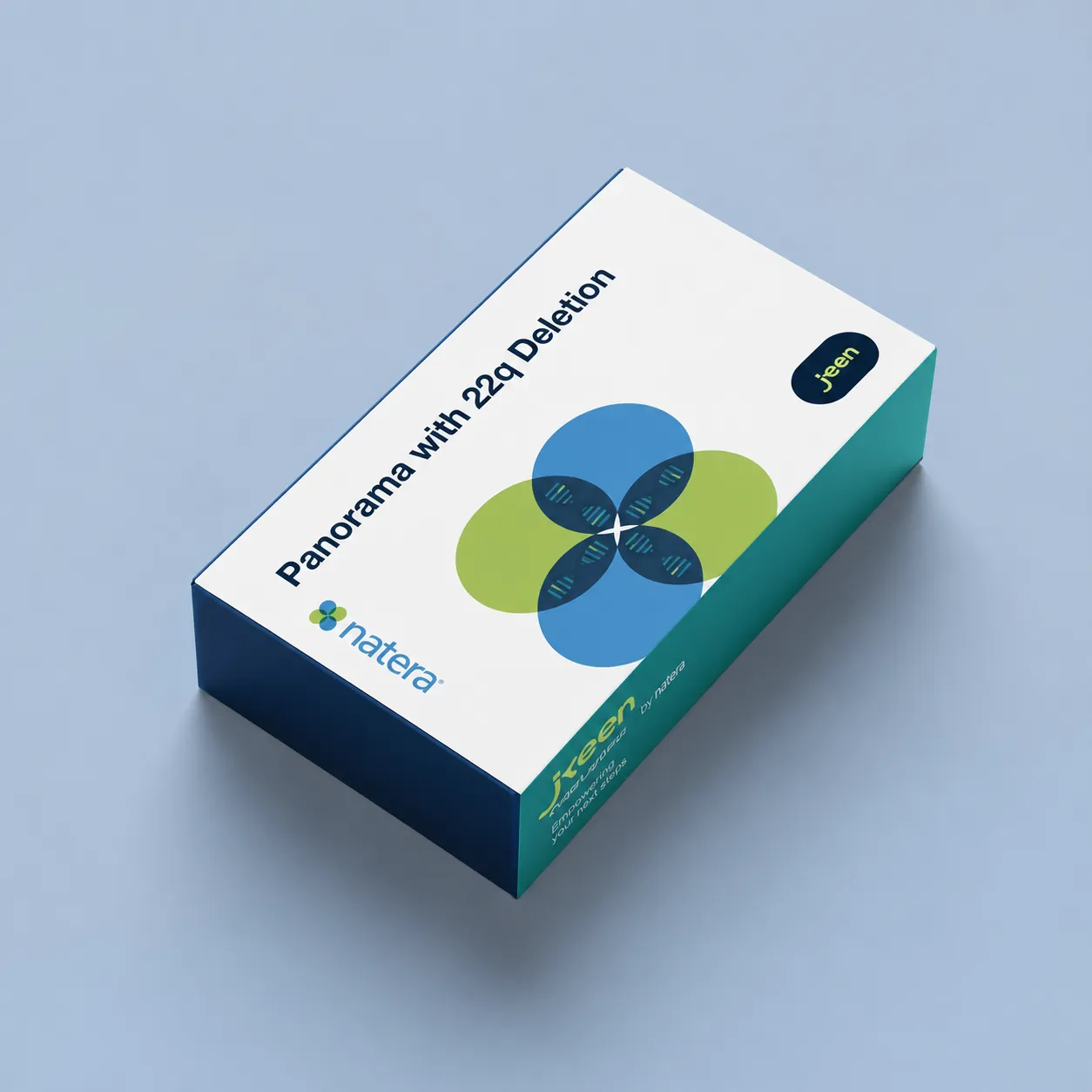
Panorama NIPT
Screens for 9 conditions, including Down’s syndrome and sex chromosome conditions. From 9 weeks of pregnancy.
-
NIPT Microdeletions
A wide panel: the main chromosome conditions, sex chromosome conditions and more than 20 microdeletion syndromes. From 10 weeks.

For more comprehensive screening, we may recommend advanced NIPT options such as NIPT Microdeletions or KNOVA. The most suitable test for you may change following your midwife consultation, based on your medical history, scan findings, and individual needs.
Questions and answers
How accurate is Express NIPT?
Detection rates exceed 99% for Down’s syndrome (Trisomy 21); detection for Edwards’ (T18) and Patau’s (T13) is also high but somewhat lower, around 93–99%. NIPT is a screening test - high-risk results should be confirmed with a diagnostic procedure such as CVS or amniocentesis.
Who runs the analysis, and how fast are results?
Your sample is analysed on Illumina’s VeriSeq NIPT Solution v2 - a whole-genome sequencing NIPT platform - at TDL Genetics (The Doctors Laboratory), one of the UK’s largest independent laboratories. Samples are processed and reported six days a week, which is what gives the test its fast, typically 3–4 day turnaround.
What’s the difference between basic and advanced NIPT?
Basic NIPT screens for the three most common chromosomal conditions: Down’s syndrome (Trisomy 21), Edwards’ syndrome (Trisomy 18), and Patau’s syndrome (Trisomy 13). Advanced NIPT includes everything in the basic test, but can also check for sex chromosome conditions, some rare genetic deletions (called microdeletions), and can tell you the biological sex of the baby if you choose to know. At Jeen, our NIPT specialists will help you decide which version is right for you during your consultation.
Is this the same screening the NHS offers?
The NHS offers screening for Down’s, Edwards’ and Patau’s syndromes to everyone who is pregnant: as the NHS explains, it is your choice whether to have it, and it tells you whether there is a higher or lower chance of each condition. It is part of the NHS fetal anomaly screening programme, alongside your pregnancy scans (see Screening tests for you and your baby, on GOV.UK).
Express NIPT screens for the same three conditions from a sample of your blood, privately, from 10 weeks. Like any screening test, a higher-chance result is confirmed with a diagnostic test, and it does not replace your NHS scans.
Do I need midwife counselling before NIPT?
Yes. With Jeen, you must attend an online midwife NIPT counselling appointment before the test. After this appointment, we will send you the kit for sample collection. At Jeen, we believe it’s important that everyone taking NIPT has the chance to speak to a qualified midwife (or a genetic counsellor for an additional fee) first. This session helps you understand what the test covers, what it doesn’t, and what the results might mean for you and your baby. It’s also a space to ask questions and make confident, informed choices.
Why do I need to send my scan before doing the NIPT?
We ask you to send us your pregnancy scan so our medical team can confirm that you’re at least 10 weeks pregnant and that the pregnancy appears to be developing as expected. By reviewing a recent scan performed within one week of your NIPT blood draw, our doctors can check that there are no early concerns before going ahead with your NIPT. It’s also helpful to know that NIPT screens for specific genetic conditions only. It doesn’t look for physical or structural differences, such as heart defects or organ development issues, which are usually identified later in pregnancy through detailed ultrasound scans. Reviewing your early scan helps ensure NIPT is appropriate for you before moving forward.
Do I need a GP or hospital referral for Express NIPT?
No. Anyone aged 18+ can order Express NIPT directly with Jeen Health. Your kit is dispatched 1–2 working days after your 20-minute midwife consultation and your signed consent form, by next-day delivery; your midwife reviews every report and a specialist follow-up is offered if your result is high-risk.
Can I do NIPT at home?
Yes. At Jeen Health, the standard option is for you to arrange your blood test at home independently. If you prefer, we can organise your blood test for you for an additional fee.
When can I take the NIPT and is it safe?
You can take Express NIPT from 10 weeks into your pregnancy. Before ordering your test with Jeen, we ask you to send us a recent pregnancy scan, such as a dating or viability scan, so our team of specialists can confirm you’re eligible to proceed. NIPT is completely safe for both you and your baby. It’s a non-invasive blood test that only requires a small sample from your arm, and there is no physical contact with the baby. This means there is no risk of miscarriage or harm to the pregnancy, unlike some invasive procedures.
Can NIPT tell me the sex of my baby?
Yes, NIPT can identify the baby’s biological sex with high accuracy, but this is completely optional. If you’d like to know, just let our team know during your consultation and if you’d rather not find out, we’ll make sure it’s not included in your report.
Who checked it, and sources

Medically reviewed by Dr Fred Ushakov, Medical Director & Founder.Last reviewed November 2026.
The statistics and clinical claims on this page are supported by the following authoritative sources.
How we estimate "affects about 1 in N pregnancies"
The "1 in N" is an approximate UK total-birth prevalence - how often, across all births (live births plus stillbirths and terminations for fetal anomaly), a pregnancy is affected by one of the conditions this screen covers. We take the published birth prevalence of each condition, add them together, and express the total as "1 in N". The three autosomal trisomies are anchored to NCARDRS England 2022 (NHS England Digital).
This panel (3 conditions):
- Trisomy 21 (Down's syndrome) - 30.2 per 10,000 (≈1 in 331)
- Trisomy 18 (Edwards' syndrome) - 8.7 per 10,000 (≈1 in 1,150)
- Trisomy 13 (Patau's syndrome) - 3.4 per 10,000 (≈1 in 2,900)
Combined: 42.3 per 10,000 births ≈ 1 in 240.
This is a population detection rate, not your personal risk - your own risk depends on maternal age, family history and other factors, and a screen result is not a diagnosis. Because each test covers a different set of conditions, the figures are not directly comparable between tests.
Sources: autosomal trisomies - NCARDRS England 2022 (NHS England Digital).
The information provided in this article is for educational purposes only and is based on NHS recommendations. It is not a substitute for professional medical advice. Always consult your doctor or a qualified healthcare provider for advice on medical conditions or treatments.
Not sure? Ask a person.
Tell a midwife what you are worried about and they will point you to the right test, or tell you if you do not need one.